The Supreme Court’s Redistricting Ruling: What It Means for the 2026 Midterms and Beyond

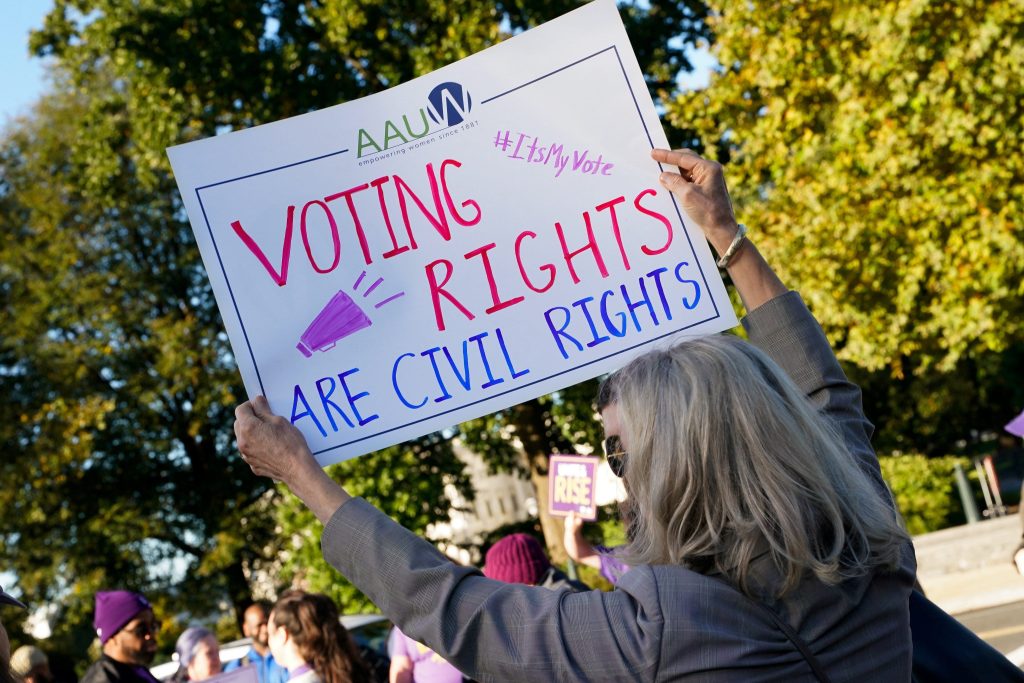
The American political landscape is undergoing a seismic shift. In a landmark 6-3 decision in the case of Louisiana v. Callais, the Supreme Court has effectively narrowed the scope of the Voting Rights Act (VRA), ruling that Louisiana’s congressional map—which included a second majority-Black district—constituted an “unconstitutional racial gerrymander.” As we navigate the 2026 midterm cycle, this ruling has ignited a firestorm of debate regarding the future of minority representation and the integrity of the U.S. House of Representatives.
While the court’s conservative majority, led by Justice Samuel Alito, framed the decision as a necessary step to prevent race-based quotas, critics argue it effectively “muzzles” minority voters by allowing states to prioritize partisan gain under the guise of neutral districting. With the 2026 elections rapidly approaching, the question remains: will this ruling shift the balance of power, or is it a long-term play for the next decade of American politics?
The Ruling: A New Standard for Congressional Maps
For decades, Section Two of the Voting Rights Act of 1965 served as a primary safeguard against the dilution of minority voting power. However, the Supreme Court’s recent decision marks a pivot toward a more restrictive interpretation of the law. Justice Alito argued that the VRA cannot be used to mandate the creation of districts solely based on race, suggesting that such actions violate the 15th Amendment’s protections against intentional racial discrimination.

The “Arms Race” of Gerrymandering
Legal experts suggest this ruling may accelerate what many call a “relentless arms race” in redistricting. Because the court has previously ruled that partisan gerrymandering is largely beyond federal intervention, states now have a clearer path to draw maps that favor their dominant party, provided they avoid explicit racial criteria.
By removing the legal threat of VRA-based challenges, the Court has essentially signaled to state legislatures that they have significant latitude in “choosing their voters.” This creates a scenario where political survival—not public representation—becomes the primary driver of map-making.
Will the 2026 Midterms See an Immediate Impact?
Despite the national outcry, political analysts and data experts agree that the immediate impact on the 2026 midterms will likely be minimal. The logistical reality of election administration is the primary reason for this insulation.
- Primary Deadlines: Most states have already finalized their primary schedules. In states like Louisiana and Georgia, the primary processes are already underway or concluded, making a sudden, court-ordered shift in district lines legally and administratively chaotic.
- Legislative Lag: Even in states where lawmakers are eager to redraw maps to gain a partisan advantage, the legislative process takes time. Any new maps would face immediate legal challenges, potentially snarling them in court long after the November general election passes.
- Strategic Caution: Incumbents are generally risk-averse during election years. Most state legislatures are expected to wait until the 2028 cycle to implement any major changes, preferring to use the current maps to defend their existing seats.

The National Battle for the House
The battle for the House of Representatives remains razor-thin, with Republicans holding a slim majority. The Supreme Court’s decision has energized both parties, though for very different reasons.
President Donald Trump has openly encouraged Republican-led states to take advantage of the ruling. While he noted that some states might not need to adjust their maps, his rhetoric has emboldened state-level GOP leadership to explore new opportunities to secure their majorities. Conversely, Democratic advocacy groups are sounding the alarm, warning that the decision will systematically dilute the power of voters of color in key battleground states.
Key States to Watch
- Texas: With 38 seats, Texas has been a focal point of the redistricting wars. Republican efforts to create more GOP-majority districts have been met with fierce Democratic resistance.
- Florida: Governor Ron DeSantis has been vocal about maximizing GOP influence through redistricting, aiming to add several seats to the Republican column.
- Virginia and Mississippi: These states are currently seeing intense legislative maneuvering, with debates over whether to finalize new maps for the upcoming cycle or wait for the 2028 presidential election.

Looking Toward 2028 and Beyond
The true impact of Louisiana v. Callais will be felt in the 2028 presidential election and the subsequent redistricting cycle following the 2030 Census. By limiting the reach of the Voting Rights Act, the Supreme Court has essentially removed itself from the “redistricting gambit.”
This shift places the burden of ensuring fair representation on the states themselves. Without federal oversight, the risk of “muzzling” minority voices becomes a structural concern rather than just a legal one. As Justice Elena Kagan noted in her dissent, the Court’s “antiseptic” view of the law fails to account for the reality of vote dilution, which will likely lead to a Congress that is less reflective of the nation’s diverse demographic makeup.
The Constitutional Debate
The disagreement on the bench reflects a 50-year debate over the role of race in American law. Conservative justices argue that the Constitution is colorblind, and that race-conscious redistricting—even when intended to help minorities—is a form of unconstitutional discrimination. Liberal justices, however, argue that the history and purpose of the 15th Amendment and the VRA were specifically designed to remedy systemic exclusion, and that ignoring the reality of race in politics only serves to perpetuate existing inequalities.
Final Thoughts: A New Era for American Elections
As we look toward the 2026 midterms, voters should expect a landscape defined by entrenched partisan lines rather than sudden, massive changes. The Supreme Court has cleared the path for states to exercise greater control over their electoral maps, but the political consequences of these decisions will unfold over years, not weeks.
For the average citizen, the takeaway is clear: the battle for representation has shifted from the courtroom to the statehouse. Whether or not this leads to a more representative government depends on the integrity of state-level institutions and the engagement of the electorate in local and state elections. The “redistricting war” is far from over; in many ways, it is only just beginning.