Beyond Partisanship: The Push for a ‘Team Canada’ Strategy Amid U.S. Trade Tensions

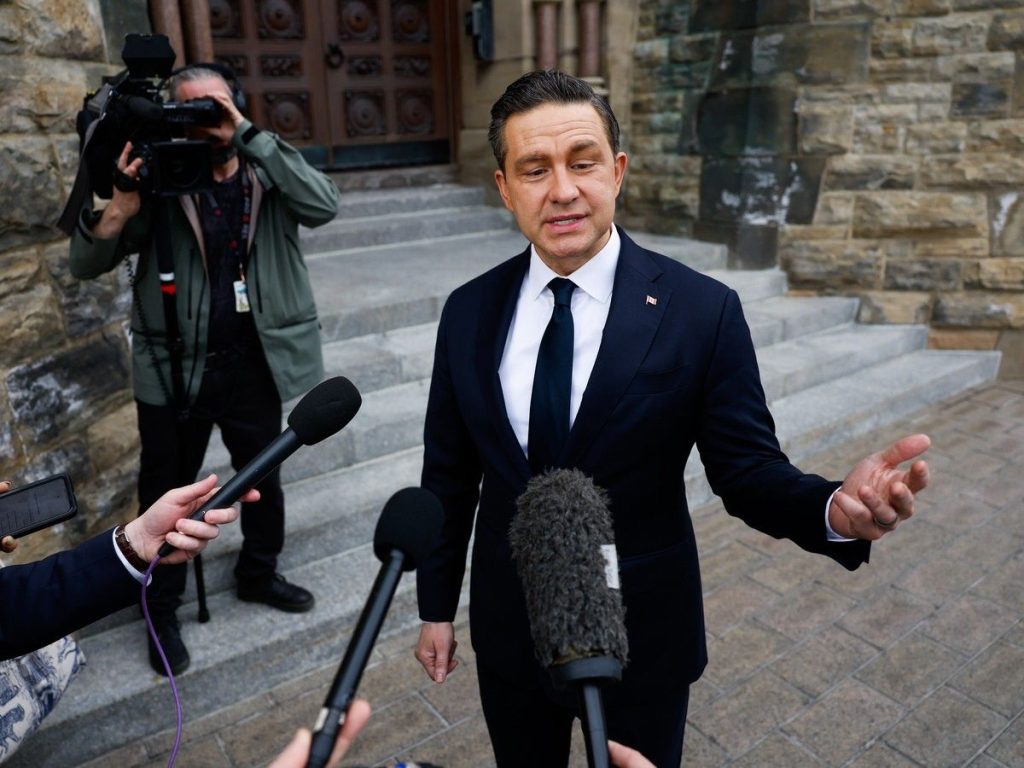
As the 2026 political landscape intensifies, the Canada-U.S. relationship has become the focal point of Ottawa’s legislative agenda. With Prime Minister Mark Carney navigating a high-stakes trade environment under the administration of U.S. President Donald Trump, the call for unity has reached a fever pitch. Conservative Leader Pierre Poilievre has recently urged the Liberal government to “use every relationship we have,” signaling a potential, albeit cautious, shift toward a bipartisan “Team Canada” approach to protect the nation’s economic interests.
The Washington Delegation: MPs on a Diplomatic Mission
The current diplomatic climate is defined by uncertainty regarding tariff-free trade. To address this, a group of Conservative MPs—including foreign affairs critic Michael Chong, Shuvaloy Majumdar, Jacob Mantle, and Corey Tochor—recently traveled to Washington, D.C. The delegation participated in a networking event hosted by the American Chamber of Commerce in Canada, aiming to facilitate direct, practical dialogues with American stakeholders.

A key figure in this diplomatic push is Ontario MP Jamil Jivani. Known for his personal connection to U.S. Vice-President JD Vance—a bond forged during their time at Yale Law School—Jivani has become a central, if somewhat polarizing, figure in these discussions. While his previous solo trips sparked internal debate within the Conservative caucus, his supporters argue that these personal links are vital assets in the current geopolitical climate.
Leveraging Personal Networks for National Stability
The effectiveness of using individual MPs as conduits for diplomacy is a subject of ongoing debate. While critics argue that such actions can undermine the official government line, proponents, including Poilievre, maintain that the severity of the trade situation necessitates a “big tent” strategy. The primary goal remains the preservation of tariff-free trade in crucial sectors, including steel, aluminum, and automotive manufacturing.
The Role of Coordination
Diplomatic experts, such as former envoy Louise Blais, emphasize that while leveraging diverse networks is beneficial, it must be backed by rigorous coordination. Blais notes that all contacts are valuable, but they must be funneled through proper channels to ensure that the Canadian embassy and federal officials remain fully informed. A fragmented approach, she warns, could lead to mixed messaging, which is the last thing Canada needs when negotiating with a volatile U.S. administration.
Jivani and the Vance Connection
Jamil Jivani’s unique access to the Vice-President’s office represents a “complementary” asset for Canada. By extending his willingness to assist the Liberal government, Jivani has signaled that, despite sharp ideological differences, the economic survival of his riding—which relies heavily on the automotive sector—takes precedence over party lines. Whether the Liberal government will formally tap into this resource remains to be seen, but the offer highlights the desperate need for creative diplomatic solutions.
Poilievre’s Strategic Stance: “One Prime Minister at a Time”
Pierre Poilievre has maintained a delicate balance. On one hand, he is a fierce critic of Prime Minister Carney’s trade record, labeling the current results as insufficient. On the other, he has explicitly stated his intention to work collaboratively when it serves the national interest.
Poilievre’s approach is rooted in the principle that the U.S. administration should deal with “one prime minister at a time.” By allowing the government to lead, while simultaneously deploying his own MPs to conduct parallel “practical conversations,” Poilievre is attempting to maximize Canada’s leverage without creating a constitutional crisis. His message is clear: the economic fallout of U.S. tariffs on Canadian goods is too high a price to pay for partisan posturing.
Prime Minister Carney’s Trade Philosophy
Prime Minister Mark Carney has articulated a cautious, long-term vision for trade relations. Addressing the media, Carney made it clear that Canada will not be rushed into a “bad deal.” He has been particularly vocal about the current U.S. tariffs, describing them as “violations of our trade deal” rather than mere irritants.
Quality Over Speed
Carney’s perspective is that countries that scrambled to sign agreements with the Trump administration often ended up with documents that were “not worth the paper they were written on.” His strategy involves:
- Prioritizing Substance: Avoiding quick, small-scale deals that could disadvantage Canadian industry in the long run.
- Addressing Trade Irritants: Pushing back against U.S. complaints regarding provincial trade policies while keeping the focus on the massive tariffs impacting Canadian steel and auto workers.
- Strategic Patience: Standing ready to negotiate but refusing to capitulate to pressure tactics.
The Road Ahead: CUSMA and Beyond
As Canada approaches the next review phase of the Canada-U.S.-Mexico Agreement (CUSMA), the pressure on both the Liberal government and the Conservative opposition will only increase. The involvement of provincial emissaries and the continued presence of parliamentary delegations in D.C. suggest that the “Team Canada” approach is becoming the de facto standard for navigating this turbulent era.
The economic reality is stark. With tariffs impacting forest products, steel, and aluminum, the Canadian workforce is feeling the strain. Whether the government chooses to integrate the efforts of opposition MPs like Jivani or continues to maintain a more centralized diplomatic strategy, the ultimate test will be the tangible removal of these tariffs.
Conclusion: A United Front or Parallel Paths?
The call for Canada to “use every relationship” is more than just political rhetoric; it is a recognition of the shifting nature of North American diplomacy. While Prime Minister Carney and Leader of the Opposition Pierre Poilievre may differ on the tactics—and indeed, on the fundamental vision for the country—there is a growing consensus that the U.S.-Canada relationship requires an all-hands-on-deck approach.
The coming months will determine if this bipartisan spirit can survive the pressures of a competitive political environment. For the workers in Bowmanville, the steel mills of Hamilton, and the forestry sectors across the country, the success of these diplomatic missions is not just a political win—it is an economic necessity. As the delegation of MPs returns from Washington, the focus shifts back to Ottawa, where the challenge of turning these “practical conversations” into concrete policy will define the trajectory of the Canadian economy for the remainder of 2026.