Trump’s Surprise Endorsement: Why the US President Hailed John Swinney’s 2026 Election Win

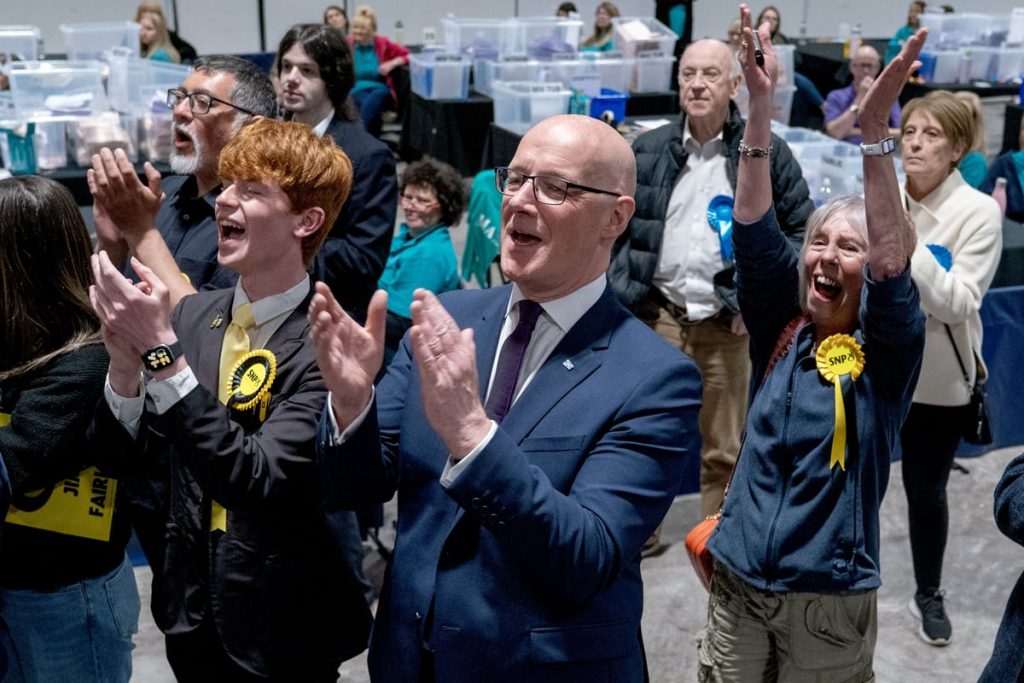
In a geopolitical move that has rippled across both sides of the Atlantic, United States President Donald Trump took to his Truth Social platform this weekend to offer a formal congratulations to Scottish First Minister John Swinney. Following the 2026 Scottish Parliamentary elections, which saw the Scottish National Party (SNP) retain its position as the largest party in Holyrood, the President’s endorsement has sparked intense debate regarding the future of US-Scotland diplomatic relations and the nuances of Scottish domestic politics.
President Trump, who has frequently touted his Scottish heritage, characterized Swinney as a “good man” and lauded his efforts in securing a major breakthrough in international trade. The President’s intervention serves as a high-profile recognition of the SNP’s fifth consecutive electoral victory, a feat that cements the party’s dominance in Scottish politics despite a shifting landscape.
The 2026 Election Landscape: A Complex Victory for the SNP
The results of the 2026 election were far from a simple landslide. While the SNP remains the dominant force in the Scottish Parliament, the party secured 58 seats—a notable decline from the 64 seats held in 2021. For John Swinney, the goal of achieving an outright majority remained elusive, leaving the party to navigate a parliament where they must rely on consensus-building and potential coalition-style arrangements to advance their agenda.
Shifting Political Tides
The election night revealed significant volatility across the Scottish political map. While the SNP maintained its lead, the Scottish Greens enjoyed a historic night, surging to 15 MSPs. This growth included landmark constituency wins that have challenged the traditional SNP-Labour duopoly. Meanwhile, the Scottish Conservatives dropped to fourth place with 12 seats, and the Liberal Democrats managed a modest increase, securing 10 seats.
Perhaps most significantly, the Scottish Labour Party faced what many analysts are calling a “torrid” cycle. Dropping from 22 seats to 17, they now find themselves level with Reform UK, which has emerged as a disruptive force in the Scottish political theater. Anas Sarwar, the Scottish Labour leader, has acknowledged the party’s disappointment, emphasizing that while they “didn’t win the argument” for change this time, his focus remains on party unity.
The “Whiskey Diplomacy” Connection
The most intriguing aspect of President Trump’s message was his specific praise for Mr. Swinney’s role in securing tariff relief for Scotch whisky. Trump wrote, “He is a good man, who worked very hard, along with the King and Queen of the United Kingdom, with respect to Tariff relief for Great Scottish Whiskey – and deserves this Big Electoral Victory!”
This mention highlights the often-overlooked intersection of local Scottish governance and international trade policy. For years, the Scotch whisky industry—a pillar of the Scottish economy—suffered under the weight of trade disputes between the US and the UK.
The Credit Controversy
The announcement of the tariff removal last month triggered a domestic political skirmish. John Swinney and the UK Government engaged in a public disagreement over who deserved the credit for the breakthrough. By publicly validating Swinney’s role in the negotiations, President Trump has effectively tipped the scales in this narrative, providing the First Minister with a significant diplomatic “win” that he can leverage in his upcoming term.
Tension Between Holyrood and Downing Street
As John Swinney begins his new mandate, the relationship between the Scottish Government and the UK Government in Downing Street remains a primary point of friction. In his post-election address, the First Minister did not mince words, describing the relationship as having “soured” over the preceding months.
A Call for Respect
Swinney’s rhetoric following the election results was focused on the need for a reset in inter-governmental relations. He highlighted the fact that Labour had been “hammered” in Scotland, suggesting that the UK Government must now acknowledge the longevity and resilience of the SNP.
Key takeaways from Swinney’s post-election stance:
- The Need for Cooperation: Swinney explicitly stated he wants a more co-operative relationship with London.
- The Mandate Argument: Despite the lack of an outright majority, the First Minister maintains that the SNP’s 19-year tenure provides a unique, ongoing mandate.
- The “Listening” Requirement: Swinney insists that Downing Street must respect the outcome of the Scottish election, noting that the electorate has once again chosen the SNP to lead.
The Rise of the Greens and the “Wasted Vote” Myth
The 2026 election cycle will be remembered as the moment the Scottish Greens broke through the glass ceiling of list-only representation. By winning local constituency seats, the party has dismantled the long-standing narrative that voting Green in a constituency is a “wasted vote.”
Holly Bruce, the new MSP for Glasgow Southside—the seat previously held by former First Minister Nicola Sturgeon—noted that the result signals a fundamental shift in voter behavior. This rise in Green influence, coupled with the decline in Conservative support, suggests that the Scottish Parliament is moving toward a more fragmented, multipolar environment.
What Does Trump’s Endorsement Mean for the Future?
President Trump’s intervention is more than just a congratulatory note; it is a signal of how the US administration views the current Scottish political reality. By focusing on economic cooperation (whisky tariffs), Trump is signaling that he prioritizes pragmatic, transactional relationships over traditional diplomatic protocols.
For John Swinney, the endorsement is a double-edged sword. While it provides international validation and bolsters his image as a leader capable of securing global trade successes, it may also attract criticism from domestic opponents who view the US President’s politics as diametrically opposed to the SNP’s progressive platform.
Looking Ahead: The Third Decade of SNP Rule
As the SNP embarks on what is effectively its third decade in power, the party faces the challenge of stagnation. Critics argue that after 19 years, the government’s focus has waned. However, the 2026 results prove that a significant portion of the Scottish electorate still views the SNP as the most reliable steward of the country’s interests.
Swinney’s challenge over the coming months will be to balance the demands of a more diverse parliament with his ambition to maintain the SNP’s status as the primary vehicle for Scottish self-determination. The “respect” he demands from Downing Street will likely be the defining theme of the next two years.
Conclusion
The 2026 Scottish election has left the country at a crossroads. With a returning, yet diminished, SNP government and a parliament that is more politically diverse than ever, the path forward is complex. President Trump’s high-profile congratulations to John Swinney have added an international dimension to these domestic results, highlighting the importance of economic diplomacy in a globalized world.
Whether this “Big Electoral Victory,” as the President called it, translates into a renewed, harmonious relationship with the UK Government remains to be seen. What is clear, however, is that the Scottish political landscape has undergone a significant transformation, and the ripple effects of this election will be felt for years to come.