Rory McIlroy’s Pivot: From LIV Critic to Pragmatic Realist as Saudi Funding Dries Up

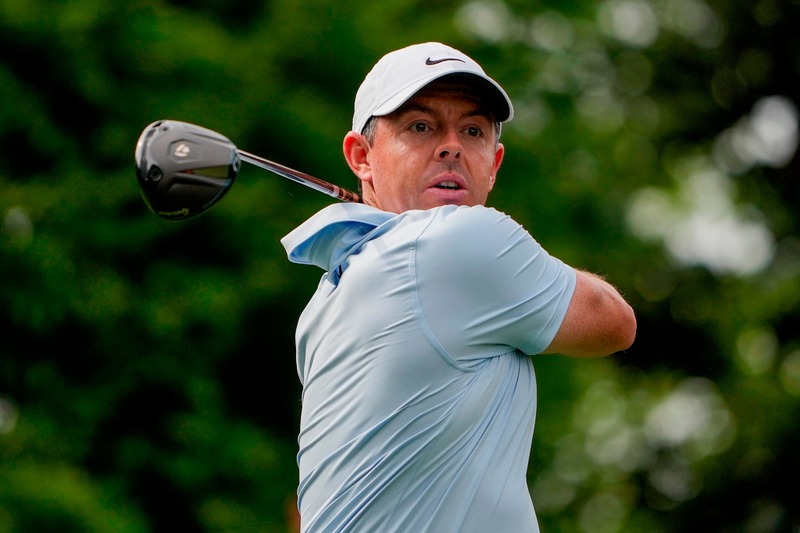
The landscape of professional golf in 2026 is undergoing a seismic shift. As the Saudi-backed LIV Golf circuit faces an existential crisis following the Public Investment Fund’s (PIF) decision to withdraw its multi-billion-pound financial support, the discourse surrounding the game’s future has reached a fever pitch. At the center of this conversation is four-time major champion Rory McIlroy, a man who has spent years as the unofficial spokesperson for the PGA Tour’s defense.
Speaking at the 2026 Truist Championship, where he carded a surgical four-under 67 to move firmly into contention, McIlroy offered a perspective that was as sharp as his iron play. While he didn’t shy away from throwing a final, pointed jab at the financial viability of the breakaway league, his stance on the reintegration of defected players has softened—shifting from moral opposition to a cold, hard business calculation.
A Financial Reality Check: When the Well Runs Dry
The core of the current golf drama lies in the sheer scale of the investment—and the sudden realization that it might not be sustainable. Since its inception in 2022, LIV Golf has burned through an estimated £4 billion. However, with the PIF signaling an end to its involvement, the league finds itself in a precarious position.
McIlroy, never one to mince words regarding the league’s business model, delivered a stinging assessment of the situation. “When one of the wealthiest sovereign wealth funds in the world thinks that you’re too expensive for them, that sort of says something,” he remarked. This comment highlights a growing sentiment among industry analysts: the “start-up” phase of LIV is over, and the market has spoken.
The End of the “Unlimited Budget” Era
For years, the narrative was that LIV Golf could simply outspend its way into legitimacy. Now, as the funding window closes, the players who jumped ship are left wondering what comes next. McIlroy’s critique isn’t just about the money; it’s about the perceived lack of value that the league ultimately provided to the broader ecosystem of the sport.
A New Stance on PGA Tour Reintegration
Perhaps the most surprising takeaway from the Truist Championship was McIlroy’s shift in tone regarding the return of LIV defectors to the PGA Tour. Once a staunch opponent of “handing out” pathways back to players who abandoned the Tour for lucrative signing bonuses, McIlroy now views the situation through the lens of “good business.”
“I think there’s going to be a lot of bridges to cross to get there,” McIlroy admitted. “But anything that makes this Tour stronger, anything that makes the DP World Tour stronger, I think everyone should be open to that.”
The “Good Business” Philosophy
This pragmatic approach reflects a maturity in how the PGA Tour is handling its competition. Rather than focusing on retribution, leadership—and by extension, influential voices like McIlroy—are beginning to weigh the value of talent consolidation. If the goal is to provide the highest level of competition, then blocking elite talent from returning—provided they meet strict sanctions—may no longer serve the Tour’s long-term interests.
- Strategic Re-entry: The PGA Tour has already established a precedent with Brooks Koepka, who navigated a return under specific penalties.
- The Talent Question: McIlroy raises a valid point: do these players actually want to come back, and are they willing to accept the consequences of their departure?
- Competitive Integrity: McIlroy remains firm that the PGA Tour is the place to be for those who truly want to compete at the highest level.
The Players’ Dilemma: To Return or Not to Return?
While the PGA Tour may be “open” to returns, the ball is firmly in the court of the LIV stars. We are currently seeing a divergence in how these high-profile athletes are reacting to the impending closure of the LIV experiment.
The DeChambeau Factor
Bryson DeChambeau, one of the biggest names to join the breakaway, has taken a defiant stance. He has publicly stated that he would rather pivot toward his successful YouTube and content-creation ventures than grovel for a return to the PGA Tour. This represents a fundamental shift in the definition of a “professional golfer.” For players like DeChambeau, the traditional tour structure may no longer be the primary career goal.
The Reputation Cost
McIlroy’s commentary on the “reputation” cost is telling. He notes that while players secured life-changing wealth, they paid a price in terms of standing and legacy. This tension between financial security and professional prestige is the defining struggle for the current generation of golfers.
McIlroy’s Form: Back in the Hunt
Amidst the off-course politics, Rory McIlroy remains a world-class athlete focused on the task at hand. His second-round 67 at the Truist Championship was a masterclass in resilience. After a bogey on the second hole, he surged forward with six birdies, showing the kind of form that secured him his second consecutive green jacket at Augusta National just a month ago.
Consistency: Despite the media scrutiny, McIlroy’s ability to “lock in” during a round remains his greatest asset.
Tactical Improvement: His performance on the par-threes at the Philadelphia Cricket Club demonstrated a level of precision that makes him a favorite for the upcoming PGA Championship.
The Chase: Sitting in a tie for eighth, just four shots back of Sungjae Im, McIlroy is perfectly positioned to make a run for the title.
The Future of Golf: A Unified Landscape?
As we look toward the remainder of 2026, the golf world is bracing for a period of intense negotiation. The collapse of the LIV funding model doesn’t necessarily mean the end of golf’s division, but it certainly changes the leverage.
What Lies Ahead?
Consolidation of Talent: We may see a gradual trickle of players attempting to negotiate their way back onto the PGA or DP World Tours.
New Investment Models: The PGA Tour will likely look to strengthen its own financial standing, perhaps through partnerships that prioritize long-term stability over the short-term cash injections that characterized the “LIV era.”
The Legacy of the Breakaway: Regardless of how the next year unfolds, the last four years have permanently altered the sport. The focus on player compensation, the structure of events, and the global reach of the game have all been accelerated by the competition.
Conclusion: A Pragmatic Path Forward
Rory McIlroy’s comments at the Truist Championship serve as a microcosm for the state of professional golf. The era of pure antagonism is fading, replaced by a more nuanced, business-oriented approach. McIlroy, ever the ambassador for the sport, recognizes that while the “LIV experiment” may have been flawed, the players involved are still part of the game’s fabric.
Whether or not the PGA Tour sees a mass influx of returning stars remains to be seen. What is certain, however, is that as the financial dust settles, the focus will return to where it belongs: the players, the performance, and the pursuit of championships. McIlroy’s ability to balance his role as a critic with his desire for a stronger, more competitive tour proves that even in a changing landscape, the best players in the world are still driven by the same thing—winning.