The 2026 London Political Earthquake: Navigating the Chaos of “No Overall Control”

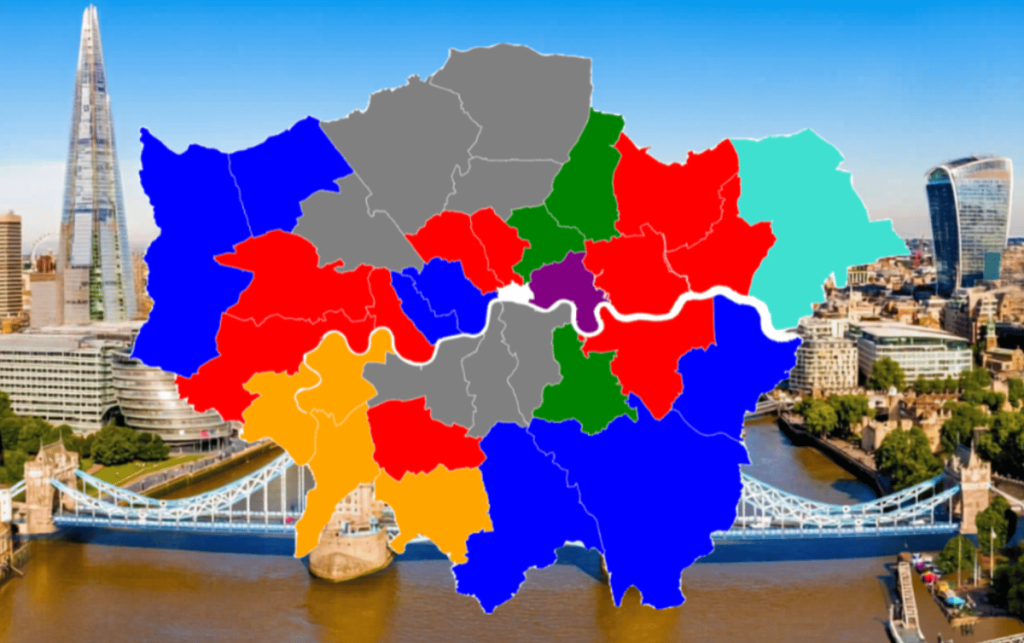
The 2026 London local elections have fundamentally altered the capital’s political DNA. For decades, the narrative of London governance was defined by Labour dominance, with the party comfortably managing 21 councils. However, the results of May 2026 have shattered this status quo, leaving seven major London boroughs in a state of No Overall Control (NOC).
As the dust settles, residents in Brent, Barnet, Enfield, Haringey, Southwark, Lambeth, and Wandsworth are left asking: Who is actually in charge? With the traditional two-party system effectively “dead and buried” according to Green Party leader Zack Polanski, the capital is entering an era of complex coalition building, minority administrations, and, inevitably, political horse-trading.
What Does “No Overall Control” Actually Mean?
In the UK local government system, a party gains “overall control” when it secures more than 50% of the seats in a council chamber. This allows them to pass budgets, appoint cabinet members, and push through their manifesto pledges without needing support from opposition parties.
When no party hits that threshold, the council enters a period of No Overall Control (NOC). This is not a state of anarchy, but rather a state of negotiation. The council must find a way to function, which usually forces parties that were bitter rivals on the campaign trail to sit down and discuss how to keep the bin collections running and the social services funded.
Why the 2026 Shift is Different
The 2026 elections were unique due to the surge of the Green Party and Reform UK, combined with a significant decline in the Labour and Conservative vote shares. This “political patchwork quilt” means that power in these seven boroughs is no longer a binary choice. Local issues—such as housing density, low-traffic neighbourhoods (LTNs), and local economic development—are now dictating alliances rather than national party lines.
The 7 Boroughs at the Centre of the Storm
The seven boroughs now facing the complexities of NOC represent a massive cross-section of London. From the historic Labour heartlands of Lambeth and Southwark to the fiercely contested battlegrounds of Barnet and Wandsworth, each council is navigating its own path toward stability.
1. The Power-Broker Dilemma: Barnet
In Barnet, the deadlock is razor-thin. With both Labour and the Conservatives holding 31 seats each, the single Green councillor has effectively become the “kingmaker.” Unless Labour and the Tories decide on an unlikely “Grand Coalition,” the council’s future depends on whether the Green representative decides to lean left or right on key votes.
2. The Green Surge: Lambeth
Lambeth presents an even more complex picture. The Green Party emerged as the largest group with 29 seats, but they lack the majority to govern alone. With Labour holding 26 seats and the Liberal Democrats holding 8, the Lib Dems hold the balance of power. They could theoretically back a Green-led administration or facilitate a Labour-led minority government.
3. The Remaining Boroughs
Brent, Enfield, and Haringey: These former Labour strongholds are now grappling with the reality of having to compromise with smaller parties to pass their annual budgets.
Southwark and Wandsworth: Both boroughs are seeing intense backroom negotiations. In these areas, the focus is shifting toward “issue-by-issue” voting, where an administration might survive on a vote-by-vote basis rather than a formal coalition agreement.
How Councils Function Without a Majority
When a council finds itself in NOC, there are generally three paths to governance. Each comes with its own set of risks and rewards for the councillors involved.
The Formal Coalition
This is the most stable, yet most difficult, option. Two or more parties agree to a formal partnership. They share cabinet positions and agree on a joint policy programme for the next four years.
The Pro: Long-term stability and a clear path for decision-making.
The Con: It requires parties to compromise on core promises, which can alienate voters who wanted a specific, undiluted manifesto.
The Minority Administration
The largest party takes the lead, but they do not have a majority. They must “shop around” for votes on every major decision. This often involves informal agreements with smaller parties or independents to ensure that the budget passes and the council doesn’t fall into a state of paralysis.
The Pro: The largest party keeps its ideological purity.
The Con: Constant threat of a “vote of no confidence” or the opposition grouping together to block key policies.
The Informal Agreement (Confidence and Supply)
Similar to national-level arrangements, smaller parties agree to support the administration on budgets and key votes, but they do not join the cabinet. This allows for a looser, more flexible arrangement that can be dissolved if the relationship sours.
The Role of the “Full Council” Meeting
The key moment for all seven boroughs will be the upcoming Full Council meeting. Within two weeks of the election, all councillors must gather to vote on the leader, cabinet members, and committee chairs.
Crucially, the largest party does not automatically get the “keys to the town hall.” If the opposition parties decide to form a united front, they can effectively lock the largest party out of all leadership positions. This is where personal relationships, local grievances, and the “bruising” nature of the 2026 campaign will come to the fore. As one local councillor remarked, “It’s not going to be pretty—a lot of concessions and apologies will need to be made.”
The National Ripple Effect: Starmer Under Pressure
The local government crisis is not happening in a vacuum. The collapse of the Labour vote in the capital is putting severe pressure on Prime Minister Sir Keir Starmer. With prominent MPs like Catherine West warning the cabinet that they are “on notice,” the instability in London’s councils is acting as a catalyst for potential leadership challenges at the national level.
The message from voters, according to Sadiq Khan, is that Labour took the capital “for granted.” By losing control of such significant boroughs, the party has lost the ability to implement its vision in the very cities that once served as its bedrock. This shift has emboldened opposition parties and created a, perhaps temporary, era of political pluralism in London.
What Should Residents Expect?
For the average Londoner, the immediate impact of a “No Overall Control” council might be minimal, but the long-term effects could be significant:
- Slower Decision Making: Expect more debate and fewer “rubber-stamped” decisions. Every policy will be scrutinized by opposition groups.
- Increased Transparency: Because no single party has the power to steamroll the opposition, debates are likely to be more robust and public.
- Local-First Politics: Parties will be forced to focus on local issues—like road maintenance, school funding, and local planning—to secure the votes of smaller parties or independents.
Conclusion: A New Era for London Governance
The 2026 local elections have proven that the political landscape in London is no longer predictable. The transition to No Overall Control in seven major boroughs is a symptom of a broader shift in British politics: a move away from tribal voting toward a more fractured, multi-party reality.
While the coming weeks of negotiations will undoubtedly be messy, they represent the democratic process in its most raw form. Whether these councils form stable coalitions or struggle through minority administrations, the residents of these boroughs will be the ultimate judges of whether this new, pluralistic style of governance delivers the change they were promised.
As we move toward the next few years of local government, the focus will remain on the committee rooms of these seven boroughs. In a city as dynamic as London, one thing is certain: the era of the “safe seat” and the “guaranteed majority” is fading, replaced by a complex, high-stakes game of political negotiation.