The Farage Factor: Could Reform UK’s Surge Lead to a Hung Parliament in 2026?

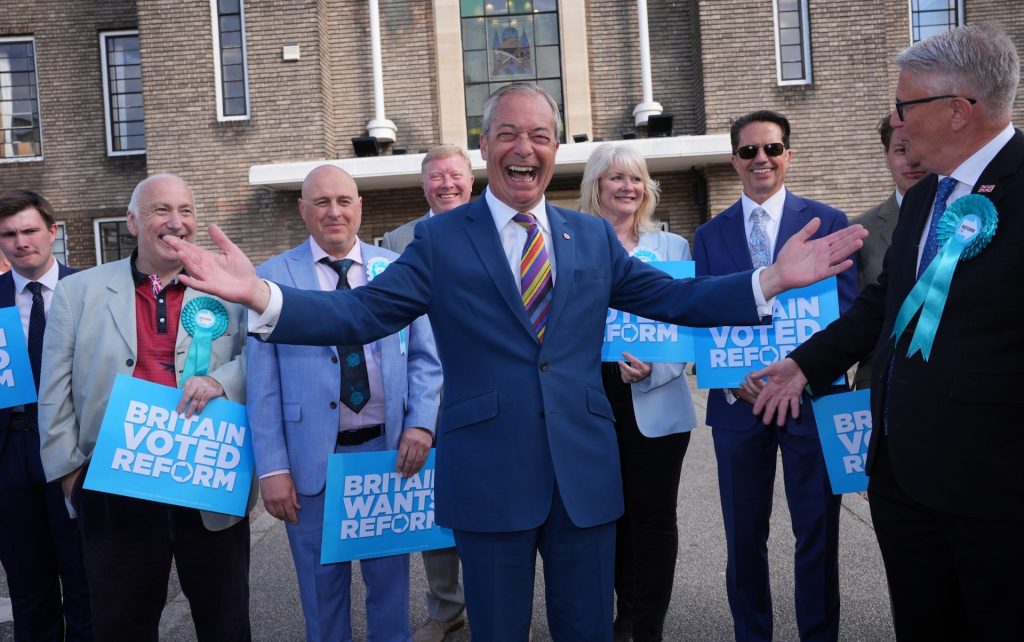
The landscape of British politics is undergoing a seismic shift that few pollsters dared to predict just a few years ago. As we move through 2026, the traditional duopoly of the Conservative and Labour parties is facing an existential threat. Recent local election results and comprehensive MRP (Multilevel Regression and Post-stratification) polling suggest a reality that would have been unthinkable in the last decade: Nigel Farage is on the precipice of Downing Street.
However, the path to power is not a clear-cut victory. Data indicates that while Reform UK is surging, the most likely outcome of a general election held today would be a hung parliament, forcing a complex era of coalition negotiations. This article explores the mechanics of this political earthquake, the collapse of the traditional “Red Wall,” and what a Reform-led administration might actually look like.

The Rise of the Reform Movement: More Than a Protest Vote
For years, pundits dismissed Reform UK—and its predecessor, the Brexit Party—as a vehicle for protest votes. The narrative was simple: voters use Reform to “send a message” to the Tories or Labour, but they return to the fold when it comes to a general election. The results in 2026 have shattered that consensus.
Why the Electorate is Shifting
The surge in Reform’s support is not merely about dissatisfaction; it is about a fundamental misalignment between the political establishment and the working-class electorate. Key factors driving this trend include:
Economic Disenchantment: Voters in former industrial heartlands feel left behind by urban-centric economic policies.
The “Work vs. Welfare” Narrative: Farage has successfully framed his party as the champion of those who “get up and go to work,” contrasting this with a Labour Party he characterizes as focused on welfare and identity politics.
Local Governance Failures: In regions like the North West and the West Midlands, Reform has gained traction by highlighting the perceived failure of local councils to address issues like regional infrastructure and immigration-related social pressures.
Analyzing the Projections: The Anatomy of a Hung Parliament
Professor Michael Thrasher’s analysis, coupled with recent YouGov MRP projections, paints a vivid picture of the current electoral map. If an election were held tomorrow, the results would likely be historic.
The Seat Breakdown
The data suggests a radical redistribution of power in the House of Commons:
- Reform UK (approx. 280–311 seats): While they are projected to become the largest party, they fall short of the 326 seats required for an absolute majority.
- Labour (approx. 110 seats): A catastrophic collapse from their 2024 numbers, though they maintain a presence due to concentrated support in major metropolitan centers.
- Conservatives (approx. 96 seats): A continuation of the downward trend for the Tories, who are being squeezed from both the right and the center.
This configuration creates a hung parliament, a scenario where no single party commands the legislative authority to pass a budget or enact laws without external support.
The “Red Wall” Breakthrough: A Permanent Realignment?
Nigel Farage has been vocal about his belief that Reform has captured the Red Wall for the long term. Victories in areas like Tameside, Wigan, and Hartlepool are not just statistical anomalies; they represent a deep-seated cultural shift.
Challenging the Labour Hegemony
For decades, Labour took these areas for granted. Farage’s strategy has been to treat these regions not as “left-behind” pockets, but as the new base of a national, populist movement. By gaining control of councils like Havering and Newcastle-under-Lyme, Reform has moved from being a parliamentary pressure group to a party of local government, proving they can handle the day-to-day administration of public services.
The Conservative Collapse
The Tories, meanwhile, find themselves in a “pincer movement.” Their traditional voters in counties like Norfolk and Suffolk are increasingly looking to Reform, viewing the Conservative party as having drifted too far from its core principles. If the Tories drop to under 100 seats, they face an identity crisis that may take a generation to resolve.
Coalition Politics: The Only Path to Number 10
If Farage finds himself leading the largest party in a hung parliament, he will be faced with a historic dilemma: how to govern?
The Potential for a “Blue-Reform” Alliance
The most frequently discussed outcome is a coalition or a confidence-and-supply agreement with the remnants of the Conservative Party. However, this is fraught with challenges:
Ideological Friction: Can the pragmatic, often centrist elements of the Conservative Party sit in a cabinet led by a figure as polarizing as Farage?
Policy Demands: Reform would likely demand radical changes to migration policy, tax reform, and a potential referendum on specific governance structures (such as the Havering independence proposal).
The Price of Power: If the Conservatives refuse to cooperate, the country could face a period of extreme instability, potentially leading to a second general election within months.
Expert Insights: The Challenges Ahead
Political analysts remain divided on the durability of the Reform surge. Josephine Harmon, an expert in political science, notes that while the polling is “extraordinarily high,” translating that into a stable governing majority is a “tall order.”
The primary challenge for Farage is moving from a campaign-style opposition to the complexities of statecraft. Governance requires compromise, and the very nature of the Reform movement—built on anti-establishment fervor—may struggle with the realities of parliamentary procedure and the civil service.
Conclusion: A New Era for British Democracy
As we look toward the remainder of 2026, the message from the electorate is clear: the status quo is no longer acceptable to a significant portion of the British public. Whether Nigel Farage eventually walks through the door of Number 10 Downing Street or finds himself leading a powerful opposition, the political landscape has been irreversibly altered.
The rise of Reform UK represents more than just a shift in vote share; it is a fundamental realignment of British politics. The next few months will be critical, as the parties prepare for what could be the most consequential general election in modern history. One thing is certain: the era of predictable two-party politics is over.