The Road to 2029: Why John Swinney is Racing to ‘Farage-Proof’ Scotland

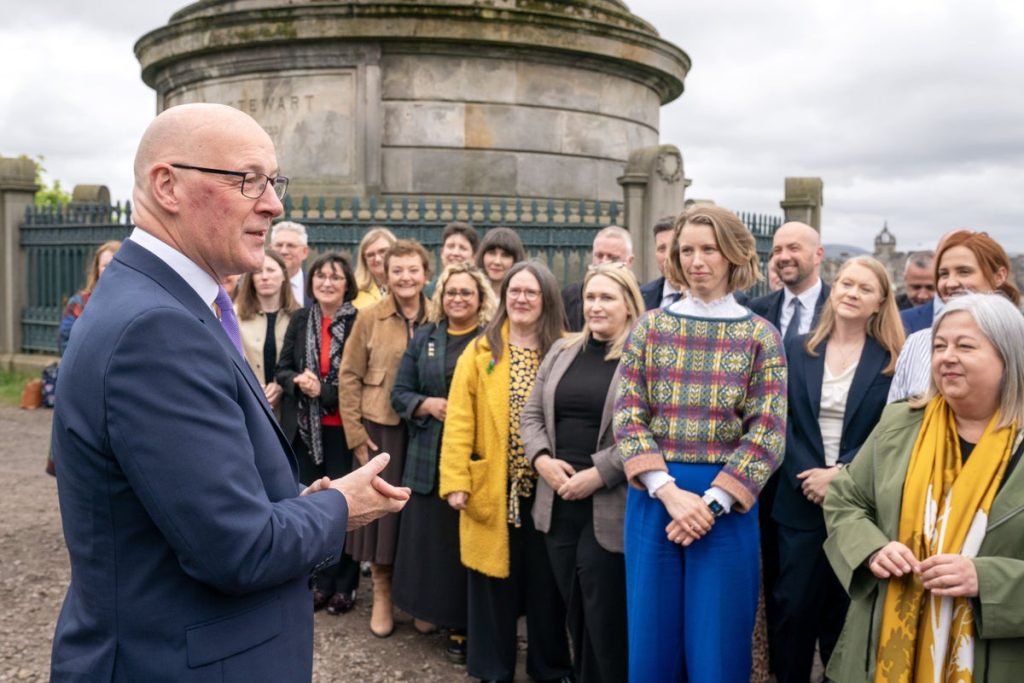
The political landscape in Scotland has shifted beneath our feet. As the dust settles on the recent Holyrood elections, First Minister John Swinney has emerged with a singular, urgent mission: to “Farage-proof” the Scottish Parliament before the 2029 deadline. With Reform UK marking their debut in the Scottish chamber and the looming possibility of a right-wing populist wave at Westminster, Swinney is framing Scottish independence not just as a political aspiration, but as an essential defensive shield.
A New Political Reality at Holyrood
The most recent election results have delivered a complex mandate. While the Scottish National Party (SNP) secured its fifth consecutive victory, the absence of an overall majority has forced a new era of coalition-style negotiation and political maneuvering. The most striking development, however, is the arrival of Reform UK as a significant parliamentary force, securing enough seats to sit in a joint second-place tie with Scottish Labour.
For John Swinney, this is more than just a change in the chamber’s composition; it is an existential threat to the devolved settlement. By labeling the objective as “Farage-proofing” the nation, the First Minister is drawing a clear line in the sand, positioning the SNP as the only bulwark against a brand of politics he characterizes as hostile to Scotland’s established social democratic values.
The “Celtic Fringe” Moves Center Stage
Swinney’s rhetoric during his post-election address in Edinburgh was charged with a sense of historical urgency. He explicitly pointed to the political trajectories of Wales and Northern Ireland, where nationalist and republican parties are already shaping the governance of their respective nations.
Key Drivers of the Constitutional Debate:
The Constitutional Shift: With Sinn Féin in Northern Ireland and Plaid Cymru’s influence in Wales, Swinney argues that the “Celtic fringe” is rapidly becoming the new center of gravity for UK constitutional discourse.
The “Hostile” Westminster Threat: Swinney has expressed deep concern over the potential for a Reform-led government in London, warning of policies that could include the privatization of the NHS and the eventual abolition of the Scottish Parliament itself.
- The Power Mandate: The SNP leader insists that Holyrood must be granted the sovereign power to determine its own constitutional future, arguing that the current mechanism for calling a referendum is too easily blocked by a potentially hostile UK government.
Drawing the Boundaries of Cooperation
The First Minister has been remarkably transparent regarding his strategy for the next term. In a move that has sparked significant backlash from opposition benches, Swinney confirmed he would not be inviting Reform UK to St Andrew’s House for discussions on governance or policy priorities.
This decision to “lock the doors” to Reform has been labeled as “arrogant and undemocratic” by Reform’s Scottish leader, Lord Malcolm Offord. Yet, for Swinney, this is a calculated choice. By refusing to normalize the presence of Reform UK within the Scottish governing process, he is attempting to maintain a pro-independence, progressive consensus, even without a formal majority.
The Opposition’s Counter-Narrative
The reaction from rival parties has been swift and severe. Scottish Labour, led by figures like Jackie Baillie, has accused the First Minister of ignoring the “basics” of governance. The critique is simple: while the SNP obsesses over the constitutional question and the arrival of Nigel Farage, the people of Scotland are struggling with the cost-of-living crisis and the pressures on the National Health Service.
Meanwhile, the Scottish Conservatives, under Russell Findlay, have doubled down on their “no” stance. They argue that Swinney’s push for a referendum is a “massive lie” and an attempt to ignore the fact that the recent election did not produce an explicit mandate for constitutional change.
Can Scotland Actually Be “Farage-Proofed”?
The concept of “Farage-proofing” is multifaceted. It involves:
- Legislative Safeguards: Seeking powers from Westminster that would make the Scottish Parliament’s existence and functions immune to interference from a UK-wide government.
- Public Opinion Momentum: Swinney has suggested that driving support for independence above the 60% threshold is the only way to force the hand of the UK government, regardless of who occupies Downing Street.
- The 2029 Horizon: By setting a 2029 timeline, the First Minister is creating a high-stakes roadmap that forces voters to consider the long-term implications of remaining in a UK that could be headed by a Reform-led administration.
Analysis: The Risk of the “Obsession” Narrative
Political observers note that Swinney is playing a dangerous game. By focusing so heavily on the threat posed by Reform UK, he risks alienating moderate voters who are more concerned with economic stability than constitutional reform. However, he also recognizes that the rise of populism provides a potent rallying cry for the independence movement.
The question remains: will the Scottish electorate view this as a necessary act of protection, or as a distraction from the day-to-day failures of government? The next few years will be defined by this tension. If Swinney fails to deliver on the “basics,” the argument for independence may lose its luster; if he succeeds in keeping the constitutional question at the forefront, he may just secure the legacy he desires.
Conclusion: The Final Countdown
As we look toward 2029, the political climate in Scotland is clearly reaching a boiling point. John Swinney’s strategy is clear: he wants to insulate Scotland from the volatility of Westminster politics by establishing clear, legally binding protections for Holyrood. Whether this strategy serves as a bridge to independence or a bridge to nowhere will be decided not in the halls of St Andrew’s House, but at the ballot box.
For now, the First Minister remains undeterred. He is banking on the idea that the threat of a “catastrophic” prime minister will be enough to unite a fractured independence movement and carry his agenda across the finish line.