‘Not What We Want’: Dubliners Take to the Streets to Save Stephen’s Green Shopping Centre

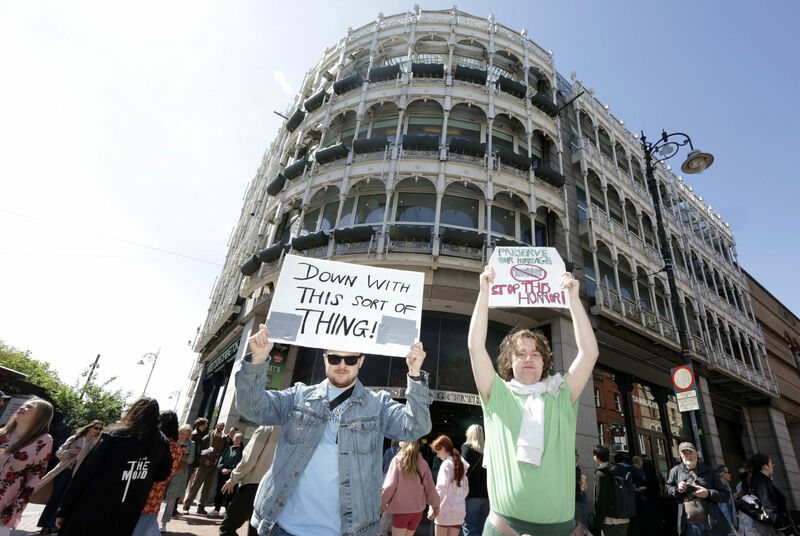
The iconic silhouette of the Stephen’s Green Shopping Centre has long been a fixture of Dublin’s cityscape. With its distinctive 1980s white ironwork and soaring glass atrium, it is more than just a retail hub; it is a landmark that defines the entrance to one of Europe’s most beautiful city parks. However, as of 2026, the building finds itself at the center of a heated architectural tug-of-war.
Following the approval of a controversial €100 million redevelopment plan by the local council, citizens have taken to the streets in a display of civic resistance. The message from the crowds is clear: the proposed replacement of the center’s signature aesthetic with a redbrick facade is, in the words of protesters, “not what we want.”
The Controversy Behind the €100 Million Redesign
The proposed renovation aims to modernize the aging structure, which has admittedly suffered from periods of decay over the last four decades. While many agree that the interior and infrastructure require significant investment, the point of contention lies in the proposed exterior transformation.
The current design, celebrated for its Victorian-inspired ironwork and light-filled glass, is slated for demolition in favor of a more muted, traditional redbrick finish. For many Dubliners, this represents a homogenization of the city’s architectural identity.
Why Citizens Are Opposing the Change
The “Save Stephen’s Green” campaign, which organized the recent demonstrations, argues that the current building possesses a unique cultural and architectural value that cannot be replicated by modern brickwork. Key concerns raised by the protesters include:
Loss of Architectural Integrity: The 1980s ironwork is viewed as a bold, post-modern statement that complements the historic greenery of the park across the street.
Corporate Gentrification: Critics argue the redesign leans too heavily into a “corporate” aesthetic, stripping the building of its personality.
Environmental Impact: Opponents are calling for the retrofitting of the existing structure rather than partial demolition, citing the carbon cost of such a massive construction project.
The Future of Dublin’s Skyline: A Clash of Perspectives
The debate surrounding the shopping centre is symptomatic of a broader struggle in Dublin: how to balance the need for modern, functional urban space with the desire to preserve the city’s unique character. Supporters of the redevelopment argue that the current structure is underperforming and that the €100 million investment is necessary to revitalize the area and attract high-end retail tenants.
However, the opposition is not merely nostalgic. The protesters acknowledge that the building has “flaws,” but they believe that these flaws are fixable. They advocate for a sensitive refurbishment that maintains the iconic glass and iron facade while upgrading the internal systems to meet 2026 energy efficiency standards.
The Role of the ‘Save Stephen’s Green’ Campaign
The campaign has become a focal point for public participation in city-making. By organizing protests and encouraging residents to submit formal observations to An Coimisiún Pleanála, the group is attempting to force a democratic review of the planning process.
“There is a sense of responsibility to participate in the city-making process,” a representative stated during the protest. This sentiment highlights a growing trend in Dublin: citizens are no longer passive observers of urban development; they are active stakeholders demanding a seat at the table.
Architectural Heritage vs. Urban Renewal
The Stephen’s Green Shopping Centre, opened in the late 1980s, was designed to be a centerpiece of retail architecture in Ireland. Its glass-and-iron aesthetic was a conscious departure from the heavy stone structures typical of the Georgian era. To replace it now with redbrick—a material that, while historic, might feel out of place in this specific context—is seen by many as an attempt to “sanitize” the area.
The Economic Angle
With a price tag of €100 million, the project is a massive undertaking. Investors argue that without a significant overhaul, the shopping centre risks becoming obsolete in an era of e-commerce and changing consumer habits. But for the protesters, the cost is secondary to the cultural value. They argue that if the city loses its architectural variety, it loses its soul.
How the Public Can Get Involved
The battle is far from over. With two separate appeals currently moving through the planning system, the future of the centre remains in limbo. For those interested in the outcome, there are several ways to stay informed:
- Monitor Planning Portals: Keep an eye on An Coimisiún Pleanála* for updates on the appeals process.
- Join Local Advocacy Groups: Campaigns like “Save Stephen’s Green” provide platforms for public discourse.
- Engage with Local Representatives: Contacting city councillors ensures that the public’s voice is heard during legislative sessions.
Balancing Progress with Preservation
As we look toward the future of Dublin in 2026 and beyond, the Stephen’s Green case serves as a critical test case. It asks the question: does urban progress require the erasure of the recent past?
The passion displayed by the crowds—chanting “Save Stephen’s Green” and carrying signs that range from witty to stern—demonstrates that the building is deeply loved by the people who walk past it every day. Whether or not the developers will heed this call remains to be seen. What is certain, however, is that the citizens of Dublin are watching, and they are prepared to fight for the landmarks that define their home.
The Importance of Civic Engagement
This movement is not just about a shopping centre; it is about the right of citizens to have a say in the evolution of their city. When major projects are approved without sufficient public consensus, friction is inevitable. Moving forward, urban planners and developers would do well to prioritize community consultation as early as the design phase to avoid the kind of public pushback that has stalled this significant investment.
Conclusion: A City at a Crossroads
The protests at Stephen’s Green serve as a powerful reminder that architecture is never just about bricks and glass. It is about identity, memory, and the shared experience of living in a city. As the debate continues, the “Not what we want” sentiment serves as a rallying cry for those who believe that progress should not come at the expense of our heritage.
Whether this building is saved, redesigned, or completely transformed, the discourse surrounding it will undoubtedly influence how Dublin approaches future urban development projects. For now, the white ironwork remains standing—a fragile, beautiful, and contested symbol of a city that cares deeply about its future.