The Constitutional Crisis: How the Celtic Alliance Aims to Reshape the United Kingdom in 2026

The political landscape of the British Isles is undergoing a seismic shift that few observers would have predicted a decade ago. In 2026, the United Kingdom faces an unprecedented challenge to its territorial integrity as the leaders of Sinn Féin, the Scottish National Party (SNP), and Plaid Cymru have signaled a coordinated, strategic push toward independence for their respective nations. This emerging “Celtic Alliance” represents more than just rhetoric; it is a calculated political maneuver designed to dismantle the current constitutional framework of the UK.
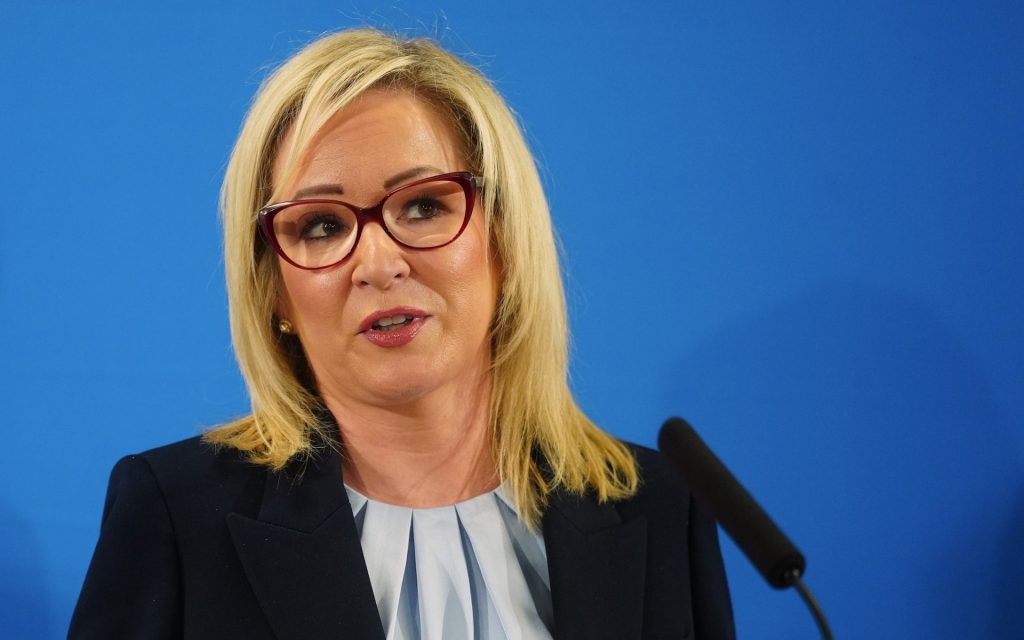
At the center of this movement is Northern Ireland’s First Minister, Michelle O’Neill. Her recent declarations have electrified nationalist circles, suggesting a unified front that seeks to move beyond the “constraints of the Union.” With the SNP holding firm in Scotland and Plaid Cymru surging in Wales, the prospect of three pro-independence First Ministers simultaneously leading devolved governments has placed Sir Keir Starmer’s administration in a precarious, defensive position.
The Rise of the Nationalist Triple Threat
For years, the Unionist establishment operated under the assumption that devolution would act as a release valve for nationalist sentiment. The theory was that by granting Scotland, Wales, and Northern Ireland greater control over their own affairs, the desire for full sovereignty would diminish. As of 2026, it is clear that this strategy has backfired. Instead of satisfying regional aspirations, devolution has provided the institutional platforms necessary for nationalist parties to build the infrastructure of independent states.
Michelle O’Neill and the Sinn Féin Strategy
Michelle O’Neill, as the First Minister of Northern Ireland, has been vocal about the “cracking seams” of the United Kingdom. Her vision for a reunified Ireland is no longer a distant aspiration but a focal point of her governance. By collaborating with John Swinney in Scotland and Rhun ap Iorwerth in Wales, O’Neill is attempting to internationalize the debate on self-determination. She views the success of her counterparts as proof that voters across the “Celtic fringe” are increasingly looking toward a post-UK future.
John Swinney’s Pivot to Cooperation
The SNP, under the leadership of John Swinney, remains the most experienced of the three nationalist parties in navigating the mechanics of secession. Swinney has explicitly stated that he welcomes the prospect of working with Sinn Féin and Plaid Cymru. His strategy is to change the “dynamics” of the United Kingdom by creating a unified bloc of devolved nations that can challenge Westminster’s authority simultaneously. For Swinney, the goal is an “irreversible” change to the British state, ensuring that even if one nation faces setbacks, the collective momentum remains.
The Welsh Factor: Plaid Cymru’s New Ambition
For a long time, Wales was considered the most stable pillar of the Union among the three nations. However, the rise of Rhun ap Iorwerth and the electoral gains of Plaid Cymru have completely altered that perception. While Plaid Cymru has historically been more cautious than the SNP regarding independence, the 2026 political reality has forced them into a more assertive stance.
Critics argue that the party is pursuing independence “by stealth,” focusing on cultural and economic autonomy that gradually separates Wales from English governance. By aligning with the SNP and Sinn Féin, Plaid Cymru is gaining access to a broader network of expertise and political leverage, effectively moving the needle of Welsh public opinion toward sovereignty.
Why the UK Government is Facing a Major Headache
The coordinated efforts of these three leaders create a unique administrative and political dilemma for the Prime Minister. If the devolved governments begin to act in unison—whether by challenging Westminster’s legislative authority in the courts or by coordinating international diplomatic efforts—the UK government’s ability to maintain a centralized policy will be severely hampered.
The Breakdown of Intergovernmental Relations
The mechanisms for cooperation between the UK government and the devolved administrations, such as the Joint Ministerial Committee, were never designed to handle a situation where all three major devolved nations are actively seeking to leave the Union. Sir Keir Starmer now faces a situation where his counterparts in Edinburgh, Cardiff, and Belfast are not seeking more funding or better representation; they are seeking a complete divorce from the British state.
The Risk of Constitutional Paralysis
If these three leaders successfully coordinate their mandates, they could force a constitutional crisis that the current UK legal framework is ill-equipped to resolve. By synchronizing their messaging and their demands for new referendums or legislative powers, they can dominate the political news cycle and force the UK government into a constant state of reaction.
Analyzing the 2026 Outlook: What Comes Next?
As we move through 2026, the question is not whether the Union is under pressure, but how much longer it can withstand this multi-front assault. The synergy between Sinn Féin, the SNP, and Plaid Cymru is unprecedented.
- Shared Diplomatic Front: Expect these three parties to hold joint summits and issue joint statements, creating a unified “Celtic” voice that commands more international attention than any single party could achieve alone.
- Referendum Pressure: While the UK government has been resistant to granting new referendums, the sheer political weight of three nationalist governments could make this position untenable. If public opinion in these nations continues to trend toward independence, the democratic mandate for a vote will become increasingly difficult to ignore.
- Economic Nationalism: We are likely to see the devolved governments push for more control over their own tax and trade policies. This “economic decoupling” is a precursor to full political independence, allowing these nations to build the institutions they would need to function as sovereign states.
The Role of the Good Friday Agreement
In Northern Ireland, the pathway to a border poll is clearly defined by the Good Friday Agreement. Michelle O’Neill’s confidence stems from the fact that the legal mechanism for reunification is already baked into the peace process. As the political landscape in Scotland and Wales shifts, the pressure on the UK government to clarify its stance on a potential referendum in Northern Ireland will only intensify.
Conclusion: A Turning Point for Britain
The pledge by Michelle O’Neill to work with the SNP and Plaid Cymru signifies the end of the “business as usual” era for the United Kingdom. Whether one views this as a liberation movement or the dismantling of a historic union, the reality is that the map of the British Isles is being redrawn in the minds of its politicians.
The year 2026 will likely be remembered as the moment the constitutional debate moved from the fringes of political discourse to the very center of the British government’s agenda. With three nations now governed by those who fundamentally disagree with the existence of the UK as a unitary state, the pressure on the center will reach a breaking point. For Sir Keir Starmer and his successors, the challenge will be to offer a vision of the Union that can compete with the compelling, if disruptive, vision offered by the Celtic Alliance.