Global Response Underway: The Urgent Evacuation of the MV Hondius Hantavirus Cruise Ship

The maritime world is currently gripped by a high-stakes medical operation as the luxury cruise ship MV Hondius makes its way toward the Canary Islands. Following a confirmed outbreak of a deadly strain of hantavirus, international governments are scrambling to coordinate the safe repatriation of passengers and crew. As of May 2026, this situation has triggered a massive logistical effort, with the World Health Organization (WHO) and multiple nations working in tandem to prevent further spread while ensuring medical care for those on board.
This emergency is not merely a logistical challenge; it is a complex public health undertaking that requires precision, transparency, and international cooperation. With the ship nearing the port of Granadilla in Tenerife, the clock is ticking against both the virus and incoming adverse weather conditions.
Understanding the Hantavirus Crisis on the MV Hondius
The outbreak, which first came to light on May 2, 2026, has sent shockwaves through the cruise industry. While hantavirus is typically transmitted through contact with rodent excreta, the rare instances of person-to-person transmission have elevated the concern level.
The Medical Reality of the Outbreak
Health authorities have confirmed that the specific strain involved is the Andes virus, a potent form of hantavirus that can lead to severe respiratory distress. To date, eight individuals have fallen ill, with the tragic confirmation of three deaths: a Dutch couple and one German national.
Symptoms: Early signs mimic severe influenza, including high fever, muscle aches, and fatigue, which rapidly progress to respiratory complications.
Containment: The WHO has advised an active monitoring period of 42 days for all passengers, starting from their last point of exposure on the vessel.
International Cooperation and Logistics
The scale of this evacuation is unprecedented. Because the MV Hondius is carrying passengers from various nations, the European Union, the United States, and the United Kingdom have mobilized their own diplomatic and medical resources to bring their citizens home safely.
A Coordinated Air Bridge
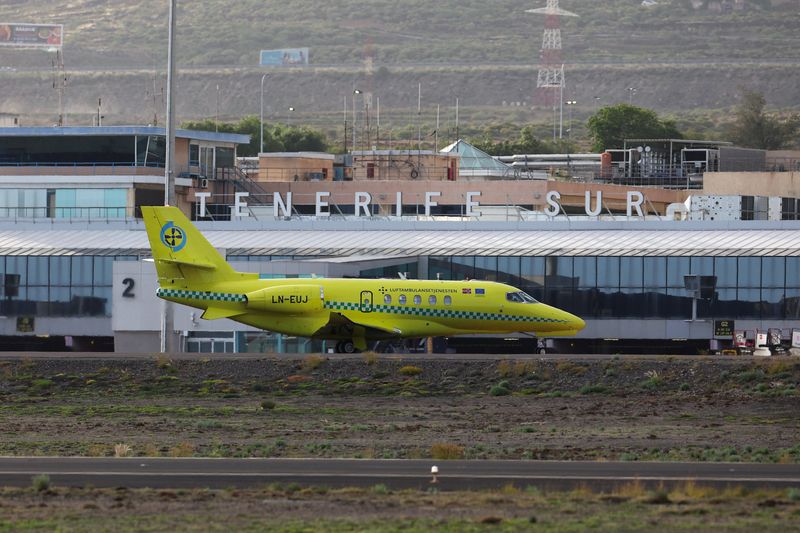
Spain’s Interior Minister, Fernando Grande-Marlaska, has confirmed that multiple nations are sending dedicated aircraft to Tenerife to repatriate their nationals. The operation is designed to be “contactless” from the perspective of the local population.
- Arrival: The ship is scheduled to dock at the industrial port of Granadilla, situated well away from densely populated residential zones.
- Transport: Passengers will be ferried ashore in sealed, guarded vehicles.
- Corridors: A completely cordoned-off transport corridor will lead directly from the ship to the awaiting aircraft.
- Repatriation: Once on board their respective planes, passengers will be flown directly to their home countries for specialized quarantine and medical observation.
Addressing Public Concerns: “This is Not Another COVID”
In an effort to curb misinformation and public panic, WHO Director-General Tedros Adhanom Ghebreyesus issued a clear, direct statement via social media. He emphasized that the risk to the general public remains low and that the nature of this virus, while lethal, does not share the transmission characteristics of the COVID-19 pandemic.
Why the Risk is Contained
Transmission Vectors: Unlike respiratory viruses that spread easily via aerosols in public spaces, the Andes virus primarily requires closer contact or specific environmental conditions.
Strict Protocols: The “sealed corridor” approach ensures that at no point will the passengers mingle with the local Tenerife population.
Disinfection: Upon the departure of the final passengers, the MV Hondius will undergo a comprehensive, deep-cleaning, and disinfection process before it is cleared for future operations.
The Race Against Time and Weather
The operation is not only a battle against a pathogen but also a race against the Atlantic Ocean. Local weather forecasts indicate that conditions around the Canary Islands are expected to deteriorate significantly by Monday afternoon.
If the evacuation is not completed within the 24-hour window starting Sunday morning, the vessel could be forced to remain at sea for days or even weeks. Such a delay would complicate medical care for those currently symptomatic and put further strain on the ship’s remaining crew.
Specific Procedures for International Citizens
Different nations are handling their repatriated citizens with varying levels of scrutiny, based on their domestic health protocols:
United States: American passengers are expected to be transported to Nebraska, a hub for high-level biocontainment, for quarantine and rigorous testing.
United Kingdom: British nationals will be moved to a hospital in the northwest of England for an initial isolation phase.
European Union: The EU is coordinating closely with member states to provide consistent, high-standard quarantine guidelines for all returning citizens.
It is worth noting that while all passengers will be evacuated, a skeleton crew of 30 members will remain on board to manage the vessel as it eventually proceeds to the Netherlands for further containment and professional decontamination.
Lessons Learned and Future Implications
The MV Hondius incident serves as a stark reminder of the complexities inherent in global travel and public health surveillance. The fact that the virus was traced back to passengers who had previously traveled in regions where the Andes virus is endemic (such as parts of Chile and Argentina) highlights the importance of pre-travel health screenings.
As of May 2026, the global maritime industry is likely to re-evaluate its medical emergency protocols. Enhancing the ability to detect and isolate viral outbreaks at sea is no longer just a luxury—it is a necessity for the safety of both crew and passengers.
Conclusion
The situation surrounding the MV Hondius is a testament to the effectiveness of international crisis management. By maintaining transparency and following established medical protocols, the authorities in Tenerife, the EU, and the WHO are successfully navigating a volatile situation. While the tragedy of the three lives lost cannot be undone, the rapid and organized response to this hantavirus outbreak provides a roadmap for how the global community can handle future health crises in an interconnected world.
As the ship prepares to dock, the world watches with the hope that the evacuation concludes safely, ensuring that the remaining passengers receive the care they need while the threat of further spread is effectively neutralized.