Virginia Supreme Court Overturns Redistricting Referendum: A Major Shift in the 2026 Congressional Battleground

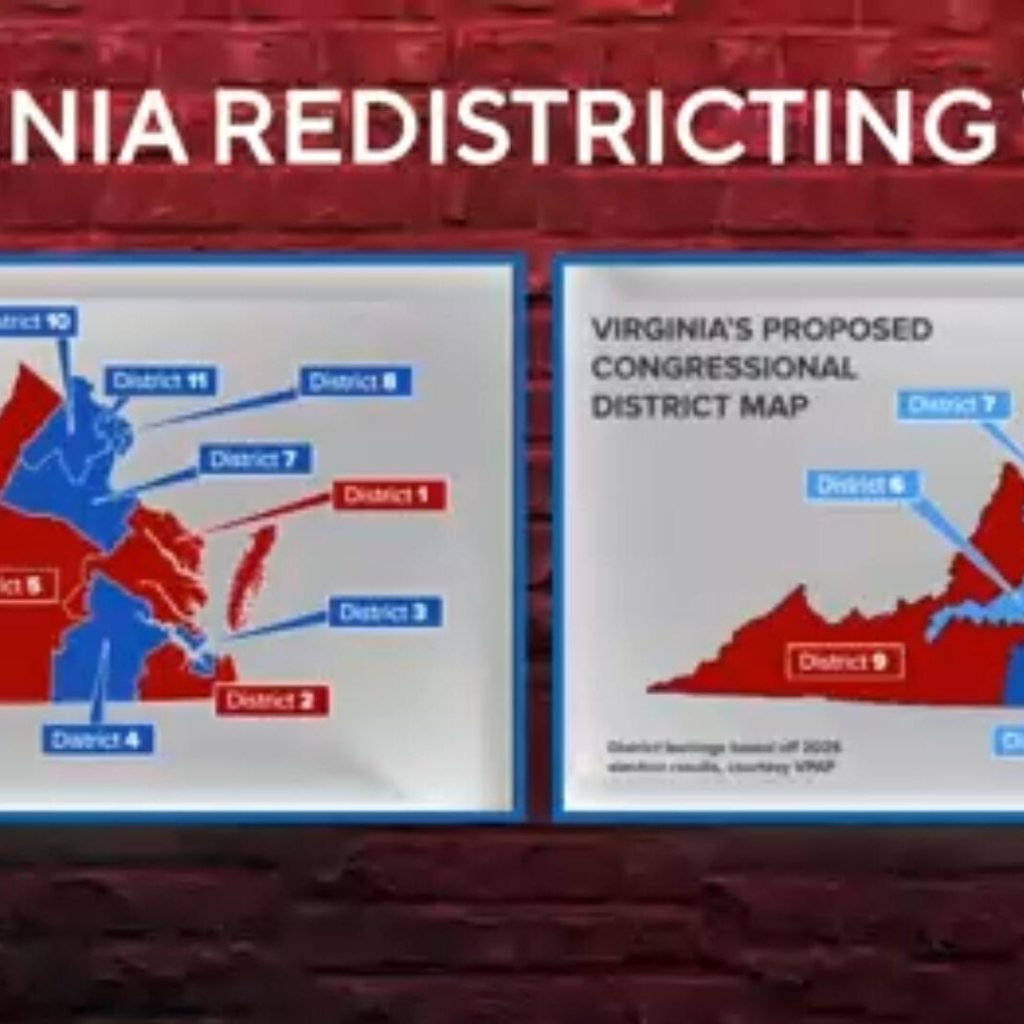
The political landscape in the Commonwealth of Virginia has undergone a seismic shift as we head into the 2026 midterm cycle. In a landmark ruling that has sent shockwaves through the halls of power in Washington and Richmond, the Virginia Supreme Court has officially tossed out a voter-approved congressional redistricting referendum. This decision effectively nullifies a map that would have handed a significant electoral advantage to the Democratic Party, potentially shifting the balance of power in the U.S. House of Representatives.
For months, the redistricting debate in Virginia has been a flashpoint for national partisan tensions. With the court’s decision, the existing 6-5 split in Virginia’s House delegation remains the status quo, preserving a narrow but vital lifeline for Republicans defending their majority. As legal teams scramble and political analysts reassess the map, one thing is clear: the road to control of the U.S. Congress has become significantly more treacherous for Democratic leadership.
The Legal Foundation: Why the Court Intervened
At the heart of the litigation—Scott v. McDougle—was not just the map itself, but the procedural integrity of the legislative process. The Virginia Supreme Court’s decision centered on a rigid interpretation of Article XII, Section 1 of the Virginia Constitution.
The Intervening-Election Requirement
Under Virginia law, any constitutional amendment must pass through the General Assembly twice. Crucially, there must be an election for the House of Delegates between those two legislative votes. This requirement is designed to ensure that the voters have a say in the composition of the legislature before it makes permanent changes to the state’s governing document.
In this instance, the court found that the General Assembly failed to uphold this mandate. The second legislative vote occurred on October 31, 2025, while early voting for the House of Delegates was already well underway. By the time the ink was dry on the proposal, over 1.3 million Virginians—roughly 40% of the electorate—had already cast their ballots.
The court’s majority opinion was scathing, noting that this “unprecedented manner” of proceeding disenfranchised voters by preventing them from choosing the delegates responsible for the final redistricting decision. The ruling declared the referendum “null and void,” emphasizing that even the legislature is not exempt from the procedural constraints of the Constitution.
The Political Stakes: A Blow to Democratic Ambitions
The proposed map was widely seen as a “blue-wave” strategy. If enacted, it would have created a 10-1 advantage for Democrats, leaving Republicans with only a single safe seat in the state. For a party looking to claw back a majority in the U.S. House, Virginia was intended to be a cornerstone of that effort.
A Narrow Majority Hangs in the Balance
With the current 6-5 delegation split preserved, the Republican Party breathes a sigh of relief. The loss of a potential four-seat gain in a single state is a massive mathematical hurdle for Democrats. Political strategists on both sides of the aisle are now recalibrating their 2026 midterm election playbooks.
Democratic Response: Speaker of the Virginia House, Don Scott, has signaled an intent to file an emergency appeal to the U.S. Supreme Court. While the path to a reversal at the federal level is steep, the move underscores the party’s desperation to reclaim these districts.
Republican Victory: Senate Republican Leader Ryan T. McDougle heralded the decision as a triumph of constitutional law. President Donald Trump, weighing in on the matter, categorized the ruling as a “huge win for the Republican Party” and a validation of the rule of law.
The Nationwide Redistricting War
Virginia does not exist in a vacuum. The conflict over congressional boundaries is a national phenomenon, fueled by the aggressive moves of both red and blue states. The “gerrymandering wars,” as they are often called, have reached a boiling point in 2026.
The Domino Effect of Redistricting
Following Texas’s attempt to redraw its own maps in 2025 to favor the GOP, California Governor Gavin Newsom announced a retaliatory effort to reshape the Golden State’s map. This tit-for-tat dynamic has turned state legislatures into the primary theater for federal power struggles.
The Virginia Supreme Court’s decision serves as a warning shot to other states: while the urge to maximize partisan advantage is high, the constitutional guardrails—specifically the timing and procedural requirements of amendments—remain legally binding.
Analyzing the Impact on 2026 Midterms
What does this mean for the average voter? The immediate impact is the preservation of the status quo, but the secondary effects are far more complex.
1. Voter Sentiment and Mobilization
The court’s decision has sparked a firestorm of debate regarding judicial overreach versus the protection of constitutional processes. Democrats are framing the ruling as a suppression of the “people’s choice,” while Republicans are positioning themselves as the defenders of the state’s founding charter. This narrative will likely drive record-breaking voter turnout in the upcoming cycles.
2. The Legal Precedent
This ruling establishes a high bar for future constitutional amendments in Virginia. By enforcing the “intervening-election” requirement so strictly, the court has signaled that the General Assembly cannot use “backroom deals” or rushed legislative cycles to circumvent the public’s role in the democratic process.
3. Campaign Finance and Strategy
With the 10-1 map off the table, Democratic candidates in competitive districts must now rely on traditional grassroots campaigning rather than favorable district lines. This shifts the focus back to swing districts, where every single vote will once again be decisive in determining the control of the House.
Expert Opinions and Future Outlook
As we look toward the 2026 midterm elections, the Virginia Supreme Court’s decision has fundamentally altered the battlefield. We spoke with political analysts who suggest that while the immediate legal battle may be coming to a close, the political fallout is only beginning.
“The court has essentially forced the parties to fight on the terrain they were given, rather than the terrain they wanted to create,” says one veteran political consultant. “This increases the pressure on both parties to build genuine consensus rather than relying on structural advantages.”
Conclusion: A Constitutional Pivot Point
The Virginia Supreme Court’s decision to strike down the redistricting referendum is more than just a legal ruling—it is a defining moment for the 2026 election cycle. By prioritizing constitutional procedural integrity over partisan redistricting, the court has sent a clear message that the law must dictate the process, regardless of the political consequences.
For Democrats, the loss is a significant tactical setback that forces a total rethink of their path to a House majority. For Republicans, it is a defensive victory that preserves their current standing and provides momentum heading into the midterms. As the legal appeals process plays out, the eyes of the nation will remain fixed on Virginia, a state that continues to be the ultimate testing ground for American democracy.