Trade War or Independence Day? Trump Issues July 4 Ultimatum to EU Over “Historic” Deal

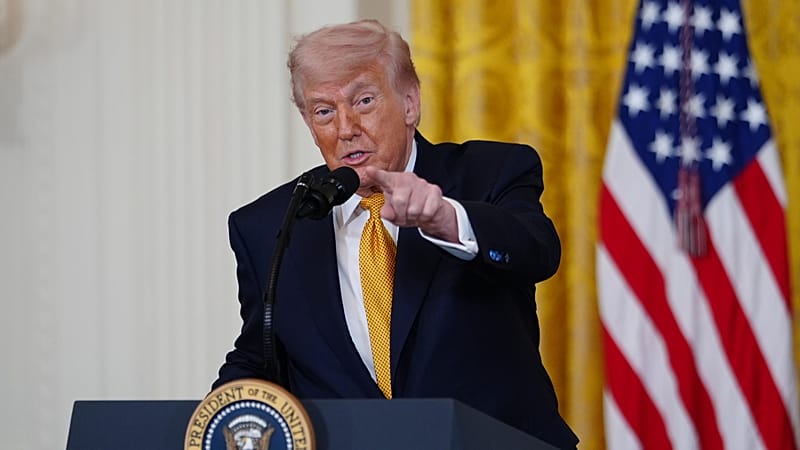
The geopolitical landscape of 2026 has just been hit by a seismic shift. In a move that blends high-stakes diplomacy with symbolic timing, US President Donald Trump has officially given the European Union until July 4, 2026, to fully implement the terms of their standing trade agreement. Failure to comply, the President warns, will result in the immediate imposition of “much higher” tariffs, potentially crippling key European industries.
This ultimatum follows a high-tension phone call between Trump and European Commission President Ursula von der Leyen. As the United States prepares to celebrate its 250th Birthday (Semiquincentennial), the White House is using the milestone as a hard deadline for what Trump describes as the “largest trade deal ever.”
The Turnberry Legacy: A Deal on the Brink
To understand the current friction, one must look back to the Turnberry Agreement struck in Scotland. This framework was hailed by the Trump administration as a revolutionary step toward reciprocal trade, aiming to slash tariffs to zero on a wide array of goods.
Under the terms of this “lopsided” deal—as some critics in Washington call it—the EU committed to removing remaining barriers on American imports. In return, the US agreed to a 15% all-inclusive tariff cap on most European products, a move intended to provide stability and prevent the “accumulation of additional duties.”
However, implementation has been anything but smooth. While the White House claims the US has fulfilled its end of the bargain, the European side has been mired in legislative delays. President Trump’s patience, it seems, has finally reached its limit.
The July 4 Deadline: Why the 250th Anniversary Matters
The choice of July 4 is no coincidence. President Trump has a long-standing flair for the dramatic and a penchant for utilizing American national holidays to frame his “America First” agenda. By setting the deadline on the US’s 250th Birthday, he is framing the trade dispute as a matter of national sovereignty and economic independence.
“I’ve been waiting patiently for the EU to fulfill their side of the historic trade deal we agreed in Turnberry,” Trump stated on social media. “A promise was made… I agreed to give her [von der Leyen] until our country’s 250th Birthday or, unfortunately, their tariffs would immediately jump to much higher levels.”
What is at Stake?
If the deadline passes without ratification, the immediate casualty will likely be the European automotive sector. The threat involves hiking tariffs on EU-made cars from the current 15% to at least 25%, and potentially higher. For German, Italian, and French automakers, this could mean billions in lost revenue and a significant loss of market share in the United States.
The Sticking Points: Greenland, Sovereignty, and Safeguards
While the European Commission remains officially committed to the deal, the European Parliament is a different story. Negotiations in Brussels have hit a wall, primarily due to a lack of trust in the stability of US commitments.
The “Greenland Clause”
The main point of contention is a demand from EU lawmakers to insert safeguards into the legislation. These safeguards are designed to trigger automatically if the US breaches joint commitments or threatens the “territorial integrity” of the bloc.
This stems from a bizarre diplomatic incident earlier this year when Trump reportedly renewed his interest in forcefully seizing Greenland from Denmark, a move that sent shockwaves through European capitals. EU legislators argue that they cannot sign a “zero-tariff” deal with a partner that might unilaterally disrupt the geopolitical order.
Member States vs. Parliament
There is a clear divide within the EU:
Member States: Countries like Germany are desperate to avoid a trade war and prefer to stick to the original wording of the Turnberry deal to ensure immediate implementation.
European Parliament: Lawmakers are more cautious, fearing that Trump will eventually demand even more concessions, specifically regarding the EU’s strict digital and environmental regulations.
The War on Regulation: Digital and Green Targets
The White House has not been shy about its disdain for Brussels’ regulatory framework. The Trump administration has repeatedly attacked the EU’s Digital Markets Act (DMA) and various Green Deal initiatives, labeling them as “hidden tariffs” designed to penalize American tech giants and energy companies.
Trump has openly called for the abolition of these regulations as part of the broader trade implementation. For the EU, these regulations are non-negotiable pillars of their internal market. This fundamental disagreement suggests that even if the tariff issue is resolved by July 4, a deeper regulatory war is just beginning.
Ursula von der Leyen’s “Deal is a Deal” Stance
Despite the pressure, Ursula von der Leyen has maintained a composed public front. Following the “great” phone call on Thursday, she expressed confidence that the pending legislation would be approved before the July deadline.
However, her rhetoric has a sharp edge. Earlier in the week, she reminded the US President that “a deal is a deal” and pointed out that under the existing 15% all-inclusive cap, the US does not have the legal right to unilaterally hike tariffs without violating international agreements.
The EU has signaled that it is “prepared for every scenario,” which is diplomatic shorthand for “we have a list of retaliatory tariffs ready to go.”
The Geopolitical Bargaining Chip: Iran and the Middle East
Interestingly, the trade talk wasn’t the only item on the agenda during the Trump-von der Leyen call. The two leaders also discussed the escalating conflict in the Middle East and the nuclear ambitions of Iran.
Trump noted that both the US and EU are “completely united that Iran can never have a nuclear weapon.” By linking trade stability to security cooperation, Trump may be looking for European concessions on Middle East policy in exchange for tariff leniency.
“A regime that kills its own people cannot control a bomb that can kill millions,” Trump remarked, a sentiment echoed by von der Leyen, who noted that the risks to global security are currently too great for internal Western division.
Economic Implications: What Happens on July 5?
If the EU fails to ratify the deal by the Fourth of July, the economic fallout will be immediate and global.
- Supply Chain Disruption: Industries relying on precision machinery, chemicals, and luxury goods will see costs skyrocket overnight.
- Market Volatility: Global stock markets, already sensitive to 2026’s geopolitical tensions, would likely see a massive sell-off in European equities.
- Inflationary Pressure: For American consumers, “much higher” tariffs mean more expensive cars, wine, and high-end consumer goods, potentially fueling domestic inflation.
The “Trump Track Record”
Many diplomats in Brussels remain skeptical that the 25% tariff will actually materialize. They point to Trump’s historical pattern: issuing a massive threat, creating a sense of crisis, and then negotiating a last-minute “victory” that allows both sides to save face.
However, with the 250th anniversary of the US serving as the backdrop, the political cost of backing down might be higher for Trump this time around.
Analysis: Is a Resolution Possible?
The path to a resolution by May 19—the date of the next major round of EU talks—is narrow but visible. If the EU member states can convince the Parliament to drop the “Greenland safeguards” in exchange for a side-letter of intent, the deal could move forward.
The real challenge lies in the zero-tariff requirement. Transitioning from a 15% cap to 0% requires massive structural changes in how the EU handles imports. It is a “historic” shift that many European farmers and manufacturers are not yet ready for.
Conclusion: A Transatlantic Crossroads
As we head toward the summer of 2026, the relationship between Washington and Brussels is at a critical crossroads. President Trump’s July 4 ultimatum is more than just a trade threat; it is a test of the EU’s unity and a demonstration of the US’s renewed willingness to use its economic might as a primary tool of foreign policy.
Whether the day will be marked by a celebratory “zero-tariff” agreement or the start of the most aggressive trade war of the 21st century remains to be seen. One thing is certain: the world will be watching the clock as it ticks down to America’s 250th Birthday.
Key Takeaways for Businesses
Monitor the May 19 Talks: This is the next indicator of whether the EU will blink or stand its ground.
Hedge Against Currency Volatility: Expect the Euro to fluctuate wildly as the July 4 deadline approaches.
- Review Supply Chains: Companies heavily reliant on EU-US trade should begin investigating alternative routes or “Plan B” logistics to mitigate potential 25% tariff hikes.