Legal Turning Point: Why Former PM Han Duck-soo’s Insurrection Sentence Was Reduced to 15 Years

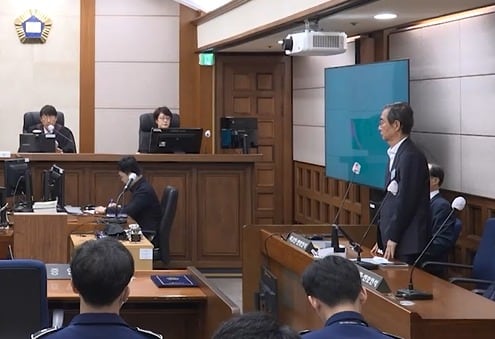
The South Korean legal landscape reached a significant milestone in May 2026 as the Seoul High Court delivered a landmark ruling regarding the role of former Prime Minister Han Duck-soo in the December 3rd martial law declaration. In a decision that has sparked widespread public debate, the appellate court reduced Han’s prison sentence from 23 years to 15 years.
This decision marks a critical shift in how the judiciary evaluates the culpability of high-ranking officials during constitutional crises. By distinguishing between “active participation” and “failure to prevent,” the court has set a new precedent for interpreting executive responsibility in the face of an “insurrection from above.”
The Appellate Court’s Rationale: Redefining Culpability
The primary driver behind the reduction in Han Duck-soo’s sentence lies in the court’s nuanced interpretation of his “failure to act.” While the initial trial court viewed the Prime Minister’s inability to stop former President Yoon’s martial law decree as a criminal omission, the Seoul High Court’s Criminal Division 12-1, presided over by Judge Lee Seung-cheol, took a more restrictive view.
The Problem of Causality
For an omission to constitute a criminal act, the law generally requires proof that the outcome could have been altered had the duty been fulfilled. The appellate court ruled that it was speculative to assume that Han’s opposition during the Cabinet meeting would have successfully halted the President’s illegal declaration. Consequently, the court acquitted Han on the specific charge of failing to prevent the martial law, viewing it as outside the scope of punishable negligence.
Rejecting the “Insurrection from Above” Narrative
The first trial had famously categorized the event as an “insurrection from above” and a “personal coup,” arguing that the shock to the democratic foundation of an advanced nation like South Korea warranted a harsher sentence than those historically handed down to former military dictators. The appellate court, however, rejected this logic. While they acknowledged that Han abandoned his duty to ensure the executive branch operated within constitutional limits, they found no concrete evidence that he had systematically conspired or led the insurrection from its inception.
What Charges Remained? The Verdict Breakdown
Despite the reduction, Han Duck-soo was not cleared of all wrongdoing. The court upheld several key convictions that continue to carry significant weight in the public eye. The following points represent the core of the 15-year sentence:
- Fabrication of Official Documents: The court maintained the guilty verdict regarding the signing of a fake martial law declaration cover, which was dated December 3rd, after the crisis had technically concluded.
- Violation of the Presidential Records Act: Han was held accountable for instructing subordinates to destroy incriminating records once the investigation into the martial law declaration began.
- False Testimony: During the Constitutional Court’s impeachment trial of former President Yoon, Han provided testimony that the court deemed false, specifically regarding his receipt and awareness of martial law-related documentation.
Interestingly, the court did grant some leniency, ruling that his testimony regarding former Defense Minister Kim Yong-hyun was not false, thereby acquitting him on that specific charge. Furthermore, the court dismissed the “delayed lifting of martial law” charge that had been pushed by the special counsel.
A Legacy of Public Service: Mitigating Factors
One of the most debated aspects of the appellate court’s ruling is the consideration of Han Duck-soo’s long career. Judge Lee Seung-cheol noted that Han has served the nation for over 50 years, receiving numerous accolades and medals throughout his tenure.
The court also highlighted a specific mitigating action: Han’s role in convening and presiding over the Cabinet meeting that ultimately led to the lifting of martial law. Because this action occurred while the National Assembly was demanding a return to normalcy, the court viewed this as a factor that helped de-escalate the crisis within six hours of its onset. This, combined with the lack of evidence for prior conspiracy, contributed to the court’s decision to move away from the “extraordinary” sentence imposed by the first trial.
The Broader Implications for South Korean Democracy
The reduction of Han’s sentence to 15 years carries profound implications for the South Korean political system. It forces the public and legal scholars to confront the difficulty of prosecuting high-level officials who operate within the shadow of an authoritarian executive.
The Limits of Executive Accountability
By ruling that an official cannot be held criminally liable for failing to prevent a superior’s illegal action unless they directly enabled it, the court has clarified the boundaries of ministerial responsibility. While some critics argue this creates a “loophole” for officials to claim they were powerless, the court insists it is merely upholding the principle of legal certainty—avoiding the criminalization of political impotence.
The Future of Legal Precedents
With this ruling, the case is likely nearing its conclusion at the Supreme Court. Because prosecutors cannot appeal for a harsher sentence solely on the grounds of “leniency,” the 15-year term is effectively the ceiling for Han’s legal exposure. This case will undoubtedly be cited for decades as a reference point for the definition of “insurrection” and the limits of the Prime Minister’s duty to check the power of the President.
Conclusion
The 15-year sentence for Han Duck-soo represents a complex compromise between acknowledging the gravity of the December 3rd incident and adhering to strict legal standards of evidence and intent. While the public remains divided on whether the sentence is sufficient given the severity of the constitutional breach, the appellate court has provided a clear, albeit controversial, framework for understanding the role of the Prime Minister in a state of emergency.
As South Korea continues to process the aftermath of the 2024 martial law crisis, the judiciary’s role in balancing justice with legal precedent remains more important than ever. The legacy of this trial will be defined not just by the length of the sentence, but by how it shapes the future conduct of public officials tasked with upholding the nation’s democratic values.