Legal Setback: Federal Court Strikes Down Trump’s Latest Global Tariff Strategy

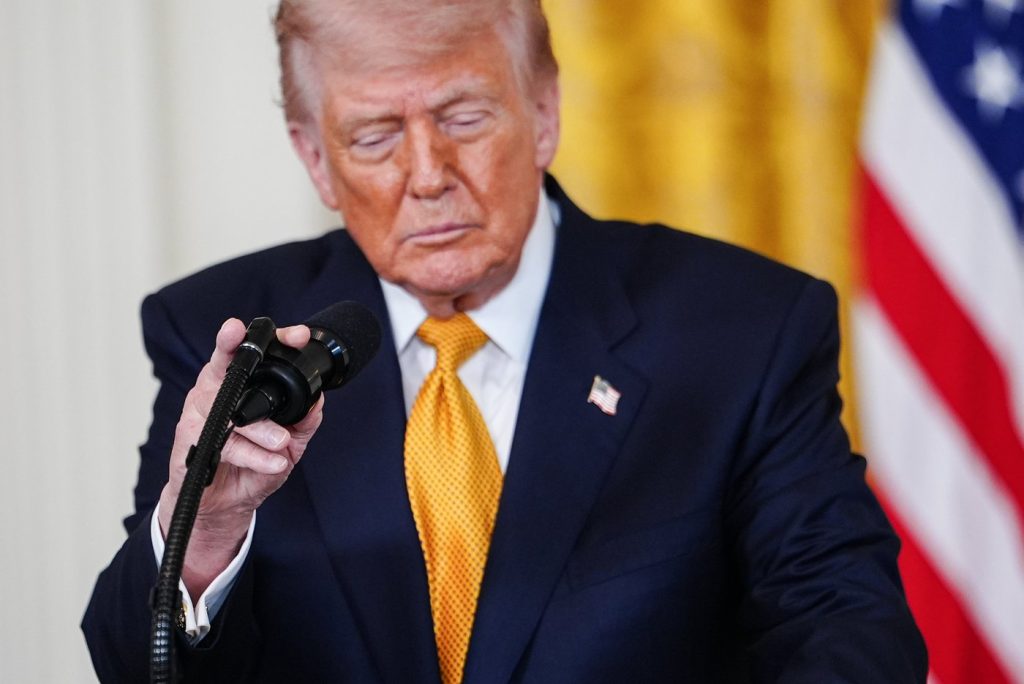
The landscape of international trade policy in 2026 has been defined by a high-stakes tug-of-war between the executive branch and the judiciary. In a landmark decision that has sent shockwaves through the global supply chain, a federal court has officially ruled against the 10% global tariffs imposed by President Donald Trump. This ruling comes as a direct response to the administration’s attempt to circumvent a previous Supreme Court defeat, marking a pivotal moment in the ongoing debate over presidential authority and the limits of trade law.
The Court’s Verdict: Overstepping Executive Power
In a split 2-1 decision, the U.S. Court of International Trade in New York found that the administration’s latest tariff regime was both “invalid” and “unauthorized by law.” The panel concluded that President Trump significantly overstepped the powers delegated to the executive branch by Congress.
For many businesses, this ruling is a breath of fresh air. The litigation, spearheaded by the Liberty Justice Center, argued that the President cannot unilaterally bypass constitutional checks and balances under the guise of national emergency. While the administration may seek to appeal this decision—likely moving the case to the U.S. Court of Appeals for the Federal Circuit—the current ruling provides immediate relief for specific plaintiffs, including the state of Washington and private companies like Burlap & Barrel and Basic Fun!.
Understanding the Legal Conflict: Section 122 vs. IEEPA
To grasp the gravity of this situation, one must look at the legal framework the administration attempted to utilize. After the Supreme Court struck down broader double-digit tariffs in February 2026—which were originally justified under the International Emergency Economic Powers Act (IEEPA)—the administration pivoted to Section 122 of the Trade Act of 1974.
The Failure of the “National Emergency” Argument
Last year, the administration invoked the 1977 IEEPA to declare the U.S. trade deficit a “national emergency.” The Supreme Court ultimately rejected this, stating that trade deficits do not constitute the type of emergency that grants the President sweeping, unchecked authority to impose taxes. By attempting to switch tactics to Section 122, the administration hoped to bypass the previous judicial scrutiny, but the Court of International Trade remained unconvinced.
The Role of Congressional Authority
The U.S. Constitution explicitly grants Congress the power to levy taxes, including tariffs. While Congress has historically delegated some of this power to the President to ensure agility in trade negotiations, the judiciary is now signaling that this delegation is not a “blank check.” The recent ruling underscores that when the President uses trade tools to reshape the economy rather than address specific, defined threats, they risk encroaching on the legislative domain.
The Economic Ripple Effect: What This Means for Businesses
The uncertainty surrounding these tariffs has created a difficult environment for importers and retailers alike. With the 10% global tariff now blocked, companies are scrambling to understand the long-term impact on their operations and potential for tax refunds.
Immediate Relief for Plaintiffs: The ruling specifically protects the plaintiffs involved in the lawsuit, preventing the collection of the 10% surcharge on their goods.
The Refund Prospect: Legal experts, including trade attorney Dave Townsend, suggest that this ruling sets a precedent. Other importers may now petition for similar relief, potentially opening the door for massive refund requests on tariffs already paid during the period the policy was in effect.
- Supply Chain Instability: Many businesses have been forced to bake these costs into their consumer prices. While the ruling is a victory for importers, the threat of future retaliatory tariffs or new executive actions keeps the supply chain in a state of flux.
Looking Ahead: Is an Appeal Inevitable?
Given the administration’s track record, an appeal is widely expected. The U.S. Court of Appeals for the Federal Circuit is the next logical stop, and legal observers anticipate that this issue will eventually make its way back to the Supreme Court.
New Investigations on the Horizon
Even while fighting this legal battle, the administration is not standing still. The Office of the U.S. Trade Representative (USTR) is currently conducting two major investigations that could lead to new, targeted tariffs:
- Overproduction Concerns: An investigation into 16 trading partners, including the EU, China, and Japan, regarding the alleged overproduction of goods that depress prices for U.S. manufacturers.
- Forced Labor Prohibitions: A massive investigation spanning 60 economies, aimed at determining whether these nations do enough to prohibit products created by forced labor.
These investigations represent a broader “shielding” strategy, where the administration seeks to protect U.S. industries from global competition by leveraging trade enforcement as a tool for economic protectionism.
Expert Analysis: The Future of Trade Policy
The tension between the White House and the judiciary is not merely a legal disagreement; it is a fundamental clash over the future of American economic policy. If the courts continue to limit presidential tariff power, the administration may be forced to work more closely with Congress to pass trade legislation. However, if the administration succeeds in winning an appeal, it could solidify a new, highly interventionist era of trade policy that prioritizes executive discretion over traditional legislative processes.
For now, businesses must remain agile. The legal landscape is shifting rapidly, and the “wall of import taxes” the administration has attempted to build remains under heavy structural pressure from the courts.
Conclusion: A Turning Point for Executive Trade Authority
The federal court’s decision to strike down the 10% global tariffs serves as a critical check on executive power. It reinforces the principle that even in the context of trade and international relations, the President must operate within the specific bounds of authority granted by Congress. As we move through the remainder of 2026, the business community will be watching the appeals process closely. Whether these tariffs are truly a thing of the past or merely a temporary hurdle for the administration remains to be seen.