Labour’s Local Election Nightmare: Reform UK Surge Sparks Leadership Crisis in 2026

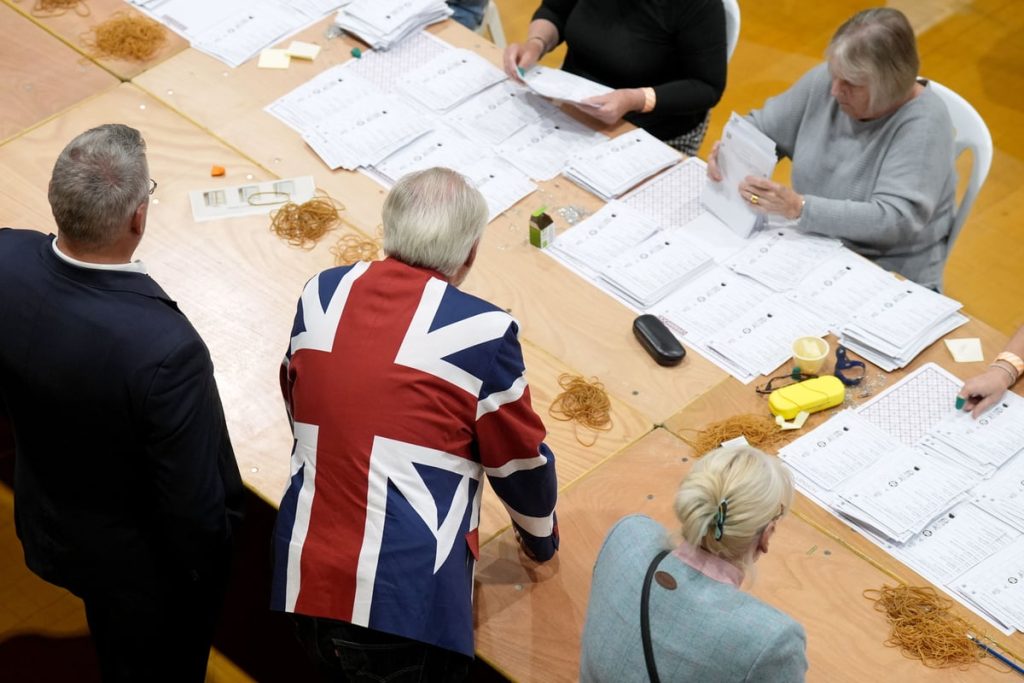
The political landscape across England has been rocked by the initial results of the 2026 local elections, as the Labour Party faces what many are calling a “political haemorrhage.” With vote counting underway, the data paints a bleak picture for Sir Keir Starmer’s administration, which appears to be losing ground in its traditional northern heartlands at an alarming rate.
As the results roll in, the narrative is shifting away from a two-party dominance toward a fragmented political arena. Reform UK, led by Nigel Farage’s momentum, is carving deep inroads into areas once considered Labour strongholds. This electoral bloodbath has immediately reignited intense speculation regarding the stability of Sir Keir Starmer’s leadership.
A “Tough” Night for Labour: Breaking Down the Losses
The expectations for these elections were already tempered by caution. Senior Labour figures had publicly described the contest as “tough,” yet the reality of the early counts has surpassed even the most pessimistic projections. Labour went into Thursday’s vote defending a significant number of seats, with experts predicting losses of up to 1,850 councillors.
Current data suggests that Labour is struggling to retain even a fraction of its defensive positions. In the first few councils to declare, the party lost 26 seats, while Reform UK surged forward with 34 gains. This shift is not just a statistical anomaly; it represents a fundamental realignment of voter sentiment in the North West and beyond.
The Northern Heartlands Pivot
The most striking aspect of these results is the erosion of Labour’s support in the North. In Halton, Cheshire, Labour managed to hold only two of the 17 seats it was defending. Conversely, Reform UK secured 15 seats, winning some wards with over 50% of the vote. Similar patterns of decline have been observed in Chorley and Wigan, signaling that the “Red Wall” is no longer the impenetrable fortress it once was for the party.
Reform UK: The “Turquoise Wave” or a Flash in the Pan?
Nigel Farage’s Reform UK is clearly the story of the 2026 local elections. By building on the successes of previous years—where the party picked up nearly 700 councillors—Reform has successfully transitioned from a protest movement into a legitimate electoral force.
Zia Yusuf, a key figure within Reform, has described the phenomenon as a “turquoise wave” sweeping across traditional Labour heartlands. The party’s strategy of targeting disaffected working-class voters seems to be paying dividends, with Reform successfully pushing Hartlepool into “no overall control” and winning a decisive eight out of nine seats in Redditch.
Why Voters are Turning Away
Several factors are likely contributing to this shift:
Economic Discontent: Persistent concerns over the cost of living and stagnant growth have left voters looking for alternatives.
Political Fragmentation: The traditional duopoly of Labour and the Conservatives is being challenged as voters feel neither party adequately represents their specific regional interests.
- The “Reform Factor”: Reform UK’s ability to campaign effectively on local issues, combined with strong messaging on immigration and national identity, is resonating with a demographic that feels ignored by Westminster.
Leadership Under Fire: Is Sir Keir Starmer’s Time Up?
The scale of these losses has inevitably turned the spotlight onto Sir Keir Starmer. Reports have surfaced that even high-ranking cabinet members, such as Energy Secretary Ed Miliband, have privately urged the Prime Minister to establish a clear timetable for his departure.
The pressure is not just coming from within the party’s internal corridors. Jonathan Brash, the MP for Hartlepool, has publicly called for the Prime Minister to address the nation and signal a leadership transition. This public dissent highlights a growing sense of panic within the Labour ranks as the party faces its worst local election performance in recent memory.
The Defense: “No Pass the Parcel”
Despite the calls for change, Deputy Prime Minister David Lammy has urged the party to remain steadfast. Speaking to the BBC, Lammy emphasized that while the party must answer difficult questions, “playing pass the parcel” with the leadership is not the solution to the challenges raised by the British public. Labour sources are also attempting to frame the current crisis by referencing 1999, hoping that history repeats itself and that the party can recover before the next general election, much like the Blair era.
The Green Surge and Liberal Democrat Consistency
While the focus remains on the Labour-Reform battle, other parties are also making significant gains. The Green Party, under the leadership of Zack Polanski, is eyeing what could be their most successful election cycle to date. The Greens have tapped into environmental concerns and local planning issues, carving out a unique niche that appeals to younger, urban voters.
Meanwhile, Sir Ed Davey’s Liberal Democrats continue to display remarkable consistency. Often described as the masters of local campaigning, the Lib Dems are eyeing an eighth successive year of gains. By focusing on hyper-local issues and maintaining a visible community presence, they have insulated themselves from the volatility currently affecting Labour and the Conservatives.
What This Means for the Future of UK Politics
The 2026 local elections serve as a bellwether for the health of the UK’s major political institutions. The decline of Labour in its heartlands, combined with the struggles of the Conservative Party, suggests that we are entering a new era of multi-party competition.
Key Takeaways for 2026:
- No Overall Control: A growing number of councils are ending up with no single party in control, reflecting a lack of confidence in the major parties.
- The Rise of the Third Way: Voters are increasingly willing to break their traditional voting habits, favoring parties like Reform UK and the Greens.
- Pressure on the Prime Minister: With Wales and Scotland yet to fully declare, the pressure on Sir Keir Starmer is expected to mount. If Labour loses the national vote in Wales—a feat not seen in over a century—the calls for his resignation will likely reach a fever pitch.
Conclusion: A Turning Point for Democracy
As the final results trickle in, the message from the electorate is clear: the status quo is no longer satisfying. Labour’s “haemorrhage” of seats is not just a temporary setback; it is a signal that the party must radically reassess its connection to the electorate. Whether Sir Keir Starmer can weather this storm or whether the party will move toward a transition of power remains to be seen.
One thing is certain: the 2026 local elections have fundamentally altered the trajectory of British politics. As Reform UK cements its position as a major disruptor and the smaller parties continue to gain ground, the days of easy majorities and predictable voting patterns appear to be a thing of the past. For the average voter, this signifies a more competitive, albeit more volatile, political environment—one where every vote truly counts toward the shifting landscape of local governance.