Labour’s 2026 Local Election Meltdown: Starmer Faces His Toughest Political Test Yet

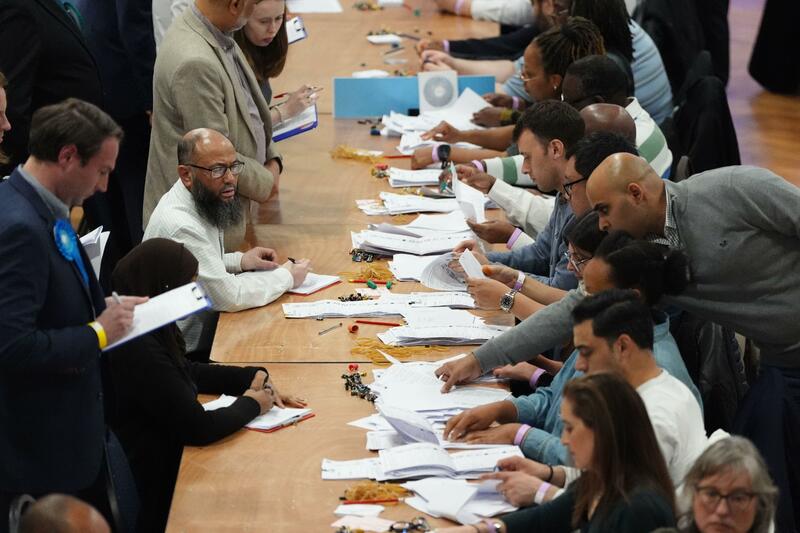
The political landscape of the United Kingdom shifted beneath the feet of the governing Labour Party this week. As the dust settles on the 2026 local elections, Prime Minister Keir Starmer finds himself at a critical crossroads. With the party shedding hundreds of council seats and losing control of key local authorities across England, the results are being described by analysts as a “catastrophic” referendum on his premiership.
Starmer, speaking from Kingsdown Methodist Church in Ealing, did not shy away from the gravity of the situation. Acknowledging that the results were “very tough,” the Prime Minister took full responsibility for the losses, vowing to “reflect and respond” rather than retreat from the challenges facing his government. However, as the final counts trickle in, the scale of the electoral rebuke suggests that the road ahead for Labour will be far more treacherous than many had anticipated.
The Anatomy of a Political Earthquake
The 2026 local elections were never going to be easy, but few predicted the sheer intensity of the anti-incumbency sentiment. Across 136 councils, Labour’s traditional strongholds—the “Red Wall” industrial heartlands—have shown a startling willingness to abandon the party in favor of alternatives.
Reform UK’s Meteoric Rise
The most significant takeaway from this election cycle is the undeniable surge of Reform UK. Under the leadership of Nigel Farage, the party has effectively dismantled the traditional left-right binary that has defined British politics for decades. By securing over 270 seats and capturing control of key councils, Reform has proven that its appeal is not just a protest vote, but a structural change in how voters interact with the ballot box.
In areas like Halton, Tameside, and Wigan, Reform’s performance was nothing short of stunning. In Tameside, a council within Deputy Prime Minister Angela Rayner’s constituency, Labour lost its majority as Reform secured 18 of the 19 seats up for grabs. This isn’t just a loss; it is an encroachment into the very DNA of Labour’s electoral coalition.
The Erosion of Labour’s Heartland
While London boroughs like Ealing and Hammersmith remained under Labour control, the party’s grip on the rest of the country is slipping. The loss of control in councils such as Redditch, Tamworth, and Exeter highlights a broader trend: voters feel that the “change” promised by Starmer’s government has either failed to materialize or is moving at a pace too slow to address their immediate economic anxieties.
Key Losses: Over 200 councillors lost in the first 40 declarations alone.
Strategic Failure: Labour’s attempt to “level with the public” regarding the state of public finances has backfired, with voters interpreting honesty as a lack of vision or hope.
- The “Pass the Parcel” Warning: Despite calls from within his own cabinet—most notably from Energy Secretary Ed Miliband—for a timeline on his departure, Starmer remains defiant.
Analyzing the 2026 Electoral Map
The electoral data reveals a fragmented Britain. While the Liberal Democrats have continued their steady march, picking up seats in suburban areas and taking control of councils like Stockport and Portsmouth, the Conservatives appear to be stuck in a state of suspended animation. Despite a slight improvement in Kemi Badenoch’s approval ratings, the Tories are still losing ground to Reform, struggling to maintain their relevance in a landscape dominated by the fallout from Labour’s fiscal policies.
The Role of the Greens and Lib Dems
The Green Party, under Zack Polanski, is celebrating what they describe as “record-breaking” results. By capturing voters disillusioned with Labour’s environmental and social policies, the Greens are carving out a niche that makes it increasingly difficult for Labour to maintain a broad-tent coalition. Similarly, the Liberal Democrats have successfully leveraged local issues to consolidate power, proving that in a volatile political climate, local campaigning still carries significant weight.
Starmer’s Path Forward: Resilience or Reckoning?
Prime Minister Starmer is currently facing a dual challenge: the external pressure from opposition parties and the internal pressure from his own party members. When asked if he had considered resigning, his answer was a firm “no.”
“I was elected to meet those challenges, but I’m not going to walk away,” Starmer told broadcasters. His strategy for the coming days involves a pivot: he plans to outline specific, tangible steps to deliver the change voters are demanding. However, the question remains whether the public still has the patience to wait for these changes to take effect.
The “Reflection” Phase
Labour’s leadership is now in a period of intense reflection. Sources within the party are pointing to the historical precedent of 1999, when Tony Blair lost over 1,000 councillors only to secure a landslide victory two years later. Whether this is a valid comparison or a case of “coping” remains to be seen. The modern political environment is much more volatile, and the rise of a third-party force like Reform UK changes the calculus entirely.
Implications for the Future of UK Politics
The 2026 local elections are more than just a mid-term setback; they are a signal that the British electorate is in a state of flux. The traditional binary of Labour versus Conservative is being challenged by a multi-polar system where regional, single-issue, and populist parties hold the balance of power.
- The End of the Old Order: As Nigel Farage noted, the “left-right” divide is increasingly irrelevant in the eyes of many voters.
- The Pace of Change: The government’s failure to translate fiscal stability into tangible improvements in the cost of living has become its greatest political liability.
- The Leadership Question: While Starmer has vowed to stay, the pressure from his cabinet and the electorate will only mount as the results from Scotland and Wales are finalized.
Conclusion: A Turning Point for the PM
The results of the 2026 local elections will likely be remembered as the moment the Starmer government lost its momentum. While the Prime Minister has taken responsibility, words alone will not win back the hundreds of thousands of voters who walked away from the party this week.
To survive, Labour must move beyond acknowledging that things are “tough.” It must demonstrate that it has a clear, actionable, and empathetic plan to improve the daily lives of citizens. If the party fails to pivot, the “historic change” heralded by Reform UK may well be the precursor to a much larger political shift in the upcoming national elections. The clock is ticking, and for Keir Starmer, the window to prove his leadership is closing rapidly.