Hackney’s New Green Mayor: Why Voters Are Abandoning the Traditional Two-Party System

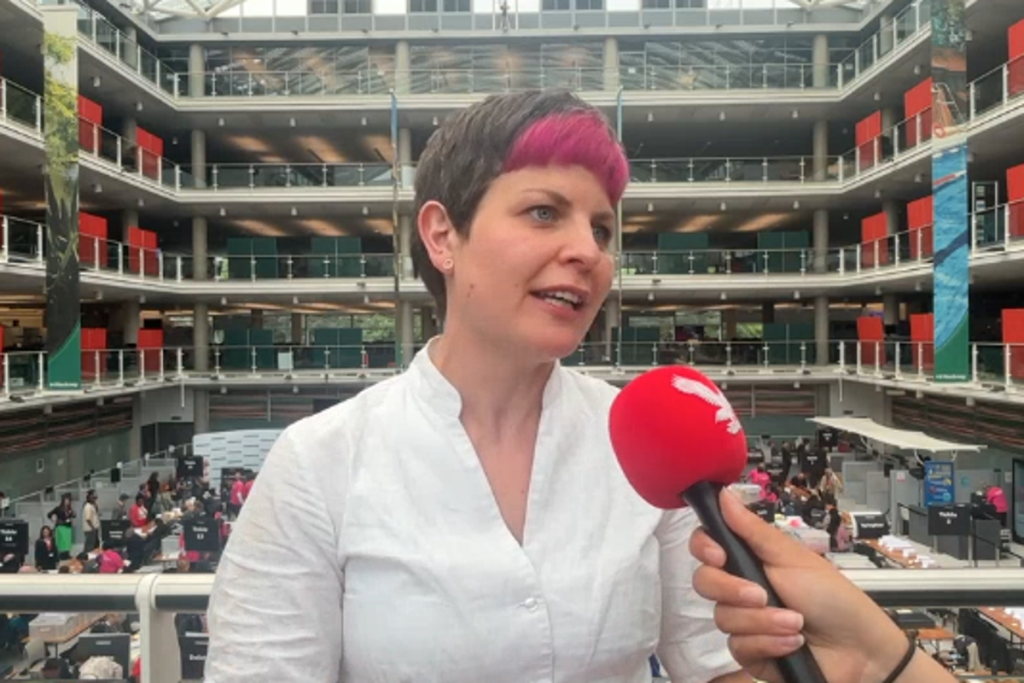
The political landscape of London has undergone a seismic shift. In a result that has sent shockwaves through Westminster and beyond, Zoë Garbett has been elected as Hackney’s first-ever Green Mayor, ending nearly a quarter-century of Labour dominance in the borough. This isn’t just a local victory; it is a clear signal that the British electorate is fatigued by the status quo and is actively seeking a viable alternative to the traditional two-party establishment.
For 24 years, Hackney was considered an impenetrable “Red Fortress.” However, the 2026 local elections have proven that no seat is safe when voters feel their concerns are being ignored. With a decisive mandate, Garbett’s victory marks a turning point in urban politics, positioning the Green Party not just as a “protest vote,” but as a serious governing force.
The Numbers Behind the Historic Win
The scale of the victory was more significant than many political analysts predicted. Zoë Garbett secured the mayoralty with 35,720 votes, comfortably unseating the incumbent Labour Mayor, Caroline Woodley, who received 26,865 votes.
The breakdown of the results highlights a diversifying political field:
- Zoë Garbett (Green Party): 35,720 votes (47.2%)
- Caroline Woodley (Labour): 26,865 votes
- Tareke Gregg (Conservatives): 6,345 votes
- Vahid Almasi (Reform UK): 4,013 votes
This victory represents a massive 47.2% share of the vote for the Greens in one of London’s most diverse and politically active boroughs. The shift indicates that the “safe seat” era is over, as residents prioritize local issues, climate action, and social equity over historical party loyalty.
“People Want an Alternative”: The Garbett Manifesto
Speaking after her victory, Zoë Garbett was clear about what this win represents. She noted that voters are no longer satisfied with the “old establishment parties” and are looking for a fresh approach to local governance.
“I am really excited to show what we can do here as a Green Council in Hackney and what that means for London and for the country,” Garbett stated. “Every time we’ve had Greens elected in Hackney, people have seen what we can deliver, and this is just a part of that growing and continuing story.”
Why Hackney Chose Green
The Green Party’s platform resonated with a population struggling with the cost-of-living crisis, rising rents, and environmental concerns. Garbett’s campaign focused on:
Housing Justice: Implementing stricter controls on rogue landlords and pushing for genuine rent caps.
Air Quality and Transport: Expanding low-traffic neighborhoods (LTNs) while ensuring they are implemented with community consent and social equity in mind.
Transparent Governance: Moving away from “top-down” decision-making and involving residents directly in how the borough’s budget is spent.
Is the Two-Party System “Dead and Buried”?
The 2026 elections have been a wake-up call for both Labour and the Conservatives. Zack Polanski, the leader of the Green Party, has been vocal about the implications of the Hackney result. He declared that Britain’s traditional two-party politics is “dead and buried,” citing the rise of multi-party representation across the UK.
The Decline of the Labour Stronghold
For decades, Labour relied on boroughs like Hackney as reliable vote banks. However, the 2026 results suggest a “pincer movement” is affecting the party. On one side, the Green Party is siphoning off progressive, younger, and environmentally-conscious voters. On the other, Reform UK is making inroads into traditional working-class areas, as seen by Vahid Almasi’s fourth-place finish with over 4,000 votes.
The Conservative Struggle in London
The Conservatives, represented by Tareke Gregg, managed only 6,345 votes, continuing a downward trend for the party in inner-city London. The inability of the Tories to offer a compelling vision for urban centers has left a vacuum that the Greens have successfully filled.
The “Garbett Effect”: A New Era for Hackney Council
Zoë Garbett is not a newcomer to Hackney politics. Having served as a councillor and previously run for London Mayor, she has built a reputation for being a “boots-on-the-ground” politician. Her transition to the Mayor’s office signifies a shift from opposition to executive responsibility.
Challenges Ahead for the New Mayor
While the victory is historic, the road ahead is fraught with challenges:
- Budgetary Constraints: Like many London boroughs, Hackney faces significant financial pressure. Garbett will need to balance her ambitious social programs with the reality of a tightening council budget.
- Housing Demand: Hackney remains one of the most expensive places to live in the UK. The new Mayor’s promise to “change the system” will be tested by the complexities of the London property market.
- Collaborative Governance: While Garbett holds the mayoralty, she must work with a council that still contains a significant number of Labour representatives. Navigating this political friction will be essential for passing legislation.
National Implications: From Hackney to Westminster
The Green win in Hackney is being viewed as a “seed-bed” for future growth. If the Greens can prove that they can govern a major London borough effectively, it provides a blueprint for parliamentary seats in the next General Election.
A Growing “Green Empire”?
Political analysts are debating whether Hackney is a “walled garden”—a unique demographic anomaly—or the start of a “new green empire.” The success of the Greens in 2026 suggests the latter. Across the country, the party gained hundreds of new councillors, proving that their message of sustainability and social justice has broad appeal beyond the “eco-warrior” stereotype.
The Message to Keir Starmer
The loss of Hackney is a personal blow to the Labour leadership. It suggests that the party’s shift toward the center has alienated its core progressive base in the capital. To win back these voters, Labour may be forced to adopt more radical environmental and social policies, effectively being pulled to the left by the Green Party’s success.
The Role of Grassroots Campaigning
One of the most striking aspects of the Hackney campaign was the grassroots mobilization. Unlike the heavily funded campaigns of the establishment parties, the Greens relied on a massive network of volunteers and local activists.
Community Engagement: Garbett’s team spent months door-knocking, not just during the election cycle but throughout the year.
Digital Savvy: The campaign utilized social media to target younger demographics who feel disenfranchised by traditional political broadcasts.
Authenticity: Voters cited Garbett’s “genuine” nature and her background in health and social care as reasons for their trust.
What This Means for London’s Future
With a Green Mayor in Hackney, London’s political dynamic has changed. We can expect to see:
More Radical Climate Policies: Hackney is likely to become a testbed for innovative green technologies and urban rewilding projects.
A Focus on Wellbeing: Garbett has often spoken about a “wellbeing economy,” focusing on the health and happiness of residents rather than just economic growth metrics.
Greater Accountability: With a first-ever Green Mayor, the eyes of the nation will be on Hackney. Every success and failure will be scrutinized as a measure of the party’s ability to lead.
Conclusion: A Turning Point in British Politics
The election of Zoë Garbett as Hackney’s Mayor is more than just a local news story; it is a manifesto of change. It proves that when voters are offered a clear, principled alternative, they are willing to break decades of political tradition.
As we move further into 2026, the “Hackney Model” will be closely watched. If Garbett can deliver on her promises of housing reform, environmental protection, and community-led governance, the Green Party may well become the primary alternative to the two-party system across the United Kingdom.
The message from Hackney is loud and clear: The era of taking voters for granted is over. People want an alternative, and in Zoë Garbett, they believe they have found one.
Key Takeaways from the 2026 Hackney Mayoral Election:
Zoë Garbett (Green) defeated Caroline Woodley (Labour) by nearly 9,000 votes.
This marks the first Green mayoralty in Hackney and the first in London.
Voter turnout reflected a deep-seated desire for an alternative to the Labour/Conservative duopoly.
The Green Party’s focus on housing, air quality, and social justice was the primary driver of their success.
The result signals a national trend where smaller parties are gaining significant ground in traditional strongholds.