Historic Shift: Reform UK Stuns Establishment in 2026 Local Elections

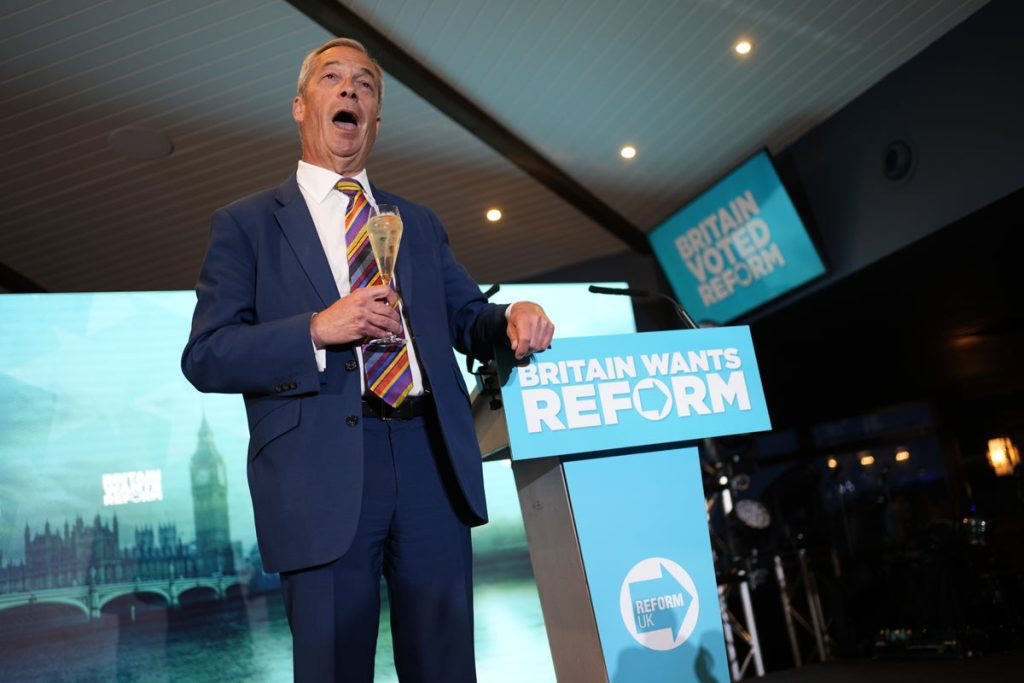
The landscape of British politics underwent a seismic transformation this week as the 2026 local elections delivered results that many are calling “the mother of all protest votes.” As the dust settles on a tumultuous count, the narrative is dominated by one figure: Nigel Farage. His party, Reform UK, has achieved what was previously considered impossible, shattering the traditional two-party duopoly and forcing a radical re-evaluation of the UK’s political future.
With Reform UK securing over 1,200 council seats and taking control of key local authorities, the political establishment is reeling. Meanwhile, the Labour Party, currently in government, faces an existential crisis after suffering catastrophic losses in England, Wales, and Scotland.
A “Truly Historic Day” for Reform UK
Nigel Farage, addressing supporters in a buoyant atmosphere, did not mince his words. He declared the results a “truly historic day,” asserting that Reform UK had not only dismantled the so-called “Red Wall” but had also made deep, unprecedented inroads into the “Blue Wall” of Conservative strongholds.
The party’s success was not merely a regional fluke. Reform UK’s performance demonstrates a nationwide surge in support, fueled by widespread voter dissatisfaction with the status quo. By capturing control of councils across the country, from Essex to Havering, the party has moved from a fringe protest movement to a legitimate governing force at the local level.
Why Voters Are Flocking to Reform
The surge is attributed to a combination of factors:
Economic Anxiety: Voters are signaling deep frustration with the ongoing cost-of-living crisis.
Policy Disillusionment: A perceived failure by both Labour and the Conservatives to address immigration, public services, and infrastructure.
- The “Protest” Factor: Many voters are opting for a “plague on both your houses” approach, choosing Reform as a vehicle to punish the major parties.
Labour’s “Crushing Defeat” and the Starmer Dilemma
For Prime Minister Sir Keir Starmer, the 2026 local elections have been nothing short of a nightmare. Labour has lost hundreds of councillor seats and relinquished control of over 30 councils, including the Birmingham City Council, which had been under Labour leadership for 14 years.
The atmosphere within the Labour camp is one of panic and introspection. While senior figures like Rachel Reeves and Darren Jones have rallied around the Prime Minister, calling for a “collective effort” to deliver on their mandate, others are breaking ranks. Prominent voices within the party are now openly questioning whether Sir Keir Starmer can lead them into the next general election.
The Welsh Disaster
Perhaps the most stinging rebuke arrived from Wales, where Labour lost its grip on the Senedd. First Minister Eluned Morgan’s loss of her seat was a symbolic and practical blow, marking the first time a sitting Welsh leader has failed to secure re-election. Plaid Cymru has emerged as the largest party, leaving the political future of the Welsh government in a state of flux.
The Green Surge: A New Alternative?
While the spotlight has remained firmly on Reform UK, the Green Party has quietly—and effectively—capitalized on Labour’s weakness. By winning the Hackney mayoral election and gaining control of councils like Norwich and Waltham Forest, the Greens are proving that they are a viable alternative for voters who feel abandoned by traditional progressive platforms.
The rise of the Greens, coupled with the success of Reform UK, suggests that the UK is entering a new era of multi-party politics. As Zak Polanski noted from the Hackney count, “Two-party politics is not just dying, it is dead and it is buried.”
Scotland: The SNP Holds Firm
While Labour struggled, the Scottish National Party (SNP) managed to weather the storm, holding onto key constituencies in the Scottish Parliament. First Minister John Swinney declared the result an “emphatic” victory, signaling that the SNP remains the dominant force in Scottish politics despite the broader national wave of dissatisfaction.
However, the relationship between Edinburgh and London appears to have hit an all-time low. Swinney has issued a stark warning to Downing Street, suggesting that the UK government has “a lot of listening to do” if they wish to maintain a functional, respectful partnership with the devolved administration.
Analysis: The Road Ahead for British Politics
The 2026 local election results serve as a definitive wake-up call. The electorate is no longer content with the binary choice of Labour versus Conservative. Instead, we are seeing a fragmentation of the political landscape, where localized issues and populist movements are driving the agenda.
Can Starmer Survive?
The calls for a resignation timetable are becoming louder. While loyalists argue that changing the leader now would plunge the country into chaos, the sheer scale of the electoral defeat makes the status quo difficult to maintain. If Labour cannot demonstrate a clear, rapid shift in policy and delivery, the “existential threat” mentioned by Sadiq Khan may well become a reality.
The Reform Challenge
For Nigel Farage, the challenge is now to transition from a protest movement to a party of professional governance. Winning council seats is one thing; managing the complex budgets and local services of an entire local authority is quite another. How Reform UK handles this transition will dictate their long-term viability as a national political entity.
Conclusion
The 2026 local elections will be remembered as the moment the British public fundamentally rejected the traditional political order. With Reform UK’s historic gains, the collapse of Labour’s Welsh heartlands, and the rise of the Green Party, the message to Westminster is clear: the people are unhappy, impatient, and looking for a radical change in direction.
As we look toward the months ahead, the focus will be on whether the current government can adapt or if the momentum generated by these elections will lead to an early general election. One thing is certain: the era of predictable two-party dominance is over, and the political map of the United Kingdom has been redrawn.