May Elections Live: Kemi Badenoch Rejects Reform Pacts as Voters Head to the Polls

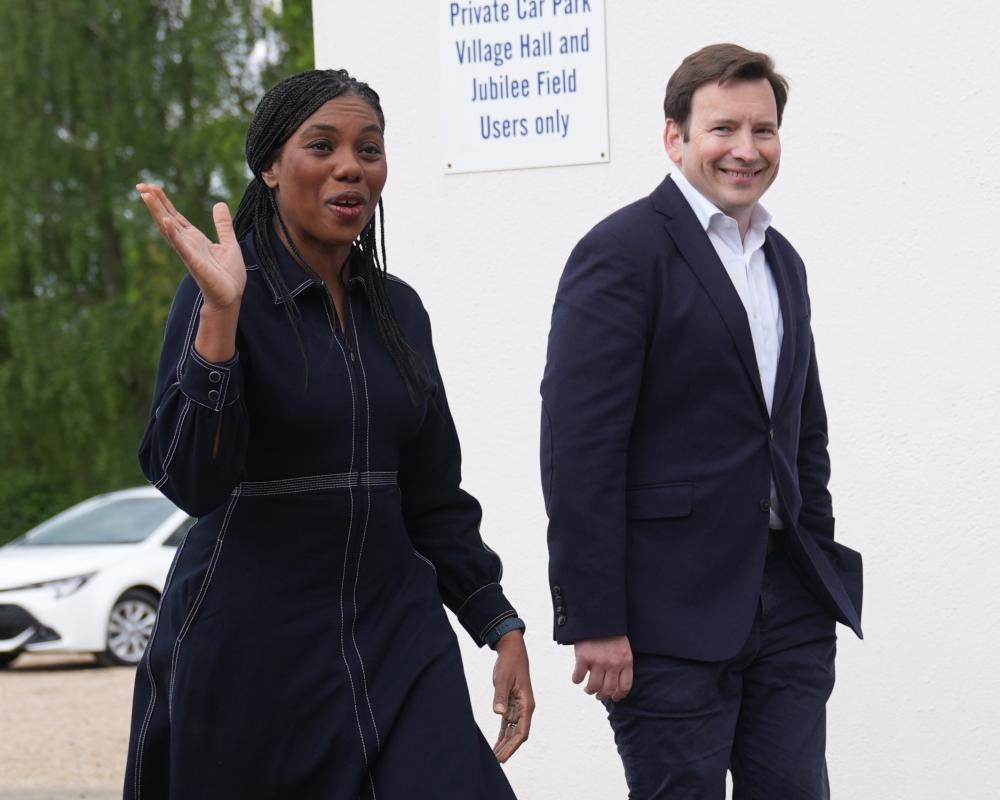
The political landscape of the United Kingdom is currently undergoing a seismic shift as millions of voters across England, Scotland, and Wales head to the polls today. In what many are calling a defining moment for British governance and the future of Westminster politics, the rhetoric has reached a fever pitch. Conservative leader Kemi Badenoch, previously seen as open to the possibility of right-leaning local alliances, has performed a dramatic U-turn, explicitly ruling out formal pacts with Reform UK.
As the nation waits anxiously for the local elections results, the atmosphere is charged with tension. With the Conservative Party fighting to maintain its relevance, the rise of Nigel Farage’s Reform UK, and Labour’s attempts to consolidate power, these elections are not just about local council seats—they are a referendum on the future of the British right.
The Badenoch Pivot: Why the Reform Pacts Are Off the Table
For weeks, speculation has swirled regarding the potential for a “United Right” strategy, a key element of various campaign strategies. Kemi Badenoch initially hinted that local Conservative councillors might find common ground with their Reform counterparts to implement right-wing policies. However, in a sharp departure from that stance, the Tory leader has now firmly closed the door on such cooperation.
“Not Serious” Players
In an interview with The Sun, Badenoch clarified that there would be no official tie-ups with Reform UK. Her reasoning was blunt: she does not view the party as a “serious” political entity among the established political parties. By labeling Reform as a collection of individuals previously expelled from the Conservative ranks, Badenoch is attempting to draw a clear ideological boundary.
This tactical withdrawal is likely an attempt to stabilize the Tory base. By distancing the party from Reform, Badenoch hopes to reclaim the “moderate” vote while simultaneously painting Reform as a chaotic, protest-driven movement rather than a viable party of government.
The Stakes: A High-Pressure Election Day
Across the UK, the stakes could not be higher. In England, roughly 5,000 council seats and six mayoral positions are up for grabs. Meanwhile, Scotland is electing 129 MSPs for the Holyrood parliament, and Wales is selecting 96 members for the Senedd, both key devolved administrations, under an expanded electoral system.
Key Trends to Watch
- The Reform Surge: Having made significant gains in previous cycles, Reform UK is aiming to dismantle long-standing Conservative majorities, particularly in key battlegrounds like counties such as Essex, Norfolk, and Suffolk.
- Liberal Democrat Resilience: The Lib Dems are positioning themselves as the primary challengers to the Tories in key areas like Hampshire and West Sussex, aiming to end decades of Conservative control.
- Labour’s Defensive Strategy: Prime Minister Keir Starmer has spent the final hours of the campaign warning voters against the “division” offered by his opponents, with opinion polls suggesting a tight race in many areas, casting the election as a choice between progress and instability.
The Financial Controversy: Farage Under Scrutiny
While the polling stations remain open, the narrative has been complicated by revelations regarding Nigel Farage’s personal finances. Analysis of the register of MPs has revealed that Farage’s income since entering Parliament has hit the £2 million mark, excluding his parliamentary salary.
This disclosure has provided fodder for his political opponents, who are using it to question the “man of the people” persona that Reform UK often projects. Conversely, supporters of Farage argue that his outside earnings are a testament to his influence and reach, though the timing of the report—on election day—could prove to be a distraction for the party as they push for final votes.
Gordon Brown and the “Gift” Debate
Adding an unexpected layer of historical context to the day, a new biography of former Prime Minister Gordon Brown has sparked a debate on political integrity. Author James Macintyre highlights Brown’s strict refusal to accept gifts or personal enrichment while in office, contrasting this with modern political standards.
This discussion has inevitably bled into the current campaign, with Keir Starmer facing scrutiny over his own acceptance of gifts, such as clothing and spectacles. The comparison serves as a reminder that the electorate is increasingly sensitive to the optics of wealth and privilege among the political class.
The Role of International Observers
In an unprecedented move, the Council of Europe has deployed a 17-strong delegation to monitor the proceedings in England, Scotland, and Wales. This marks the first time that devolved elections in Holyrood and Cardiff Bay have been subjected to such scrutiny.
The delegates, hailing from nations including Switzerland, Germany, and Poland, are tasked with observing not just the mechanics of the vote, but also the “general political situation.” Their final report will likely influence future discussions on electoral reform and democratic standards in the UK, adding an extra layer of weight to these already consequential elections.
The View from the Party Leaders
The final messages from party leaders highlight the deep fragmentation in British politics:
Keir Starmer (Labour): Emphasized unity and the necessity of Labour councils working alongside a Labour government to solve the cost-of-living crisis.
Kemi Badenoch (Conservative): Focused on “better services and lower taxes,” warning that a vote for anyone else would lead to “chaos.”
John Swinney (SNP): Called for a “fresh start with independence,” urging Scots to use their votes to lock Reform out of power.
Rhun ap Iorwerth (Plaid Cymru): Promoted a message of “compassion and credibility,” positioning his party as the true voice of Welsh interests.
- Ed Davey (Lib Dems): Framed the election as a battle against “Trump-style politics,” urging voters to protect their communities from Reform’s influence.
Analysis: What Happens After the Polls Close?
Regardless of the final numbers, the political landscape will be fundamentally altered by tomorrow morning. If the Conservatives suffer the “wipeout” many political analysts predict, the pressure on Badenoch to either move further to the right or reconcile with the Reform-leaning faction of her party will become immense.
If Reform UK succeeds in capturing the “heartland” seats they are targeting, we may see a permanent realignment of the British right. The days of a two-party duopoly are clearly fading, replaced by a more volatile, fragmented, and ideologically diverse field.
The “No Overall Control” Scenario
Political analysts like Sam Freedman suggest that several county councils are poised to move into “no overall control,” a scenario often influenced by voter turnout. This will lead to a period of intense negotiation and potential coalition-building. Even though Badenoch has ruled out national pacts, local politics often follow a different set of rules. The real question is whether local Conservative and Reform councillors will be willing to defy their national leadership to secure influence in their local town halls.
Conclusion: A Turning Point for Britain
As the polls close across the country, the UK stands at a crossroads. The rhetoric has been aggressive, the stakes are high, and the potential for a major upset is palpable. Whether it is the formal end of long-standing Conservative majorities or the emergence of a new power dynamic in the Senedd and Holyrood, these elections will set the tone for the remainder of the political term.
The voters have had their say. Now, the long night of counting begins, and with it, the potential to upend the status quo. Keep watching for real-time updates as the results trickle in—the next 24 hours will define the future of the UK for years to come.