Global Health Alert: 5 U.S. States Monitoring Passengers from Hantavirus-Stricken Cruise Ship

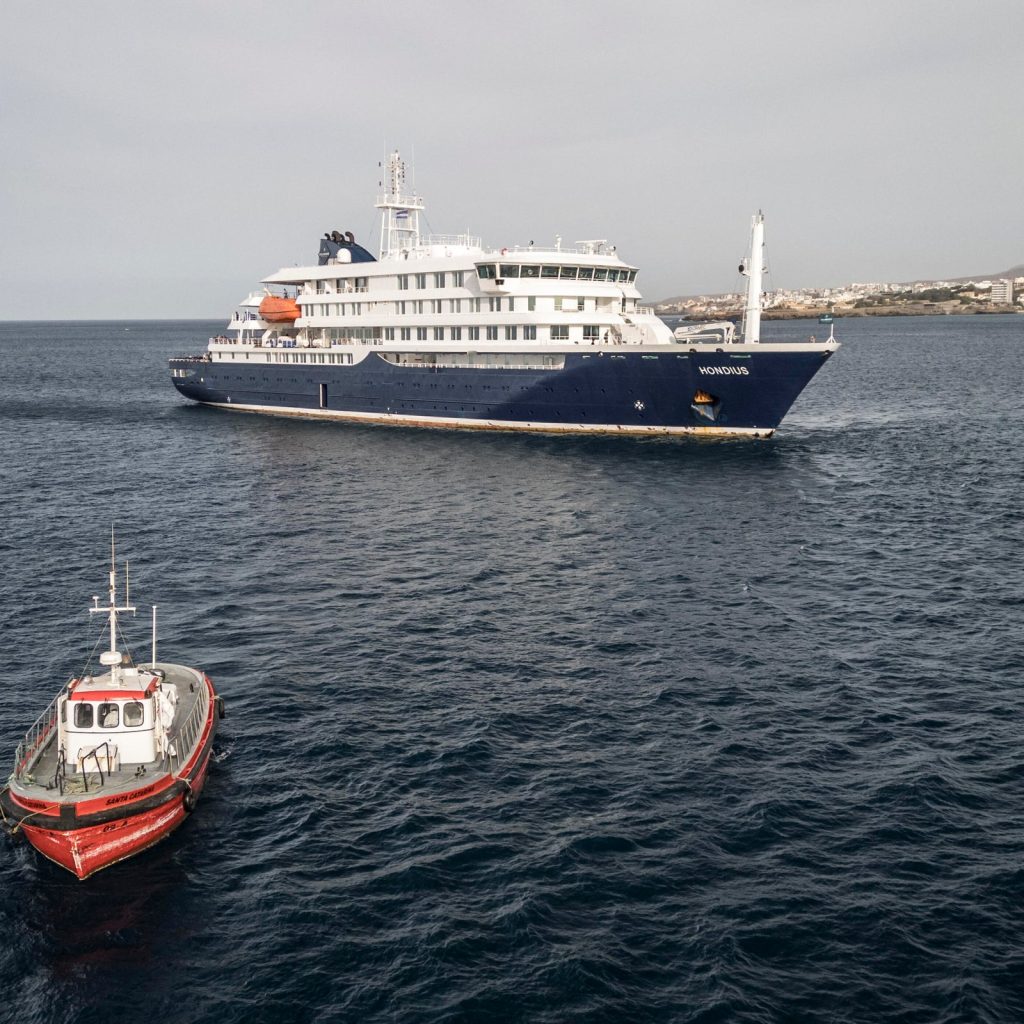
The year 2026 has brought a startling reminder of the complexities of global health security. What began as a luxury expedition to the remote reaches of the South Atlantic has transformed into a high-stakes international tracing effort. Health officials in the United States and across the globe are currently scrambling to monitor passengers who disembarked from the MV Hondius, a cruise ship now at the center of a rare and deadly hantavirus outbreak.
As of May 2026, the situation has escalated following the confirmation that the virus circulating on the vessel is the Andes strain—a specific variant notorious for its ability to spread through human-to-human transmission. This revelation has triggered emergency protocols in at least five U.S. states, as authorities race against a 42-day incubation window to prevent a domestic outbreak of the respiratory illness.
The U.S. Response: Five States on High Alert
The Centers for Disease Control and Prevention (CDC) has been working tirelessly with state health departments to locate and monitor individuals who were aboard the MV Hondius before the full scale of the outbreak was realized. Currently, five U.S. states have officially confirmed they are tracking residents for signs of the disease.
Arizona: The 42-Day Countdown
In Arizona, public health officials held a press conference to address the presence of one known passenger within the state. According to Dr. Joel Terriquez, medical director of infectious disease and prevention for Northern Arizona Healthcare, the CDC notified the state on May 5. The individual is being monitored for a full 42 days from their date of departure from the ship. While the risk to the general public remains low, the length of the monitoring period reflects the cautious approach required for hantavirus.
Texas and Georgia: Multiple Passengers Under Surveillance
Texas and Georgia have each reported that they are monitoring two passengers. In Texas, health departments are conducting daily check-ins to ensure that these individuals do not develop the high fever or respiratory distress associated with the virus. Georgia officials have mirrored this vigilance, emphasizing that while the passengers are currently asymptomatic, the Andes strain’s unique transmission profile necessitates strict observation.
Virginia and California: Expanding the Search
Virginia has confirmed one passenger is under monitoring, while California health departments have acknowledged an unspecified number of travelers who returned from the South Atlantic voyage. The challenge for California, given its massive international travel hubs, is ensuring that any secondary contacts are also aware of the potential risks, though officials maintain that “close and prolonged contact” is usually required for transmission.
Understanding the Andes Strain: Why This Outbreak is Different
To understand the severity of the current situation, one must look at the virology of the hantavirus. Most strains of hantavirus, such as the Sin Nombre virus common in the American Southwest, are contracted through direct contact with rodent droppings, urine, or saliva. However, the Andes strain (ANDV), which originated in the mountainous regions of Argentina and Chile, is the only hantavirus known to spread between humans.
The Mechanism of Human-to-Human Transmission
According to Dr. Tedros Adhanom Ghebreyesus, Director-General of the World Health Organization (WHO), transmission of the Andes virus typically occurs through:
Close household contact (sharing living spaces).
Intimate partnerships.
Medical care environments where personal protective equipment (PPE) may be insufficient.
The fact that this strain was identified on a cruise ship—a confined environment characterized by shared dining areas and ventilation systems—has raised the stakes for epidemiologists. The WHO confirmed that the strain identified in the current outbreak matches the variant found in the Chubut and Río Negro provinces of Argentina.
The Timeline of a Tragedy: How the Outbreak Unfolded
The MV Hondius departed from Ushuaia, Argentina, on April 1, 2026. Among the passengers was a Dutch couple who had spent months bird-watching in South America. It is believed they may have been exposed to the virus in rural areas of Argentina or Chile, where the long-tailed pygmy rice rat—the primary carrier of the Andes virus—is prevalent.
The First Fatalities
The tragedy began to unfold on April 11, when the Dutch husband died on board. At the time, his symptoms were mistaken for common respiratory issues, and no hantavirus samples were taken. This delay in diagnosis allowed the ship to continue its journey toward the remote island of Saint Helena.
On April 24, thirty guests disembarked at Saint Helena, unaware that the virus was circulating among them. Among those who left was the wife of the deceased Dutch man. Her health deteriorated rapidly during a flight from Saint Helena to Johannesburg on April 25. Despite attempts to board a KLM flight to return home, she was deemed too ill to fly and tragically passed away in South Africa the following day.
The Confirmation of Hantavirus
It wasn’t until a British man was evacuated to South Africa on April 27 that medical teams finally confirmed the presence of hantavirus on May 4. This confirmation set off a global “contact tracing” race involving 12 countries, including Singapore, Switzerland, and the United Kingdom.
The Global Tracing Effort: 12 Countries on the Hunt
The WHO has identified a dozen nations that are currently monitoring individuals linked to the MV Hondius. The list includes:
- United States
- Canada (3 asymptomatic individuals in Ontario and Quebec)
- United Kingdom (2 individuals self-isolating)
- Germany
- The Netherlands
- Switzerland (1 confirmed positive case of the Andes strain)
- Singapore
- New Zealand
- Denmark
- Sweden
- Turkey
- Saint Kitts and Nevis
In Canada, health ministers have confirmed that two of the monitored individuals disembarked in Saint Helena, while a third was on the same flight as the Dutch woman who died in South Africa. This highlights the complex web of exposure that occurs when passengers from a single vessel disperse across the globe via international air travel.
The Current Status of the MV Hondius
As of mid-May 2026, the MV Hondius is navigating the waters off the West Coast of Africa, traveling north toward the Canary Islands. However, the ship’s arrival has been met with significant local resistance.
Standoff in the Canary Islands
The Mayor of Granadilla de Abona in Tenerife, José Domingo Regalado, has vocally rejected the ship’s arrival at the port of Granadilla. “What we ask is that action be taken… so that they can quarantine and be treated by their own health systems,” Regalado stated, citing a lack of “common sense” in bringing potentially infected passengers to a major tourist hub.
In response, Canarias President Fernando Clavijo announced that the ship would be allowed to anchor off the coast but would not be permitted to dock. This “floating quarantine” ensures that those remaining on board—including a British crew member and several German and Dutch passengers—remain isolated until they are cleared by maritime health authorities.
Argentina’s Role and Expertise
Argentina has stepped forward as a critical partner in managing the crisis. Given that the Andes strain is endemic to their southern regions, the Argentine Health Ministry has offered its technical capacity and resources to the international community.
Interestingly, the ministry noted that while the ship departed from Ushuaia (Tierra del Fuego), no hantavirus cases have ever been reported in that specific region since 1996. This suggests the exposure likely occurred during the couple’s pre-cruise bird-watching travels through the Chubut or Río Negro provinces, rather than at the port of departure. Argentina’s experience with “pulse-echo” monitoring of hantavirus outbreaks is now proving invaluable to the CDC and WHO.
Symptoms and Prevention: What the Public Needs to Know
While health experts like Dr. Céline Gounder emphasize that the pandemic risk is low—noting that hantavirus does not spread with the ease of influenza or COVID-19—the high mortality rate makes every case a priority.
Early Warning Signs
Hantavirus Pulmonary Syndrome (HPS) typically begins with:
Fatigue and Fever: Sudden onset of high temperature.
Muscle Aches: Particularly in the large muscle groups (thighs, hips, back).
Gastrointestinal Issues: About half of patients experience nausea, vomiting, or abdominal pain.
As the disease progresses (usually 4 to 10 days after the initial phase), the “late symptoms” appear, which include coughing and shortness of breath as the lungs fill with fluid.
Why the Risk Remains “Low” for the General Public
The CDC maintains that for the average citizen in Arizona, Texas, or Virginia, the risk of contracting the virus from these monitored passengers is negligible. The Andes strain requires prolonged, intimate contact for transmission. Simply passing someone in a grocery store or sitting in the same room is generally not enough to facilitate the spread of the virus.
The Impact on the Cruise Industry in 2026
The MV Hondius incident has reignited debates over health protocols on expedition cruises. Unlike massive Caribbean liners, expedition ships often travel to incredibly remote areas like Saint Helena or the Antarctic Peninsula, where advanced medical facilities are non-existent.
Oceanwide Expeditions, the owner of the Hondius, has faced scrutiny for allowing 30 passengers to disembark at Saint Helena after the first death had already occurred on board. This decision has highlighted a “gap” in maritime health reporting where respiratory deaths are not always immediately flagged as biothreats.
Moving forward, industry experts predict:
Mandatory Viral Screening: Rapid testing for high-risk pathogens before disembarking at remote ports.
Enhanced Quarantine Suites: Redesigning expedition ships to include better isolation capabilities.
- Stricter Travel History Disclosure: Requiring passengers to list specific rural regions visited prior to boarding.
Conclusion: A Test of Global Health Systems
The monitoring of passengers in five U.S. states is more than just a local health precaution; it is a test of whether the post-pandemic global health infrastructure of 2026 is functioning as intended. The coordination between the WHO in Geneva, the CDC in Atlanta, and local doctors in Northern Arizona demonstrates a level of synchronized response that was often lacking in previous decades.
While we wait for the 42-day monitoring period to conclude for the American travelers, the story of the MV Hondius serves as a somber reminder of the “One Health” connection between wildlife, human travel, and global safety. For now, the focus remains on the survivors and the hope that the Andes strain has met its match in the modern vigilance of public health officials.