Tragedy in the Fireworks Capital: 26 Dead and 61 Injured in Massive Liuyang Factory Explosion

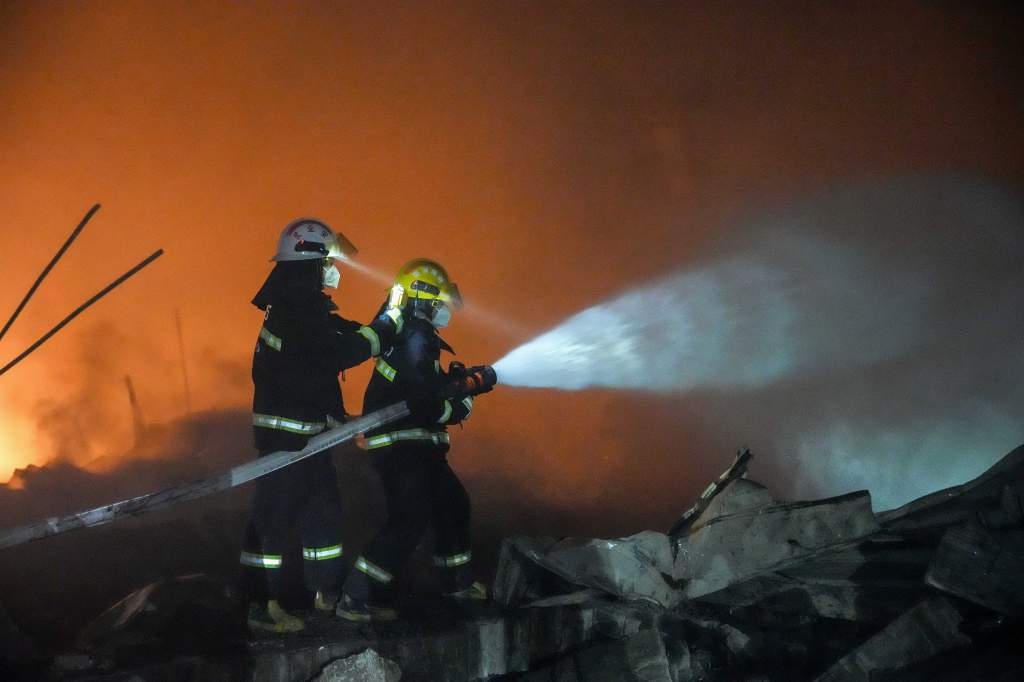
The rhythmic peace of May 2026 was shattered in central China earlier this week as a catastrophic explosion ripped through a prominent fireworks manufacturing facility. The incident, which occurred in the heart of the world’s fireworks production hub, has left a community in mourning and raised urgent questions about industrial safety standards in high-risk sectors.
As of the latest reports from Guandu Town in Liuyang, at least 26 people have been confirmed dead, while 61 others are battling injuries in local hospitals. The blast at the Huasheng Fireworks Manufacturing and Display Co. has not only halted production but has also triggered a massive humanitarian and technological rescue response.
The Afternoon the Sky Turned Dark: How the Blast Unfolded
On a Monday afternoon that began like any other in the industrial outskirts of Changsha, the capital of Hunan province, a series of thunderous detonations leveled several structures within the Huasheng facility. The force of the explosion was so immense that it caused blown-out walls, shattered columns, and a total collapse of the factory roof, effectively trapping workers inside and blocking primary exit routes.
Witnesses described a scene of absolute chaos as thick plumes of smoke rose over the Liuyang skyline. The facility, known for its high-volume production of pyrotechnics, became a labyrinth of fire and debris. Local authorities were forced to act immediately, recognizing that the presence of secondary black powder warehouses posed an imminent threat of further “random blasts.”
A High-Tech Rescue: Drones and Robots Lead the Charge
In a testament to China’s evolving emergency response capabilities in 2026, the search and rescue operation saw an unprecedented deployment of technology. More than 1,500 rescue workers arrived on the scene, but the volatility of the site necessitated a “tech-first” approach to minimize further loss of life among first responders.
The Role of 18 Drones and Specialized Robots
Because the site was littered with unexploded gunpowder and unstable architectural ruins, the Changsha Emergency Management Bureau deployed:
18 specialized drones equipped with thermal imaging to locate survivors through thick smoke.
Robotic units designed to navigate debris and monitor air quality for toxic fumes.
Advanced sensors to detect structural shifts in the remaining buildings.
Ding Weiming, the party secretary of the bureau, emphasized that the continuous random blasts made it nearly impossible for human crews to enter certain zones during the first few hours. The drones provided a literal “eye in the sky,” allowing commanders to map out the safest paths for medical personnel and police.
The Human Toll and Government Accountability
The casualty count has sent shockwaves through the region. With 26 confirmed fatalities, the process of victim identification remains a grim and ongoing task. Changsha Mayor Chen Bozhang held an emotional press conference, expressing “deep remorse” and extending a formal apology to the victims’ families.
“We feel extremely pained,” Chen stated, acknowledging the failure in oversight that led to such a tragedy. The person in charge of Huasheng Fireworks Manufacturing and Display Co. has been detained by police as investigators sift through the charred remains of the factory to determine the exact cause of the ignition.
Evacuations and Public Safety
Fearing that the heat from the initial fire could trigger the nearby black powder storage units, authorities ordered the immediate evacuation of nearby residents. All fireworks and firecracker manufacturers in Liuyang—a city whose economy is intrinsically tied to pyrotechnics—have been ordered to cease operations indefinitely while safety audits are conducted.
Liuyang: A History Written in Gunpowder
To understand the impact of this disaster, one must understand the significance of Liuyang. This county-level city is globally recognized as the birthplace of fireworks. The legacy dates back to the Tang Dynasty (618–907 C.E.), where a monk named Li Tian is credited with inventing the first firecracker near Liuyang.
Li Tian’s discovery—that filling hollow bamboo stems with gunpowder produced a blast capable of warding off evil spirits—transformed the region into a cultural and industrial powerhouse. Today, this heritage is a multi-billion-dollar business.
Economic Stakes of the Global Fireworks Trade
China remains the undisputed leader in pyrotechnic exports. Data from the Observatory of Economic Complexity highlights the scale:
- Global Dominance: China accounts for more than two-thirds of all global fireworks sales.
- Export Value: In the previous year alone, the country exported $1.14 billion worth of fireworks.
- Local Impact: In Liuyang, thousands of families depend on this industry for their livelihoods, making the shutdown orders economically painful even as they are necessary for safety.
Recurrent Hazards: A Pattern of Industrial Accidents
Despite advancements in technology, the fireworks industry in Hunan province has struggled with safety consistency. This 2026 tragedy follows a similar, albeit smaller, incident in June 2025, where an explosion killed nine people.
The recurring nature of these accidents has caught the attention of the highest levels of government. Chinese President Xi Jinping has issued a directive for “all-out efforts” in the current rescue and recovery mission. More importantly, he has called for a fundamental overhaul of public safety management systems and more effective risk screening to prevent the “random blasts” that have become a hallmark of these disasters.
Analysis: Why Do Fireworks Explosions Persist in 2026?
As we look at the wreckage of the Huasheng plant, several factors emerge that complicate industrial safety in the pyrotechnics sector:
Volatility of Raw Materials: Unlike modern electronics or textile manufacturing, fireworks production involves inherently unstable chemical compounds that react to heat, friction, and static electricity.
Aging Infrastructure vs. Modern Demand: While some plants are state-of-the-art, others operate in older facilities where “blown-out walls” are a structural risk during even minor accidents.
Supply Chain Pressures: With over $1 billion in exports, the pressure to meet global demand for New Year and national holiday celebrations can sometimes lead to lapses in rigorous safety protocols.
Looking Ahead: The Path to Reform
The Liuyang explosion serves as a somber reminder that industrial progress must be matched by a commitment to human life. The 2026 disaster is expected to trigger the strictest safety crackdown in the history of Hunan province.
Moving forward, the industry may see a shift toward:
Automated Manufacturing: Reducing the number of human workers in high-risk “mixing” zones.
Stricter Zoning Laws: Moving gunpowder warehouses further away from residential areas and manufacturing floors.
- Real-time Monitoring: Implementing IoT (Internet of Things) sensors in every warehouse to detect temperature spikes before ignition occurs.
As the families of the 26 deceased begin the long process of mourning, the global community watches to see if this will be the turning point for an industry that brings joy to millions but often at a devastating local cost.