EEOC vs. The New York Times: The Landmark Discrimination Lawsuit Reshaping Corporate DEI

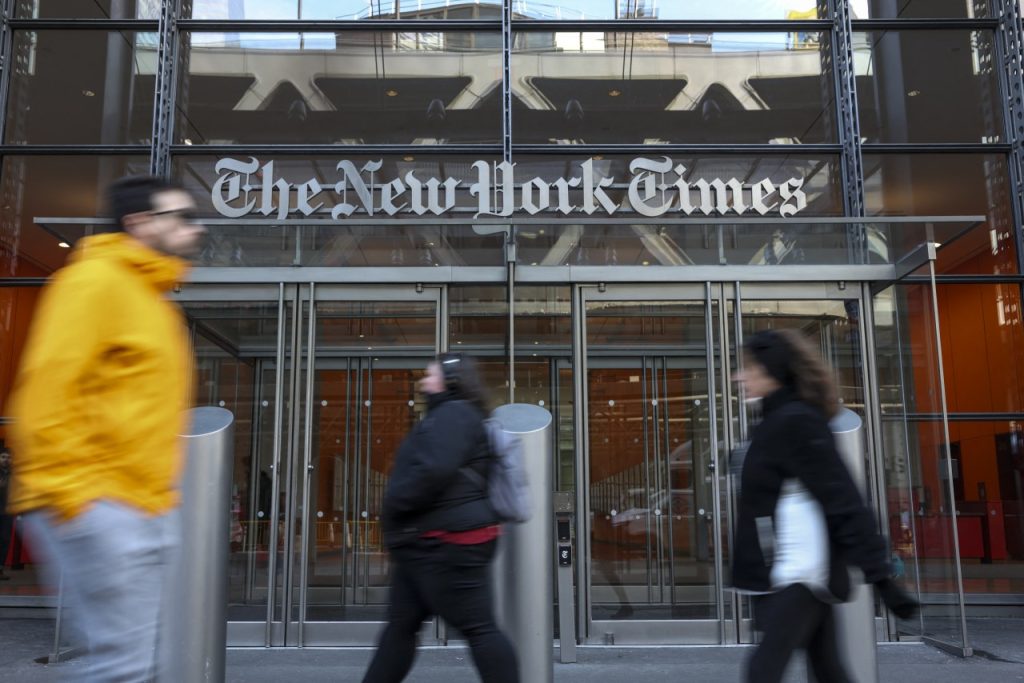
The landscape of American corporate culture is undergoing a seismic shift in 2026. In a high-stakes legal battle that pits the federal government against one of the world’s most influential media institutions, the Equal Employment Opportunity Commission (EEOC) has officially sued The New York Times. The lawsuit alleges that the newspaper bypassed a qualified white male staffer for a promotion, favoring a less experienced nonwhite female candidate as part of its internal Diversity, Equity, and Inclusion (DEI) initiatives.
This litigation represents a critical moment in the ongoing national debate regarding corporate diversity policies, meritocracy, and the boundaries of employment law. As the Trump administration continues to dismantle federal and corporate DEI frameworks, this case serves as a bellwether for how the judiciary will interpret “race and sex-conscious” hiring practices moving forward.
The Core Allegations: What Happened at The Times?
The EEOC’s complaint, filed in Manhattan federal court, centers on a specific promotion cycle from early 2025. According to the federal watchdog, a longtime editor with deep expertise in real-estate coverage was systematically excluded from the selection process for a deputy real-estate editor role.
Key Points of the Complaint:
Exclusion from Consideration: The agency asserts that the employee, despite his extensive experience, was barred from final interview panels.
The “Diversity Hire” Claim: The lawsuit alleges that the newspaper prioritized the hiring of an external candidate—a nonwhite woman—who reportedly possessed fewer qualifications than the internal male candidate.
Systemic Bias: The EEOC argues that this decision was not an isolated incident but a direct result of the New York Times’ commitment to race and gender-conscious decision-making, which the government now views as a violation of Title VII of the Civil Rights Act.
The New York Times has categorically rejected these claims, characterizing the suit as “politically motivated.” A spokeswoman for the publication emphasized that their employment practices are strictly merit-based, aiming to recruit the best talent available globally, and vowed to defend the company vigorously in court.
The Trump Administration’s Anti-DEI Agenda
This lawsuit is not an isolated event; it is a calculated execution of a broader policy agenda. Under the leadership of EEOC Chair Andrea Lucas, the agency has undergone a strategic pivot. Since the inauguration of President Trump’s second term, the administration has moved aggressively to dismantle institutionalized diversity programs.
The Legislative Pushback
On his first day of his second term, President Trump signed an executive order explicitly ending government-mandated diversity initiatives. Chair Lucas, who has been a vocal critic of modern DEI frameworks, has frequently signaled that any corporate program offering preferences based on protected categories—such as race, gender, or national origin—is inherently unlawful.
By encouraging white men who feel sidelined by these policies to file formal charges, the EEOC is effectively crowdsourcing the evidence needed to challenge corporate HR departments across the country. This strategy has already led to investigations into major corporations, including Nike and various regional distributors, over their networking and hiring practices.
The Legal and Cultural Implications
The clash between the New York Times and the EEOC raises profound questions about the future of workplace equity. If the court rules in favor of the EEOC, it could trigger a massive wave of litigation against companies that utilize demographic targets or “conscious” hiring practices.
The Shift Toward “Color-Blind” Hiring
Proponents of the EEOC’s current stance argue that the 1964 Civil Rights Act was designed to prevent discrimination against all individuals, regardless of race or sex. They contend that modern DEI programs often cross the line from “equal opportunity” to “equal outcome,” which they argue is a form of reverse discrimination that penalizes merit.
Conversely, corporate leaders and civil rights groups argue that these programs are essential for correcting historical imbalances and ensuring that organizations reflect the diverse demographics of the United States. The New York Times case will likely force the courts to define the precise legal threshold where a diversity initiative becomes an act of illegal discrimination.
Broader Tensions: The Pentagon and the Press
This legal battle is further complicated by the existing friction between the New York Times and the federal government. The newspaper is currently embroiled in separate litigation against the Department of Defense regarding press access rules.
With the administration pushing for stricter oversight of media access at the Pentagon—a move the Times claims violates the First and Fifth Amendments—the lawsuit over employment practices is being viewed by some observers as a continuation of a larger “war of attrition” between the current administration and legacy media outlets.
What Lies Ahead?
As we move further into 2026, the legal discovery process in this case will be under intense public scrutiny. The EEOC is seeking a permanent injunction against the Times, along with back pay for the aggrieved employee and punitive damages.
For HR departments and corporate legal teams, the message is clear: the regulatory environment has changed. The “diversity-first” era of corporate hiring is facing its most significant legal challenge in decades. Whether this case results in a settlement or a landmark Supreme Court-bound decision, the outcome will undoubtedly dictate how American companies navigate the balance between inclusivity and the letter of the law for years to come.
Why This Matters for Professionals
Meritocracy vs. Representation: The debate highlights the tension between two competing philosophies of organizational health.
Legal Risk Management: Corporations are now forced to re-evaluate their HR playbooks to ensure that diversity goals do not expose them to federal litigation.
Transparency in Hiring: The lawsuit forces a spotlight on the often opaque world of internal promotion panels, demanding greater transparency in how candidates are selected.
Ultimately, the New York Times case is about more than just one editor’s career—it is about the soul of American corporate culture and whether the principles of equality can be applied in a way that satisfies both legal mandates and the desire for a diverse, representative workforce.