Beyond the Bargaining Table: Why the Irish Language Must Be Central to a New Ireland

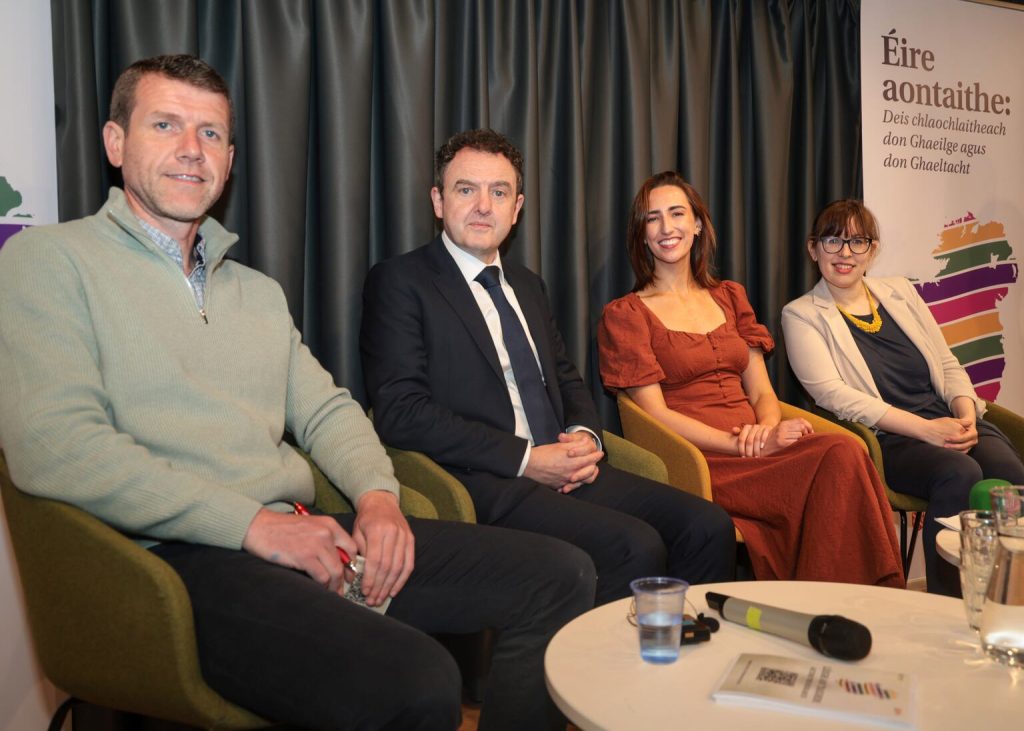
As discussions regarding a potential united Ireland gain momentum in 2026, the political landscape is shifting. Amidst these high-stakes conversations, a critical debate has emerged concerning the status of the Irish language (An Ghaeilge). A groundbreaking report, A United Ireland: A Transformative Opportunity for the Irish Language and Gaeltacht, has challenged the prevailing narrative, arguing that the language must never be treated as a “bargaining chip” in constitutional negotiations.
Commissioned by Conradh na Gaeilge and authored by researcher Róisín Nic Liam of Queen’s University Belfast, the report marks a pivotal moment in how we conceptualize the cultural and political future of the island. By moving away from regressive framing, the report advocates for a rights-based, transformative approach that positions Irish speakers as architects of a new, inclusive state.
The Danger of “Bargaining Chip” Politics
For too long, the Irish language has been subjected to a “regressive and negative lens” in political discourse. Academics and senior politicians have, at times, suggested that the language should be “de-emphasized” or sidelined to facilitate political consensus. This perspective treats the cultural heritage of thousands as a symbolic concession to be traded away in exchange for political stability.
Róisín Nic Liam argues that this mindset is fundamentally flawed. By framing the language as a hurdle rather than an asset, policymakers risk repeating the failures of the past. Since the partition of Ireland, both the North and the South have struggled to adequately support Gaeltacht communities and Irish-language speakers. A united Ireland represents a “historic opportunity” to break this cycle of neglect.
A Rights-Based Vision for a New Ireland
The report, launched at the Séamus Heaney Centre at Queen’s University, calls for a fundamental reset. Instead of waiting for political parties to dictate the status of the language, the Irish-language community is encouraged to articulate its own progressive vision.
Key Pillars of the Proposed Vision:
Constitutional Equality: Moving beyond symbolic gestures to ensure the language is protected through robust human rights legislation.
Active Participation: Positioning the Gaeltacht and Irish-speaking communities as “integral architects” of the new political arrangement.
- Addressing Historical Marginalization: Using the transition to a united Ireland as a mechanism to end centuries of oppression against Irish speakers.
Professor Colin Harvey, a leading expert in human rights law at Queen’s University, underscored that constitutional change should be viewed as a generational opportunity for genuine equality. This is not just about linguistics; it is about human rights and the right of citizens to live their lives through their chosen language.
Reframing the Debate in 2026
In 2026, the conversation around Irish unity is more complex than ever. The report highlights that the “ideological split” often associated with the language—where it is sometimes incorrectly categorized as a binary political issue—must be challenged. Historical evidence, such as the discovery of World War I soldiers from Belfast who were both Protestant and Irish-speaking, proves that the language has a diverse, non-sectarian history.
Ciarán Mac Giolla Bhéin, President of Conradh na Gaeilge, stated that the organization hopes this report serves as a “major catalyst” for change. By shifting the focus from political transactionalism to a rights-based framework, the community can ensure that a new Ireland is built on a foundation of respect and inclusivity.
The Role of the Gaeltacht
The Gaeltacht regions remain the heartbeat of the language. However, these areas have often been left behind in economic and policy planning. The report argues that a united Ireland must prioritize the sustainability of these regions. This means:
- Investment in infrastructure that supports Irish-speaking communities.
- Educational reform that fosters a bilingual society across the entire island.
- Legal protections that ensure Irish-language users have equal access to state services, regardless of their location.
Why Language Framing Matters
The psychology of framing is powerful. When politicians refer to the Irish language as a “concession,” they normalize the idea that the language is an optional luxury. Conversely, when it is framed as a fundamental right, it shifts the social norm toward inclusivity.
The report suggests that the language should be a bridge, not a barrier. By embracing the Irish language as a shared cultural asset, a new Ireland can foster a more progressive identity that honors the past while looking toward a pluralistic future.
Conclusion: A Transformative Opportunity
The call to action is clear: the Irish language community must no longer be passive spectators in the unity debate. By asserting their own demands and presenting a coherent, rights-based vision, they can ensure that the future of Ireland is one where the language is protected, celebrated, and integrated into the very fabric of the state.
As negotiations for a potential united Ireland continue to evolve in 2026, the message from the Séamus Heaney Centre is a stark reminder to all stakeholders: the Irish language is not a bargaining chip; it is an essential component of the island’s cultural identity and a vital element of a fair, equitable, and democratic future.