Trump’s Indiana Purge: How the President Reshaped the State Senate Over Redistricting

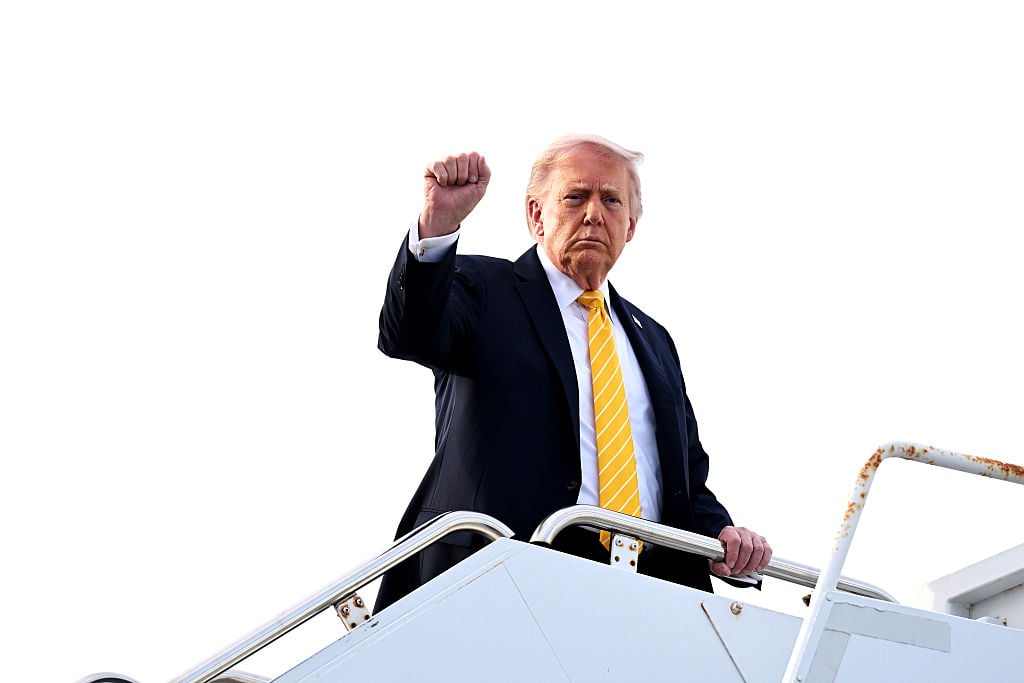
The political landscape in Indiana underwent a seismic shift this week, serving as a stark reminder of the enduring influence President Donald Trump wields over the Republican Party. In a series of high-stakes primary contests, Trump-backed challengers successfully unseated five incumbent Republican state senators. The core of this “revenge campaign” stems from a fierce battle over redistricting that took place late last year, signaling that defiance of the President’s strategic vision carries a steep political price.
For observers of American politics, these results are more than just local primary outcomes; they represent a litmus test for the “America First” movement heading into the 2026 midterms. As the GOP navigates its path toward securing congressional majorities, Indiana has become the primary theater for testing whether the grassroots base will prioritize loyalty to Trump over long-standing legislative traditions.
The Roots of the Conflict: A Failed Redistricting Push
The tension between the White House and the Indiana State Senate began in December, when a proposal to redraw the state’s congressional maps was brought to the floor. The goal of the administration was clear: maximize the GOP’s structural advantage in the state’s nine congressional districts, potentially eliminating the two remaining Democratic seats.
Despite the Republican Party holding a massive 40–10 supermajority in the state Senate, the redistricting measure hit a wall. In a surprising display of independence, 21 Republican senators joined forces with all 10 Democrats to block the plan. This collective defiance did not go unnoticed. President Trump immediately labeled these holdouts as “RINOs” (Republicans in Name Only) and promised that their opposition would be met with primary challenges.
Why the Redistricting Fight Mattered
Redistricting is the lifeblood of congressional power. By redrawing district lines, parties can consolidate their influence or dilute the opposition’s voting power. For the Trump administration, the Indiana maneuver was not just about state politics; it was a broader national strategy. By pushing for mid-decade map adjustments in states like Texas, Ohio, and North Carolina, the White House aimed to create a robust firewall against Democratic gains in the upcoming 2026 midterms.
The “Trump Effect” on Indiana Primaries
The primary election results held on Tuesday proved that the President’s endorsement remains the most potent currency in Republican politics. Of the seven candidates hand-picked by Trump to challenge the incumbent “holdouts,” five emerged victorious. This sweep effectively purged a significant portion of the legislative bloc that had dared to stand in the way of the redistricting push.
The victory was celebrated by key Trump allies in the state, including U.S. Representative Jim Banks and Governor Mike Braun. For these leaders, the results were a clear mandate from the Hoosier electorate. Banks described the night as a “big win for MAGA,” asserting that the voters preferred representatives who were aligned with the President’s agenda rather than those who sought to maintain the status quo.
Financial Implications: The Cost of a Primary Battle
The intensity of these races was reflected in the record-breaking spending. According to data from the tracking firm AdImpact, the primary cycle saw approximately $13.5 million poured into these state Senate races. This is a staggering increase from the less than $300,000 spent just two years prior.
This massive influx of capital highlights the “D.C.-style” politics now permeating state-level contests. As outgoing state Senator Travis Holdman noted, the trend suggests that Indiana is no longer immune to the high-dollar, high-stakes warfare typically reserved for federal elections. The financial escalation is likely to continue as the 2026 midterm cycle intensifies.
Analyzing the Broader National Strategy
The Indiana results provide a roadmap for how the President intends to handle dissent within the party. By focusing on primary challenges, the White House is signaling that the internal party structure is being recalibrated to ensure total alignment with the “America First” platform.
A Warning to Other States
The strategy utilized in Indiana is not an isolated incident. Across the country, Republican-led states are facing pressure to optimize their district maps. The success of the “revenge campaign” in Indiana sends a clear message to lawmakers in other states: crossing the President on structural, procedural, or legislative matters will lead to an organized effort to replace them at the ballot box.
Upcoming Challenges
The momentum from the Indiana victories will likely carry over into other high-profile contests. The President has already set his sights on other long-standing critics within the party, including Senator Bill Cassidy of Louisiana and Representative Thomas Massie of Kentucky. These upcoming races will serve as the next barometer for Trump’s influence as he attempts to solidify his control over the GOP’s legislative wing.
Conclusion: What This Means for 2026
The outcome in Indiana confirms that the Republican base remains deeply tethered to President Trump’s vision. For the incumbents who lost their seats, the lesson is painful: legislative independence is often viewed as political disloyalty by the party’s current primary voters.
As the 2026 midterms approach, the GOP is undergoing a profound transformation. The focus on redistricting and the willingness to spend millions to unseat “RINOs” demonstrates a party that is increasingly aggressive in its pursuit of power. While some traditionalists may lament the shift toward more confrontational tactics, the results in Indiana prove that, for now, the President’s strategy is delivering exactly what he promised: a party that acts in lockstep with his demands.
The next few months will be critical as the political fallout from these primaries settles. Whether this trend of aggressive primary challenges will lead to a stronger, more unified Republican Party in 2026 or create further internal friction remains to be seen. However, one thing is certain: the era of the “Trump Primary” is in full swing, and no Republican lawmaker is safe from the reach of the President’s political machine.