Maya Gebala’s Fifth Surgery a Success: A Milestone in Her Long Road to Recovery

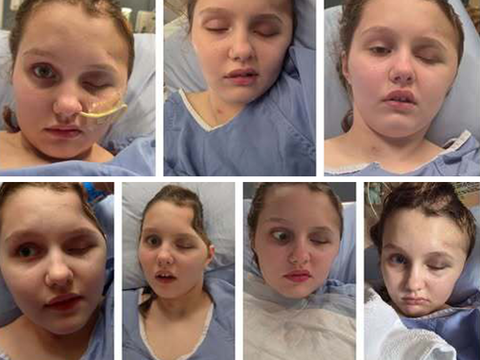
The journey of Maya Gebala, a resilient survivor of the tragic mass shooting in Tumbler Ridge, B.C., has captured the hearts of Canadians and supporters worldwide. After months of grueling medical challenges, her family has shared a long-awaited glimmer of hope: Maya has successfully completed her fifth surgery, a complex cranioplasty that her parents believe could finally be the last.
As of 2026, the progress made by this young survivor continues to serve as a testament to both modern medical intervention and the enduring strength of the human spirit.
A Breakthrough Procedure: The Cranioplasty Success
On Monday, the surgical team at BC Children’s Hospital in Vancouver performed what the family hopes is the final step in Maya’s reconstructive journey. The primary goal of the procedure was the installation of a prosthetic skull piece to replace the missing bone flap, a necessity following the severe brain trauma she sustained during the February 10, 2024, shooting incident.
The Father’s Report: Signs of Resilience
David Gebala, Maya’s father, took to social media shortly after the operation to share the encouraging news. He noted that despite the surgery taking longer than expected—due to the surgical team’s meticulous approach to ensuring the implant was placed perfectly—the outcome was positive.
“We were amazed to see Maya open her eye and lift her head to look around, showing incredible strength so soon after such a major procedure,” David wrote. Throughout the following day, Maya exhibited a “pre-surgery spark,” squeezing her parents’ fingers and displaying curiosity, which doctors view as a vital sign of neurological recovery.
Understanding the Medical Challenges: Hydrocephalus and Pressure
The road to this fifth surgery was fraught with complications. In the weeks leading up to the procedure, Maya’s family observed alarming fluctuations in the area where her skull flap was missing. The site would swell and deflate, causing significant concern for her medical team.
Why the Prosthetic Matters
The installation of the prosthetic barrier is designed to do more than just protect the brain; it is intended to:
Regulate Intracranial Pressure: By providing a rigid structure, the prosthetic helps manage the flow of cerebral spinal fluid.
Resolve Hydrocephalus: The family is optimistic that by restoring the skull’s integrity, the pressure will normalize, potentially negating the need for a shunt—a secondary device that would require further surgery.
- Relieve Facial Pressure: Her mother, Cia Edmonds, noted that the pressure had previously caused Maya to struggle with opening her left eye. The family hopes the new barrier will alleviate this, perhaps even allowing for a smile.
The Ongoing Recovery Process
While the news of the successful cranioplasty is cause for celebration, the Gebala family remains cautiously optimistic. They acknowledge that while there are no immediate signs of the infections Maya battled in previous months, medical recovery is rarely a linear path.
The Role of the External Ventricular Drain (EVD)
To ensure the surgical site heals without complications, Maya is currently equipped with an external ventricular drain. This device is a critical tool for managing pressure changes in real-time. It acts as a safety net, allowing the surgical team to monitor her brain’s response to the new implant and intervene immediately if fluid levels spike.
“We’re not entirely out of the woods yet; there are always risks with a synthetic implant,” David Gebala noted. Despite this, the family’s focus remains on Maya’s daily victories—the small, incremental movements that signal her brain is healing.
The Journey to Healing: A National Effort
The story of Maya Gebala has been a focal point of news coverage since the senseless mass shooting in Tumbler Ridge claimed eight lives in February 2024. Maya, who suffered significant brain damage during the attack, has been the subject of an outpouring of public support.
The Transfer Dilemma
Earlier in 2024, the family accepted an offer from UFC president Dana White to cover the costs of transferring Maya to a specialized facility in Los Angeles. However, the logistical and medical realities proved complex. As of recent updates, Maya remains at BC Children’s Hospital. Her medical stability has been the primary factor in keeping her in Vancouver, as the risks associated with transporting a patient in her condition are immense.
The family’s transparency throughout this ordeal has fostered a deep connection with the public. From the speculation surrounding her unexplained vomiting episodes to the relief of a successful cranioplasty, supporters have been with them every step of the way.
Future Outlook: Hope for a Normal Life
As Maya enters this new phase of recovery, the goal is stabilization. If the cranioplasty successfully regulates her brain pressure, the medical team hopes that her cognitive and physical abilities will continue to improve.
The “mystery of the brain,” as her mother Cia Edmonds described it, remains the biggest variable. Every day without a new complication is a victory. The family continues to ask for the public’s love and support as they navigate the next few weeks, which will be critical in determining whether this surgery will indeed be her last.
Summary of Maya’s Progress
- Surgery 1-4: Addressed initial trauma, infection management, and stabilization.
- Surgery 5 (Cranioplasty): Installation of a permanent prosthetic to restore skull integrity.
- Current Status: Recovering in BC Children’s Hospital with an EVD for monitoring.
- Long-term Goal: Normalization of brain pressure and avoidance of further neurosurgical intervention.
The resilience displayed by Maya Gebala is a reminder of the fragility of life and the immense power of medical science combined with the unwavering support of a loving family. As she recovers, the community of Tumbler Ridge and beyond continues to hold her in their thoughts, hoping that this latest chapter is the beginning of a much brighter, more stable future.