Ceasefire Intact: Defense Secretary Hegseth Addresses Iranian Strikes and Regional Stability

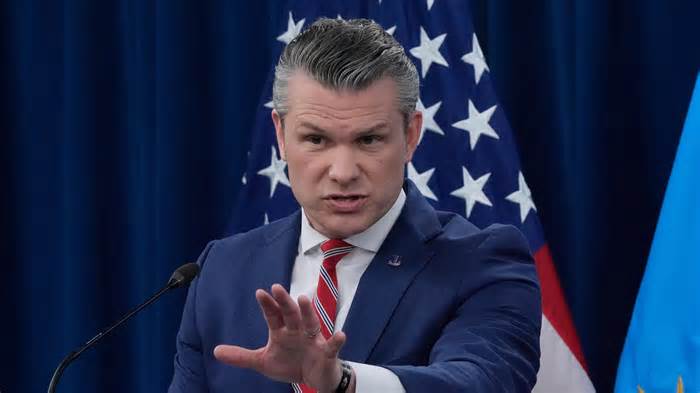
The geopolitical landscape in 2026 remains precarious as the U.S.-Iran ceasefire faces its most significant stress test to date. Following a series of targeted strikes in the Strait of Hormuz, Defense Secretary Pete Hegseth has stepped forward to clarify the administration’s position, asserting that the current cessation of hostilities remains in effect. Despite the “churn” of recent military exchanges, the Pentagon is maintaining a posture of readiness, balancing diplomatic restraint with the threat of overwhelming force.
Defining the Threshold: Why the Ceasefire Persists
In a recent briefing, Secretary Hegseth addressed the confusion surrounding the recent Iranian provocations. When asked directly if the ceasefire was over, his response was a firm “no.” The Pentagon’s logic relies on a distinction between localized skirmishes and the resumption of major combat operations.
Hegseth categorized the recent Iranian strikes as “churn”—a period of expected volatility as both sides navigate the boundaries of the current agreement. By framing these incidents as isolated events rather than a full-scale breakdown of diplomatic efforts, the administration aims to prevent an unnecessary slide into a wider regional conflict.
Freedom of Navigation and International Waterways
At the heart of the current tension is the Strait of Hormuz, a critical artery for global commerce. Hegseth emphasized that the U.S. presence in the region is fundamentally about:
Freedom of navigation: Ensuring that international waters remain open to global shipping.
Free flow of commerce: Protecting energy supplies and trade routes from Iranian interference.
- Stability of the region: Preventing any single nation from contesting the established international order.
The “Locked and Loaded” Doctrine
While the Secretary maintains a preference for a diplomatic resolution, he has not shied away from the language of deterrence. Hegseth noted that the U.S. military is currently “locked, loaded, and ready to go,” signaling that the Pentagon has the capacity and the will to respond if Iran crosses the threshold of what the administration deems a “violation.”
This approach is a cornerstone of the current administration’s foreign policy, which seeks to project strength to avoid the necessity of war. By keeping Admiral Cooper and naval forces in a “three-point stance,” the U.S. is signaling to Tehran that the window for a deal is open, but the patience of the United States is not infinite.
Strategic Analysis: The Risk of Escalation
The situation in 2026 is markedly different from previous years. The U.S. has expanded its military capabilities in the region, creating a new equilibrium. However, the risk of miscalculation remains high. If Iran perceives the U.S. restraint as weakness, they may be tempted to increase the frequency of their strikes.
Conversely, the U.S. must be careful not to over-respond to minor provocations, as that could inadvertently trigger the very “major combat operations” that the administration is trying to avoid. Hegseth’s messaging is clearly designed to walk this tightrope, putting the burden of “prudence” squarely on the shoulders of the Iranian regime.
Internal and External Pressures
The administration is also navigating internal scrutiny. Recent reports of leaked strike details and ongoing FBI investigations into information security have added a layer of complexity to the Pentagon’s operations. Despite these domestic distractions, the War Department remains focused on its primary mission: maintaining the integrity of the ceasefire while ensuring that Iran understands the consequences of further aggression.
President Trump has also signaled his involvement, discussing the implications of the conflict during high-profile appearances. This unified front between the White House and the Pentagon is intended to convey to both allies and adversaries that the U.S. policy regarding Iran is consistent and resolute.
Looking Ahead: Will a Deal Be Reached?
The final objective remains a durable, long-term deal that addresses the security concerns of the U.S. and its partners. Hegseth’s urging for Iran to “choose wisely” suggests that the U.S. is still holding out for a negotiated outcome. However, the clock is ticking. If the Iranian regime fails to follow through on its end of the bargain, the U.S. has made it clear that it is prepared to pivot from defensive posturing to offensive action.
Conclusion
The fragile state of the U.S.-Iran ceasefire in 2026 is a testament to the high-stakes diplomacy currently playing out in the Middle East. Secretary Hegseth’s clear, uncompromising language serves as both a warning to Tehran and a reassurance to the international community that the U.S. remains in control. As the situation evolves, the world will be watching closely to see if Iran chooses the path of stability or if the U.S. is forced to demonstrate its full, latent combat power.
For now, the ceasefire holds, but as Hegseth noted, the ability to restart major combat operations is a tool the President retains—and he is not afraid to use it if the circumstances demand.