Enoch Burke Remains Behind Bars: The Legal Deadlock Continues in 2026

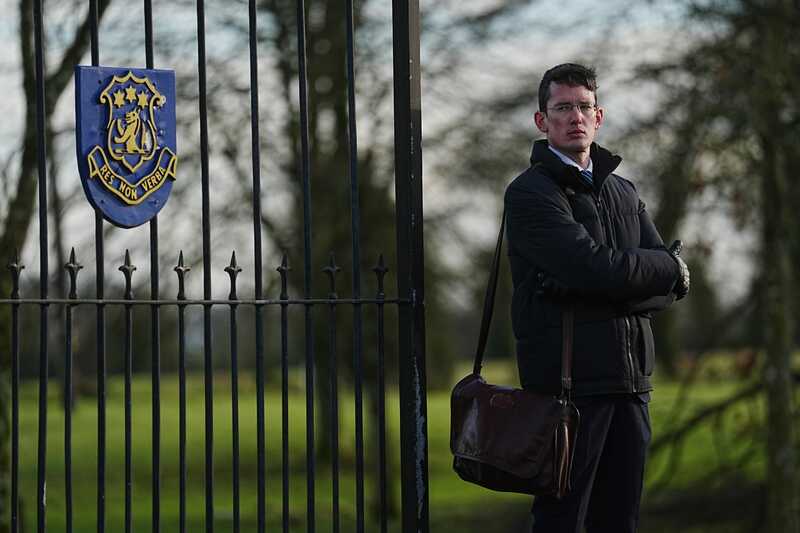
The legal saga surrounding former teacher Enoch Burke has reached a new milestone in 2026, marking over four years of intense litigation and confinement. As Burke continues to serve time for contempt of court, the Irish judicial system finds itself in a persistent standoff with the former history and German teacher. Despite repeated opportunities to secure his release, Burke remains steadfast in his refusal to purge his contempt, leading to a complex constitutional and legal stalemate.
The Origins of the Dispute: A Timeline of Conflict
The roots of this protracted legal battle trace back to 2022 at Wilson’s Hospital School in County Westmeath. The controversy initially erupted when Burke objected to a request from the school’s principal to address a transitioning student by a new name and pronouns. Burke, citing his religious beliefs and constitutional rights, refused to comply with the directive.
This refusal triggered a series of disciplinary actions by the school board, eventually leading to Burke’s suspension. However, the situation escalated when Burke continued to attend the school premises despite the suspension, prompting the school to seek legal intervention. By May 2023, the High Court had ruled that the suspension was lawful, setting the stage for the ongoing injunctions that would dictate the next several years of Burke’s life.
The Court’s Stance: Contempt and the Rule of Law
Throughout 2026, the judiciary has maintained a consistent position: Burke’s imprisonment is not a result of his personal beliefs, but a direct consequence of his willful breach of court orders. Judge Brian Cregan and other presiding officials have emphasized that the court’s role is to uphold the rule of law, not to adjudicate on matters of religious conscience or social ideology.
Why the Courts Won’t Budge
The legal argument against Burke is grounded in the principle of compliance. The High Court has issued clear restraining orders prohibiting Burke from trespassing on the grounds of Wilson’s Hospital School. The courts have repeatedly stated:
The Key to Freedom: Burke holds the “keys to his own cell.” He could be released immediately if he simply provides an undertaking to refrain from trespassing at the school.
A Sustained Pattern: Judges have characterized the actions of Burke and his supporters as a “deliberate, sustained, and concerted attack” on the authority of the civil courts.
- Civil vs. Criminal: It is critical to note that this is a matter of civil contempt. The court does not desire his incarceration; it merely seeks the enforcement of its lawful injunctions.
The Perspective of the Jailed Teacher
During his latest appearance via video link, Enoch Burke remained defiant. Addressing the court, he argued that his presence at the school was not an act of trespassing, but rather an act of professional duty. “I shouldn’t be in prison, I should be in my classroom, I should be with my students,” Burke asserted.
His defense rests on the claim that his constitutional rights—specifically his right to freedom of expression and religious belief—are being violated by the school’s directives and the subsequent court orders. For Burke, the legal proceedings represent a fight for the integrity of his conscience, regardless of the personal cost of his long-term confinement.
The Financial and Social Toll
The situation has evolved beyond a simple employment dispute. By 2026, the financial implications for Burke have become staggering. He now reportedly owes the State over €225,000 in fines and legal costs, a figure that continues to climb as he persists in violating the court’s mandates.
Furthermore, the impact on Wilson’s Hospital School has been significant. The school has been forced to navigate years of disruption, high legal costs, and the presence of protestors at its gates. The intervention of the Gardaí has been limited; they have maintained a policy of non-arrest unless Burke engages in direct, threatening behavior, yet the atmospheric tension remains palpable at the Multyfarnham site.
Analysis: The Constitutional Conflict
The Enoch Burke case serves as a landmark study in the clash between institutional authority and individual conviction. Legal scholars suggest that this case tests the limits of the Irish Constitution regarding:
- Freedom of Religion: How far can an individual go in defying institutional policy based on personal faith?
- Judicial Authority: Can the court maintain its legitimacy when an individual refuses to acknowledge its power to issue restraining orders?
- Workplace Rights: The balance between an employer’s right to manage their staff and an employee’s right to dissent.
The judiciary has been careful to frame the case strictly around the breach of an injunction. By focusing on the “trespass” rather than the “transgender debate,” the courts have attempted to keep the conversation within the bounds of civil procedure. However, the public discourse remains heavily polarized, with many viewing Burke as a martyr for religious freedom, while others view him as a disruptive figure undermining the educational environment of a school.
What Lies Ahead?
As of late 2026, there is no end in sight. The High Court has made it clear that it will not retract its orders, and Burke has shown no inclination to alter his behavior. The case is a stark reminder of the complexities inherent in modern Irish law, where the rights of the individual often collide with the institutional necessity of maintaining order.
For the observers of this case, the central question remains: How long can a standoff of this nature persist? With no legal mechanism to force a change of mind, the court is left in a position of managing a situation where the defendant refuses to participate in the traditional framework of legal resolution.
Conclusion
Enoch Burke’s ongoing imprisonment is a unique and deeply polarizing saga that shows no signs of resolution. As he remains in custody, the legal system continues to prioritize the enforcement of its injunctions, while Burke remains committed to his narrative of religious and constitutional rights. Whether this leads to a legislative intervention, a change in judicial strategy, or a continued stalemate remains the subject of intense public debate.
The case of Enoch Burke will undoubtedly be studied for years to come, not just for the specific issues of the school dispute, but as a defining moment in the interaction between the Irish legal system and the boundaries of personal conviction.