Strait of Hormuz Crisis: South Korea Probes Namu-ho Explosion Amid U.S. Allegations of Iranian Attack

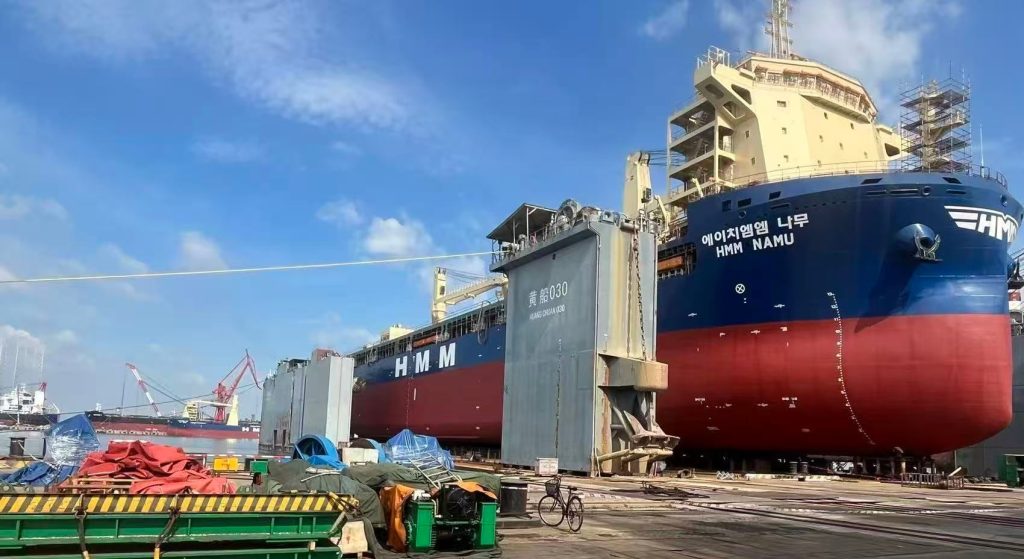
The maritime security landscape in the Middle East has been thrust into volatility following a mysterious explosion and subsequent fire aboard the HMM-affiliated cargo ship Namu-ho. As the vessel sits anchored near the United Arab Emirates (UAE), the incident has sparked a high-stakes diplomatic and strategic divergence between Seoul and Washington. While U.S. President Donald Trump has publicly attributed the disaster to an Iranian attack, the South Korean government maintains a cautious, fact-based stance, emphasizing that the investigation is still in its infancy.
The Incident: What Happened to the Namu-ho?
On May 4, 2026, the Namu-ho—a vital asset in South Korea’s maritime logistics chain—suffered a catastrophic explosion while navigating the strategic waters of the Strait of Hormuz. The blast, which triggered a significant fire, has left the international community on edge.
South Korean authorities confirmed that the vessel is currently being towed to the Port of Dubai for a comprehensive forensic analysis. A team of South Korean maritime experts is being dispatched to the UAE to determine whether the fire was the result of a technical malfunction, a mechanical failure, or, as alleged by Washington, a deliberate act of hostility.
Divergent Narratives: Washington vs. Seoul
The core of the current tension lies in the conflicting public statements regarding the cause of the explosion. President Donald Trump, speaking via Truth Social and subsequent media interviews, did not mince words. He asserted that “Iran has fired several times toward countries unrelated to the war,” specifically pointing to the Namu-ho as a target of Iranian aggression.
However, the South Korean Presidential Office (Cheong Wa Dae) has adopted a significantly more reserved posture. A senior official stated on May 5 that the cause remains “unknown.” The South Korean government is wary of jumping to conclusions, knowing that an official confirmation of an Iranian attack would force Seoul into a precarious geopolitical corner.
Key Factors in the Investigation:
- Forensic Evidence: The primary focus is on the hull and the nature of the blast to determine if external ordnance was involved.
- Timeframe: Officials have warned that the investigation could span several weeks, given the complexities of maritime forensic science and the potential for international pressure.
- Diplomatic Sensitivity: Seoul must balance its alliance with the U.S. against its economic and diplomatic interests in the Middle East, particularly regarding its relations with Iran.
The Shadow of “Project Freedom”
The incident has reignited debates regarding South Korea’s potential participation in Project Freedom, a U.S.-led maritime coalition aimed at escorting and protecting commercial vessels in the Strait of Hormuz.
President Trump noted that the Namu-ho was operating independently and was not under the protection of the Project Freedom escort fleet. This distinction is vital. If the investigation concludes that Iran was indeed the aggressor, the U.S. is expected to exert massive pressure on Seoul to join the coalition formally.
The Dilemma for Seoul:
Military Commitment: Joining Project Freedom would require a formal troop dispatch, which necessitates parliamentary ratification. This is a politically sensitive move in South Korea.
Strategic Risks: Engaging in a multinational coalition near the Strait of Hormuz could label South Korea as a direct participant in regional hostilities, potentially jeopardizing future energy imports and diplomatic ties with Iran.
Internal Response: Notably, the South Korean government has not yet convened a full National Security Council (NSC) meeting, opting instead for a task-force approach led by Presidential Chief of Staff Kang Hoon-sik. This suggests a desire to manage the crisis as a technical maritime accident rather than a casus belli.
Geopolitical Implications for 2026
The Strait of Hormuz remains one of the world’s most critical “choke points” for global energy supply. Any instability here affects global oil prices and shipping insurance rates. For South Korea, a country heavily dependent on energy imports from the Middle East, the safety of these shipping lanes is not just a matter of foreign policy—it is a matter of national economic survival.
Observers note that if the U.S. narrative holds, it marks a significant escalation in the regional “shadow war” between Iran and the West. South Korea’s reluctance to echo Washington’s claims highlights a strategic autonomy that is increasingly common in modern middle-power diplomacy. Seoul is essentially playing for time, hoping to avoid being forced into a binary choice that could alienate key regional partners.
Conclusion: A Delicate Balancing Act
As the Namu-ho* reaches the Port of Dubai, the eyes of the world are watching the forensic reports. The coming weeks will be critical. If evidence points to a deliberate attack, the South Korean government will face an immense challenge in satisfying its American allies without triggering a total breakdown in relations with Tehran.
For now, the priority remains the safety of the crew and the preservation of the evidence. Whether this incident becomes the catalyst for a larger naval presence in the Strait or remains a localized diplomatic friction point, it is clear that the waters of the Middle East have become significantly more dangerous for international commerce in 2026.