Navigating the Brink: Hegseth Insists US-Iran Ceasefire Holds Amid Strait of Hormuz Escalation

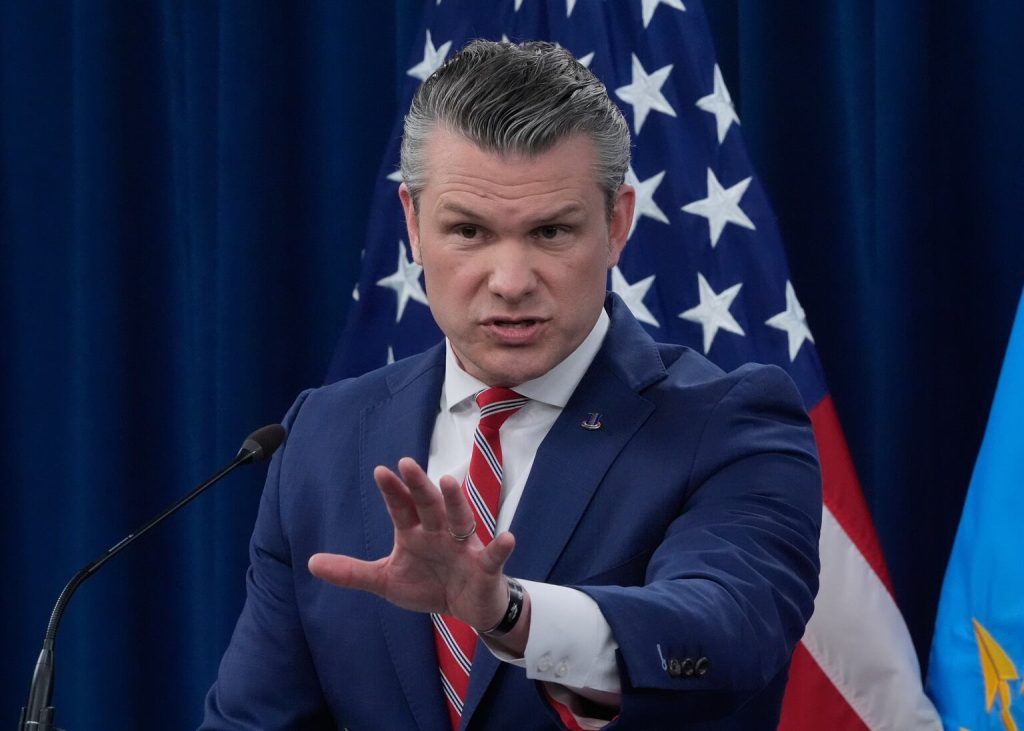
The global energy landscape in 2026 remains perched on a razor’s edge. Following a series of high-intensity maritime skirmishes and drone strikes, U.S. Defense Secretary Pete Hegseth has stepped forward to clarify the status of the nation’s most precarious diplomatic tightrope: the April 8 ceasefire with Iran. Despite a flurry of kinetic activity in the Strait of Hormuz and renewed attacks on the United Arab Emirates (UAE), Hegseth maintains that the fragile truce is “not over.”
This declaration comes at a pivotal moment. With global fuel prices skyrocketing and the “Project Freedom” shipping route struggling to gain momentum, the distinction between “gray-zone aggression” and “major combat operations” has never been more vital—or more blurred.
The Fragile Truce of 2026: A Month on the Edge
To understand the current tension, one must look back to the February 28 strikes that ignited this latest chapter of Middle Eastern conflict. After weeks of direct exchanges between U.S.-Israeli forces and Iranian assets, a diplomatic breakthrough was reached on April 8. This ceasefire was intended to halt the slide into a regional conflagration, yet the reality on the water tells a different story.
On Tuesday, Hegseth, alongside General Dan Caine, Chairman of the Joint Chiefs of Staff, addressed the media at the Pentagon. Their message was one of cautious persistence. While Tehran has been blamed for a fresh wave of drone and missile attacks, Hegseth asserted that these actions do not yet constitute a formal end to the ceasefire agreement.
“No, the ceasefire is not over,” Hegseth stated firmly. His assessment suggests that the U.S. is willing to absorb a certain level of Iranian “harassment” to prevent a return to the full-scale hostilities seen earlier this year.
The Battle for the Strait: Project Freedom vs. The Blockade
The primary flashpoint remains the Strait of Hormuz, a 21-mile-wide chokepoint through which a significant portion of the world’s liquefied natural gas (LNG) and crude oil must pass. Iran’s effective closure of the waterway has paralyzed global markets, prompting the Trump administration to launch Project Freedom.
What is Project Freedom?
This U.S.-led initiative aims to bypass Iranian-controlled waters by utilizing a new shipping lane through the territorial waters of Oman. However, the success of this route has been limited:
Low Transit Volume: Only two merchant ships, including a Maersk vehicle carrier, have successfully navigated the U.S.-guarded route.
The Bottleneck: Hundreds of commercial vessels remain “bottled up” in the Persian Gulf, hesitant to move despite U.S. military assurances.
- Iranian Counter-Measures: The Revolutionary Guard has been vetting and charging “transit fees” for ships using the northern route near the Iranian coast, attacking those that attempt the U.S. lane.
Analyzing the “Threshold of War”
General Dan Caine provided a sobering breakdown of the statistics since the April 8 ceasefire was signed. According to Caine, Iran has fired at commercial vessels nine times, seized two container ships, and targeted U.S. forces on more than ten occasions.
The Pentagon’s stance is that these actions fall “below the threshold of restarting major combat operations.” This terminology is not merely rhetorical; it is a legal necessity. By defining the current state as a “temporary mission” under a ceasefire, the administration avoids the War Powers Resolution requirement to seek formal Congressional approval for military action after 60 days.
“This is a temporary mission for us,” Hegseth remarked, emphasizing that the goal is the restoration of maritime commerce, not a regime-change war.
Escalation in the UAE: Fujairah Under Fire
While the U.S. monitors the waters, the United Arab Emirates—a staunch American ally—is facing a direct kinetic threat. For two consecutive days, Iranian drones and missiles have targeted UAE soil.
In the eastern emirate of Fujairah, a key oil terminal, a drone-sparked fire resulted in injuries to three Indian nationals. The UAE Ministry of Defence reported intercepting 15 missiles and four drones in a single engagement. These attacks have drawn sharp condemnation from international leaders, including Indian Prime Minister Narendra Modi, who called the targeting of civilian infrastructure “unacceptable.”
Despite the smoke rising from Fujairah, Washington remains focused on the broader strategic objective: breaking Iran’s economic grip without triggering a total war.
The Iranian Perspective: A “Quagmire” for the West
Tehran’s rhetoric remains defiant. Mohammad Bagher Qalibaf, Iran’s parliament speaker, took to social media to accuse the U.S. of undermining regional security. He signaled that Iran has “not even begun” its full response to the U.S. attempt to force open the Strait.
Meanwhile, Iranian Foreign Minister Abbas Araghchi warned that the U.S. and UAE are being “dragged back into a quagmire.” Iran disputes the U.S. claim of sinking six military boats, asserting instead that two civilian cargo vessels were hit, resulting in five civilian deaths.
This war of narratives is being mediated through back-channels in Pakistan, where messages are being passed between Washington and Tehran in an attempt to prevent a miscalculation that could lead to nuclear escalation.
Global Economic Fallout: Why the Strait Matters
The closure of the Strait of Hormuz is not just a regional military issue; it is a global economic catastrophe.
- Fuel Prices: With the primary artery for Middle Eastern oil restricted, fuel prices in Europe and Asia have reached historic highs.
- Petroleum Derivatives: Beyond crude oil, the flow of fertilizers and petroleum-derived products has been halted, threatening global food security.
- The U.S. Blockade: Since April 13, the U.S. has enforced a naval blockade on Iranian ports, turning back nearly 50 commercial ships. This is a deliberate attempt to deny Tehran the revenue needed to sustain its nuclear program and domestic economy.
Shipping giants like Hapag-Lloyd AG remain unconvinced by the U.S. security guarantees. Their risk assessments suggest that transits through the Strait are currently “not possible,” leaving the global supply chain in a state of suspended animation.
Conclusion: A High-Stakes Game of Chicken
As we move deeper into 2026, the question is no longer whether the ceasefire is “real,” but how long it can survive the weight of daily combat. Pete Hegseth and the Trump administration are betting that a combination of naval blockades and limited kinetic responses will force Iran to the negotiating table.
However, with Iran’s Revolutionary Guard showing no signs of backing down and the UAE facing daily bombardments, the “threshold” for major combat operations is being tested every hour. For now, the ceasefire exists in name, but the reality on the Strait of Hormuz is one of a low-intensity war that the world cannot afford to ignore.