Strait of Hormuz Crisis: Trump Announces U.S. Mission to Rescue Stranded Tankers Amid Escalating Tensions

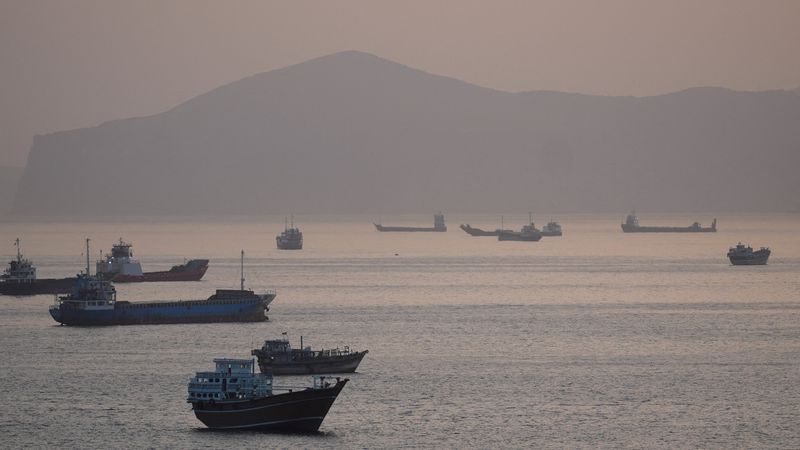
The geopolitical landscape in the Middle East has reached a boiling point in May 2026. As the U.S.-Israeli conflict with Iran enters a critical phase, the world’s most vital maritime chokepoint—the Strait of Hormuz—has become a theater of uncertainty. President Donald Trump has officially announced that the United States will launch a strategic mission to assist hundreds of vessels currently trapped in the region, providing a lifeline to crews facing dwindling supplies.
This announcement comes at a precarious moment. Mere hours after the President’s statement, reports emerged of a tanker being struck by unidentified projectiles, underscoring the extreme danger facing commercial shipping. With roughly 20% of the world’s oil and gas transiting this narrow waterway, the stakes for the global economy have never been higher.
The “Project Freedom” Initiative: What We Know
President Trump took to Truth Social to communicate that the U.S. would begin guiding trapped vessels through the restricted zones. While specific tactical details remain guarded, the administration has signaled a massive mobilization of military assets.
According to U.S. Central Command (CENTCOM), this defensive mission is not merely a diplomatic gesture but a significant naval operation. The deployment includes:
15,000 military personnel stationed in the region to oversee the safety of maritime corridors.
Over 100 land and sea-based aircraft providing constant aerial surveillance.
Advanced drone technology to monitor for hostile activity and projectile launches.
Admiral Brad Cooper, commander of CENTCOM, emphasized that the mission is essential to both regional security and the stability of the global economy. However, the administration has been clear: any interference with this operation will be met with a “forceful” response.
A Volatile Corridor: The Reality of the Blockade
For over two months, Iran has effectively enforced a blockade on the Strait of Hormuz, allowing only its own vessels to pass while restricting others. This has left approximately 20,000 seafarers in a state of limbo. Reports from the International Maritime Organization (IMO) indicate that many of these ships are running dangerously low on food, fuel, and critical medical supplies.
The incident involving an unidentified tanker being fired upon 78 nautical miles north of Fujairah serves as a grim reminder of the risks involved. While the crew is reportedly safe, the attack highlights the “unknown” variables that military planners must account for.
Economic Ripples and Global Energy Security
The “Strait of Hormuz closure” is more than a military standoff; it is an economic crisis. Crude oil prices have consistently hovered above $100 a barrel, a direct result of the supply chain disruption. In the United States, the Biden-era inflation concerns have shifted into a new phase under the Trump administration, with gasoline prices becoming a central issue for voters ahead of the November midterm elections.
The Diplomatic Tug-of-War
While the military buildup is the most visible aspect of the crisis, back-channel diplomacy remains active. Iran recently presented a 14-point peace proposal to Washington via intermediaries in Pakistan. The proposal includes:
- Withdrawal of U.S. forces from the immediate vicinity.
- Lifting of the mutual blockades on Gulf shipping.
- Release of frozen Iranian assets held abroad.
- A new international control mechanism for the Strait of Hormuz.
Washington remains skeptical. President Trump has indicated that while talks are moving “very well,” he is hesitant to accept a deal that does not address the core issue of Iran’s nuclear enrichment program. The U.S. continues to demand that Tehran surrender its stockpile of highly enriched uranium—a condition Iran has thus far rejected, maintaining that their nuclear ambitions are purely peaceful.
Analyzing the Strategic Shift
The decision to “guide” ships rather than engage in direct, full-scale naval escorting suggests a nuanced approach. Observers note that the U.S. is trying to avoid a direct kinetic war with Iran while simultaneously asserting dominance over the maritime lanes.
The strategy relies on a combination of:
Diplomatic pressure to form an international maritime coalition.
Military coordination to deter Iranian aggression without triggering an all-out regional conflict.
Humanitarian aid as a justification for the increased naval presence.
However, the risk of miscalculation remains high. With both sides testing each other’s red lines, the situation in the Gulf is fluid. The involvement of 15,000 troops indicates that the U.S. is prepared for a long-haul engagement, potentially stretching well into the summer.
Conclusion: The Path Forward
As we move through May 2026, the Strait of Hormuz remains the most dangerous patch of water on the planet. President Trump’s commitment to “freeing” the trapped ships is a high-stakes gamble that seeks to stabilize the global economy while maintaining a position of strength against Iranian influence.
Whether this leads to a de-escalation or a further hardening of positions will depend on the success of the current naval operation and the willingness of both Washington and Tehran to negotiate on the nuclear and territorial disputes. For now, the world watches the Gulf, waiting to see if the U.S. can successfully reopen the arteries of global energy trade without sparking a wider conflict.