Strait of Hormuz Crisis: Trump Announces U.S. Military Intervention to Free Stranded Tankers

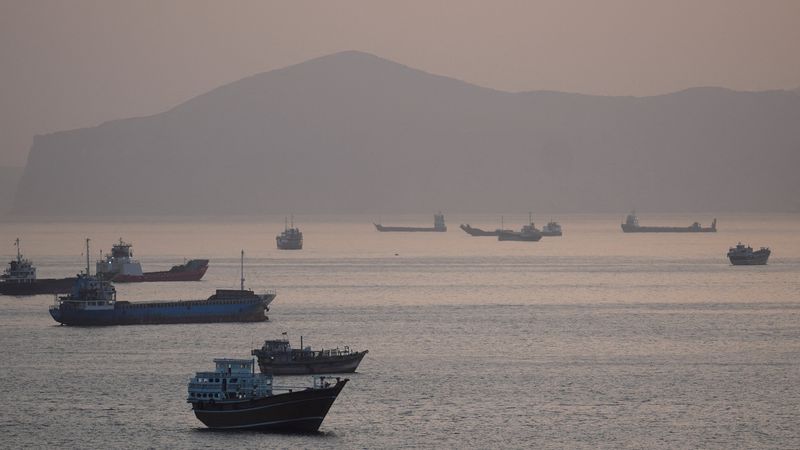
The global energy market and international maritime security are facing a precarious tipping point as of May 2026. President Donald Trump has officially announced that the United States will launch a major naval operation to “guide” commercial vessels out of the Strait of Hormuz. This critical maritime chokepoint has been effectively paralyzed by the ongoing U.S.-Israeli conflict with Iran, leaving hundreds of ships and thousands of seafarers in a state of indefinite limbo.
The announcement came on the heels of a troubling report: a tanker was struck by unknown projectiles in the region, underscoring the lethal risks inherent in these contested waters. With energy prices fluctuating and supply chains under immense pressure, the U.S. response marks a significant escalation in the regional power struggle.
The Strategic Shift: Operation “Freedom of Navigation”
President Trump’s directive aims to break the Iranian blockade that has restricted transit through the Gulf for over two months. According to the President, the U.S. military will provide escort services to ensure that merchant vessels can safely navigate out of the restricted waterways.
The scope of this operation is significant. U.S. Central Command (CENTCOM) has confirmed the deployment of 15,000 military personnel, supported by a massive array of over 100 aircraft, warships, and surveillance drones. The objective is twofold: to restore freedom of navigation for global commerce and to maintain the existing naval blockade against Iranian vessels.
Why the Strait of Hormuz Matters
The Strait of Hormuz is arguably the most vital maritime artery in the world. Approximately 20% of the world’s oil and gas supplies pass through this narrow passage. The current closure has not only sent energy prices soaring globally but has also created a humanitarian crisis for the estimated 20,000 seafarers trapped on vessels that are rapidly running low on food, water, and essential supplies.
Heightened Tensions and the “Projectile” Incident
The situation on the ground—or rather, on the water—remains volatile. The United Kingdom Maritime Trade Operations (UKMTO) confirmed that a tanker was hit by unidentified projectiles roughly 78 nautical miles north of Fujairah. While the crew remains safe, the attack serves as a stark reminder that the region is a powder keg.
Iran has maintained a firm stance, seizing multiple vessels and firing on others that attempted to challenge their blockade. Tehran’s domestic media continues to frame the U.S. presence as an act of aggression, while the U.S. insists that any interference with its rescue operation will be met with “forceful” countermeasures.
The Diplomatic Tug-of-War
Behind the military posturing, a fragile diplomatic dance is occurring. Iran recently submitted a 14-point peace proposal via Pakistani intermediaries. While Tehran seeks the lifting of sanctions and the withdrawal of U.S. forces, President Trump has signaled skepticism.
The Iranian Demands: Include the release of frozen assets, ending the war in Lebanon, and establishing a new control mechanism for the Strait.
The U.S. Stance: The White House remains focused on nuclear non-proliferation, specifically demanding that Iran surrender its stockpile of over 400 kg of highly enriched uranium.
The Economic and Political Fallout
For the Trump administration, the urgency of this mission is partly domestic. With midterm congressional elections looming in November, the economic pain caused by high gasoline prices is a major liability for the Republican Party.
By taking action to “free” the ships, the administration hopes to stabilize global energy markets and demonstrate decisive leadership. However, the risk of a miscalculation in the Gulf is immense. Admiral Brad Cooper, the CENTCOM commander, emphasized that the mission is “essential to regional security,” yet the lack of specific details on which international allies will join this coalition leaves many questions unanswered.
A Humanitarian Crisis at Sea
The plight of the 20,000 seafarers cannot be overlooked. These individuals, often caught in the crossfire of geopolitical disputes, are currently operating in a high-threat environment without the ability to dock or resupply. The International Maritime Organization (IMO) has been vocal about the dangers, but until the U.S. operation begins to clear a path, these crews remain in the crosshairs of a conflict not of their making.
Conclusion: The Path Ahead
The coming days will be critical. As the U.S. military begins its escort mission, the world will be watching to see how Iranian forces respond. Will Tehran attempt to escalate, or will the presence of such a significant U.S. force act as a deterrent?
The impasse between Washington’s demand for nuclear disarmament and Tehran’s push for sanctions relief shows no signs of an immediate resolution. For now, the Strait of Hormuz remains the focal point of a global struggle that balances energy security, military might, and the lives of thousands of mariners. As the situation evolves, the stability of the global economy remains tethered to the narrow, dangerous waters of the Gulf.