The Strait of Hormuz Standoff: Why Wall Street is Betting Against Trump’s ‘Project Freedom’ in 2026

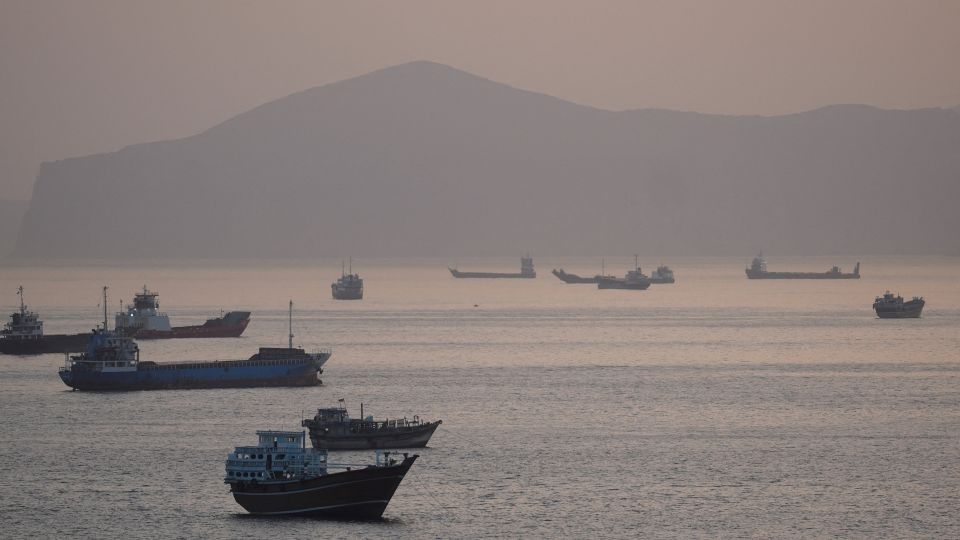
As we move through the mid-point of 2026, the global energy crisis has reached a fever pitch. The world remains gripped by a logistical nightmare in the Middle East, specifically within the narrow, volatile waters of the Strait of Hormuz. While the Trump administration recently unveiled a high-stakes initiative dubbed “Project Freedom” to break the maritime deadlock, the financial sector is responding with a resounding vote of “no confidence.”
Despite the fanfare surrounding the successful guidance of two U.S. vessels out of the strait, the market’s reaction has been cold. Instead of the anticipated relief, oil futures skyrocketed, and gasoline prices are inching toward historic highs. This article explores why “Project Freedom” is struggling to gain traction and what this means for the global economy in the coming months.
The Blueprint of Project Freedom: Ambition vs. Reality
Announced by the White House as a definitive solution to the oil tanker traffic jam, Project Freedom is a massive logistical and military undertaking. According to U.S. Central Command, the mission involves over 100 land and sea-based aircraft and approximately 15,000 service members. The stated goal is to “restore freedom of navigation” in a region that has become a graveyard for international trade.
However, the devil is in the details. While the scale of the deployment is impressive, the mission’s scope is surprisingly limited. U.S. officials have clarified that this is not an escort mission. Unlike previous historical operations where the Navy directly protected individual tankers, Project Freedom aims to monitor and “guide” ships. For shipping executives, this distinction is more than just semantics—it is a matter of life and death for their crews and billions in cargo.
Why the Market is Ignoring the White House
If Project Freedom were the “gamechanger” the administration claims, one would expect energy prices to tumble. Instead, the opposite occurred. West Texas Intermediate (WTI), the U.S. benchmark, surged past $107 a barrel, while Brent crude jumped to a staggering $114.
There are three primary reasons why traders and analysts remain skeptical:
1. The Lack of a Direct Escort Policy
The market was looking for a “convoy” system. By refusing to provide direct military escorts, the U.S. is essentially asking private companies to take the ultimate risk while the military watches from a distance. Shipping insurance premiums have reached astronomical levels, and without a physical shield, many tanker owners simply refuse to enter the Gulf.
2. Iranian Hostility and Ceasefire Violations
The fragile peace in the region is evaporating. Tehran has already labeled Project Freedom a violation of existing ceasefires. Almost immediately following the U.S. announcement, reports emerged of resumed kinetic activity. This geopolitical friction suggests that rather than calming the waters, the U.S. presence might be acting as a catalyst for further conflict.
3. The Shadow of Naval Mines
Confidence in the maritime industry has been fundamentally shaken by Iran’s use of naval mines. These “hidden killers” make the Strait of Hormuz a minefield—literally. Even with 15,000 troops in the region, clearing a path for 166 trapped tankers is a slow, agonizing process that could take months, not days.
The Human and Economic Cost: $5 Gasoline on the Horizon
For the average consumer, the geopolitical chess match in the Middle East translates directly to pain at the pump. In the United States, retail gasoline prices hit a crisis high of $4.46 a gallon this week. Analysts warn that if the Strait remains effectively closed for another thirty days, we are looking at a $5 per gallon reality.
The surge in gasoline futures—up another 4% recently—indicates that the market expects the supply crunch to worsen. As families across the country feel the squeeze, the pressure on the administration to move beyond “guidance” and toward “intervention” continues to mount.
170 Million Barrels: The Logjam That Won’t Budge
The sheer volume of energy currently trapped in the Middle East is staggering. Data from Kpler, a leading energy analytics firm, suggests that approximately 170 million barrels of crude oil, diesel, and jet fuel are currently sitting on 166 tankers. This is not just a local issue; it is a global supply chain catastrophe.
Refined Products: Millions of gallons of diesel and jet fuel are stuck, threatening the aviation and logistics industries.
The Logistical Nightmare: Experts estimate that even if the Strait were declared “fully open” today, it would take up to three months to clear the current backlog.
- Alternative Routes: While countries like Saudi Arabia and the UAE have attempted to use pipelines to bypass the Strait, recent attacks on the Fujairah Oil Industry Zone have proven that these alternatives are equally vulnerable to drone strikes.
Expert Analysis: A Unilateral Plan in a Multilateral World
The consensus among global consultants is that Project Freedom lacks the “buy-in” necessary for success. The Eurasia Group recently noted that without Iranian cooperation or a significantly more aggressive naval deployment, the plan is destined to fail.
“It takes both sides to unblock—not just one,” says Bjørn Højgaard, CEO of Anglo-Eastern. His sentiment reflects the reality that maritime security is a two-way street. If one side signals a desire for passage but the other side continues to deploy drones and mines, the “reality on the water” remains unchanged.
Furthermore, the recent explosion on a South Korean-linked vessel and the trading of shots between U.S. and Iranian forces on Monday underscore the volatility of the situation. The market views these “kinetic events” as proof that the ceasefire is dead, making the administration’s optimistic rhetoric seem out of touch with the situation on the ground.
Can OPEC Save the Day?
Treasury Secretary Scott Bessent has attempted to reassure the public, stating that “help is on the way” and that the world will soon be “awash in oil.” He pointed to OPEC’s promise to increase production as a sign of hope.
However, energy analysts are quick to point out the flaw in this logic. Increasing production is a symbolic gesture if the oil cannot physically leave the region. The 14 million barrels per day lost due to the conflict far outweigh any incremental increases OPEC can provide. Until the Strait of Hormuz is truly secure, that oil remains a “drop in the bucket” compared to the massive global deficit.
Conclusion: A Summer of Uncertainty
As we look toward the remainder of 2026, the success of Project Freedom remains doubtful. The market has sent a clear message: guidance is not enough. Investors and shipping giants are demanding a return to true stability, which likely requires either a diplomatic breakthrough with Iran or a far more robust military commitment to clearing mines and escorting vessels.
Until then, the 170 million barrels of oil will continue to bob in the Gulf, and consumers will continue to watch the numbers climb at the gas station. The “Freedom” promised by the administration remains, for now, a distant hope rather than a market reality.