A New Chapter: Pope Leo XIV Appoints Former Undocumented Immigrant as Bishop of Wheeling-Charleston

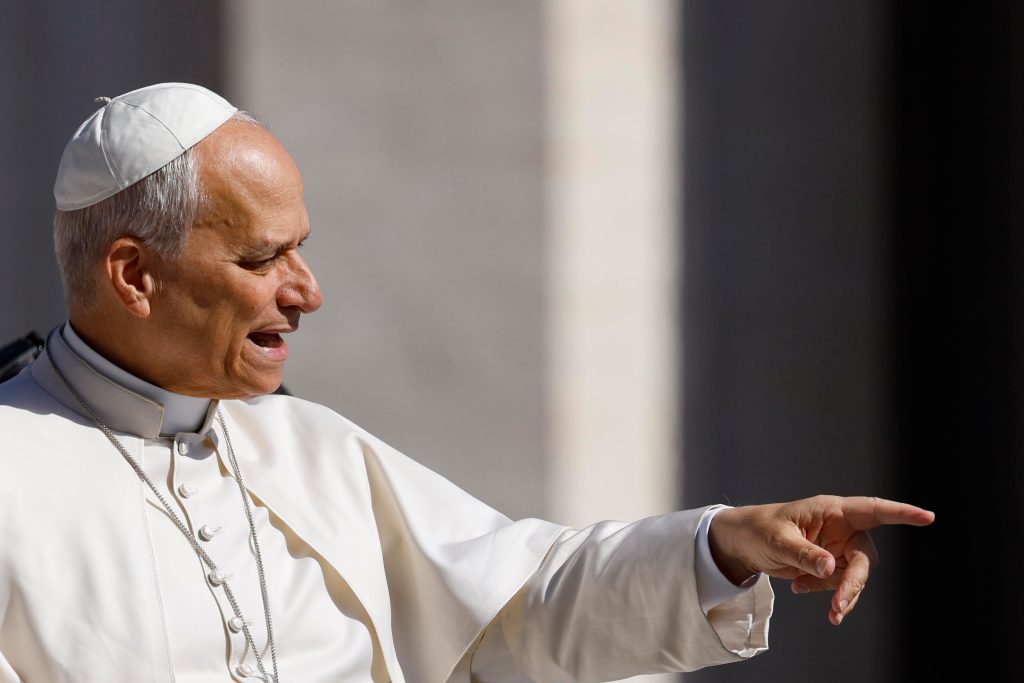
In a move that has sent ripples through the American political and religious landscape, Pope Leo XIV has made a series of high-profile episcopal appointments that appear to directly challenge the current trajectory of U.S. domestic policy. By naming Bishop Evelio Menjívar-Ayala to lead the Diocese of Wheeling-Charleston in West Virginia and appointing Father Robert Park Si III as an auxiliary bishop in Washington, the Vatican has sent an unambiguous message regarding its stance on immigration and social equity.
These appointments come at a time of heightened tension between the Holy See and the Trump administration. As the first American-born Pope, Leo XIV has not shied away from vocal criticism of global political figures, particularly in the wake of the ongoing Iran War and the shifting American approach to civil rights.
The Journey of Bishop Evelio Menjívar-Ayala
The appointment of Bishop Menjívar-Ayala is perhaps the most symbolic act of Pope Leo XIV’s papacy thus far. Born in El Salvador, the prelate’s life story reads like a testament to the struggles of the global immigrant community. In 1990, fleeing the violence of the Salvadoran civil war, a teenage Menjívar-Ayala made the harrowing journey to the United States.
To bypass border restrictions, he famously entered the country clandestinely, at one point being hidden in the trunk of a car. His transition from an undocumented laborer in Los Angeles to the leader of a U.S. diocese is a narrative of resilience that contrasts sharply with the current administration’s “anti-immigration” rhetoric.
A Shepherd for the Marginalized
Bishop Menjívar-Ayala has never been one to remain silent on pastoral issues involving the state. Throughout his tenure as an auxiliary bishop in Washington, he has been a vocal advocate for the rights of migrants, frequently urging Catholic congregants to push back against policies that he deems inhumane. His elevation to the Diocese of Wheeling-Charleston places him at the helm of a critical region, signaling that the Vatican is prioritizing leaders who have lived the experiences of the disenfranchised.
Father Robert Park Si III: A Defender of DEI
The second major appointment involves Father Robert Park Si III, a 46-year-old priest who has spent years serving the campus community at Howard University. His appointment as an auxiliary bishop in the Washington Archdiocese is equally significant. Father Park has become a prominent voice in the debate over Diversity, Equity, and Inclusion (DEI).
In recent public statements, Park has characterized the Trump administration’s systematic dismantling of DEI initiatives as both “un-American” and “unchristian.” By elevating a priest who is so explicitly opposed to the current administration’s cultural agenda, the Vatican is effectively doubling down on its commitment to social justice and institutional inclusivity.
Analyzing the Vatican’s Strategic Shift
Political analysts and religious observers are viewing these appointments as a calculated, deliberate response to the current political climate. The relationship between the Vatican and the White House has been strained since the onset of the Iran War, with Pope Leo XIV frequently referencing “tyrants” who manipulate religious sentiment for military and economic gain.
Why These Appointments Matter
A Symbolic Rebuff: By choosing two leaders who represent the very groups targeted by the administration’s policies—immigrants and proponents of DEI—the Pope is utilizing his authority to provide a moral counterweight to the White House.
The “Shepherd” Doctrine: As noted by veteran Catholic commentator Greg Erlandson, these appointments suggest a new Vatican mandate: leaders are expected to embrace controversy rather than flee from it.
- Internal Church Politics: These moves solidify the influence of the “American Pope,” who is increasingly positioning the Catholic Church as a global conscience against populism and nationalism.
The Broader Context of 2026
As we move through 2026, the intersection of faith and politics has rarely been more contentious. Pope Leo XIV, the 267th Bishop of Rome, has consistently proven that he is not a traditionalist in the conventional sense. His background as an Augustinian, combined with his unique understanding of American cultural friction, makes his leadership style distinct from his predecessors.
The resignation of Bishop Mark E. Brennan at age 79, while standard procedure, has provided the perfect opening for this changing of the guard. The Vatican’s choice to replace a long-serving, traditional bishop with a man of Menjívar-Ayala’s background is a clear indicator that the Church is preparing for a long-term ideological struggle.
Conclusion: A Church in Transition
The appointment of Bishop Menjívar-Ayala and Father Park Si III is more than just a administrative reshuffle; it is a declaration of intent. By placing these men in positions of power, the Vatican is signaling that it will not be intimidated by executive orders or political pressure.
As the faithful in West Virginia and Washington prepare to welcome their new shepherds, the world will be watching to see how these men navigate the delicate balance between their spiritual duties and their role as moral critics of the state. One thing is certain: under Pope Leo XIV, the Catholic Church is stepping into the center of the political arena, refusing to hide from the difficult conversations that define our time.