Pipeline Politics: Why Poilievre Claims Carney Has ‘Wasted an Entire Year’ on Alberta’s Energy Future

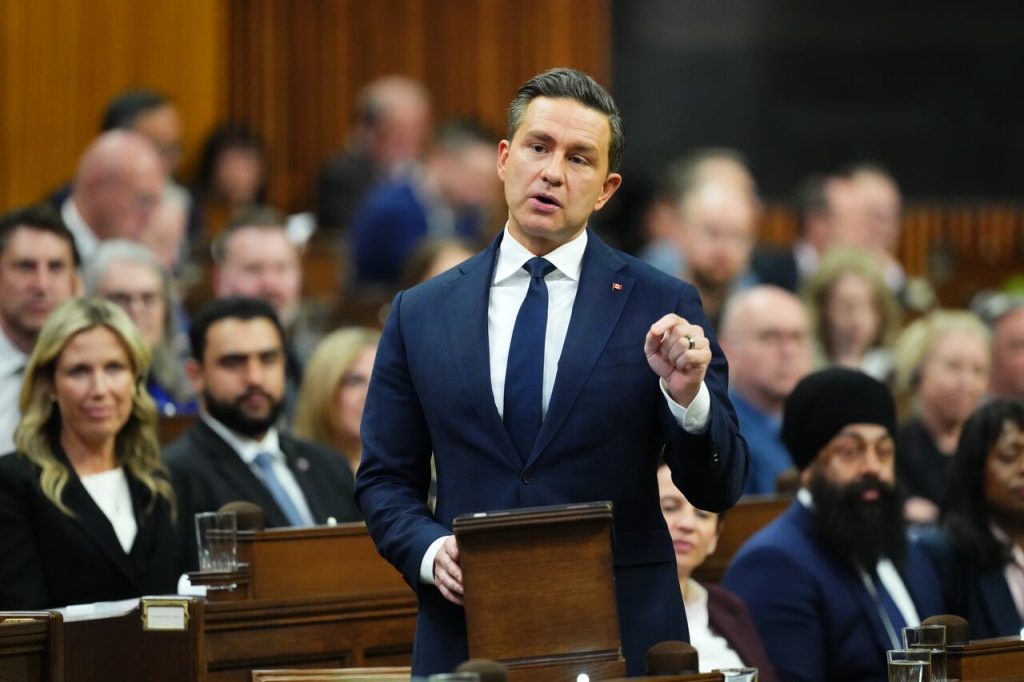
The Canadian energy sector stands at a pivotal crossroads in 2026. With global demand shifting due to ongoing geopolitical instability, specifically the conflict in Iran, the pressure to diversify Canada’s energy exports beyond the United States has reached a fever pitch. At the center of this firestorm is Conservative Leader Pierre Poilievre, who has launched a scathing critique of Prime Minister Mark Carney, accusing the government of “wasting an entire year” on the deliberation of a potential new Alberta pipeline.
As the July 1 deadline for the North American trade pact review approaches, the rhetoric between the government and the Opposition has intensified. While Carney suggests that a new pipeline is “more probable than possible,” Poilievre argues that the government’s indecision is costing the country billions in lost economic opportunity.
The State of Play: Pipeline Deliberation vs. Action
For the past year, the discourse surrounding a new pipeline out of Alberta has been defined by a complex Memorandum of Understanding (MOU) between Ottawa and the provincial government. This agreement includes significant concessions, such as the suspension of the federal oil and gas emissions cap and relief from specific clean electricity regulations.
However, Pierre Poilievre contends that these bureaucratic maneuvers are merely “stalling tactics.” During a recent press conference in Toronto, the Conservative leader was blunt: “He’s been prime minister for a year and he still hasn’t even made up his mind whether he supports a pipeline. He’s wasted an entire year.”
Poilievre’s argument centers on the idea that the private sector is ready to build, but is being hampered by federal red tape. He suggests that the project is “wildly profitable” and does not require government handouts or complex subsidies; it simply requires the political will to issue the necessary permits.
Mark Carney’s Position: A “Package Deal”
Prime Minister Mark Carney maintains that the pipeline cannot be viewed in a vacuum. His administration views the pipeline as one component of a much larger economic strategy. By linking pipeline development to broader environmental and trade commitments, Carney argues that he is building a sustainable framework for the future.
In an interview with The Canadian Press, Carney emphasized that the government is making steady progress on this “bigger package.” This includes:
Indigenous Co-ownership: Ensuring that First Nations are not just consulted, but are actual partners in the development.
Carbon Capture and Storage (CCS): Alberta’s commitment to major CCS projects as part of the agreement.
Diversification: Shifting focus toward Asian markets to reduce reliance on U.S. infrastructure.
Despite these assurances, critics point to the historical baggage of the Trans Mountain Expansion (TMX) project. Originally purchased for $4.5 billion in 2018, the final cost ballooned to $34 billion. For skeptics, the current deliberation feels like a precursor to another massive public expenditure that may struggle to meet its timeline.
The Role of Energy in U.S. Trade Talks
As Canada prepares for the upcoming North American trade pact review, energy security has become a primary pillar of the conversation. The U.S. administration, under President Donald Trump, has shown a clear interest in energy independence and continental security.
Is Energy Leverage?
A point of contention between the two leaders is whether Canada should use its energy and critical minerals as “leverage” in these high-stakes negotiations.
The Government’s Stance: Prime Minister Carney has rejected the term “leverage,” preferring to frame the relationship in terms of “mutual interest.” He argues that Canada honors its contracts and that the goal is to see where trade can be expanded naturally.
- The Opposition’s Stance: Poilievre views this as a missed opportunity. He argues that Canada’s resources are a powerful geopolitical tool. “Of course, our energy and minerals should be positive leverage,” Poilievre noted. He believes that by offering to bolster continental security through increased supply, Canada could secure better terms for its manufacturing and service sectors.
The Path Forward: What Happens Next?
With Alberta expected to deliver a formal pipeline submission to the Major Projects Office by July 1, the clock is ticking. Energy Minister Tim Hodgson has hinted that the government’s new sovereign wealth fund could theoretically be utilized for infrastructure like pipelines, though he describes it as a “hypothetical.”
Key Hurdles to Overcome
- Regulatory Certainty: Investors are wary of the “stop-start” nature of Canadian energy policy.
- Political Polarization: The defeat of Poilievre’s recent pipeline motion in the House of Commons demonstrates the deep divide in Parliament regarding how to balance environmental goals with economic expansion.
- Global Market Shifts: As other nations accelerate their own energy projects, Canada’s window of opportunity to capture Asian market share is narrowing.
Conclusion: A Defining Moment for the Canadian Economy
Whether one aligns with Poilievre’s demand for immediate deregulation or Carney’s “big package” approach, it is clear that the pipeline debate is about more than just steel and oil. It is a debate about Canada’s identity as an energy superpower in a rapidly changing world.
The “wasted year” argument resonates with those who feel that Canada’s bureaucratic processes have become a bottleneck to national prosperity. Conversely, proponents of the government’s approach argue that long-term stability requires the very consensus-building that Poilievre characterizes as delay.
As we move toward July 1, all eyes will be on the Major Projects Office. Whether this leads to a new era of Canadian energy dominance or another chapter of stalemate remains the most pressing question in Ottawa today.