Beyond Germany: Why the US Military Drawdown in Europe Has Only Just Begun

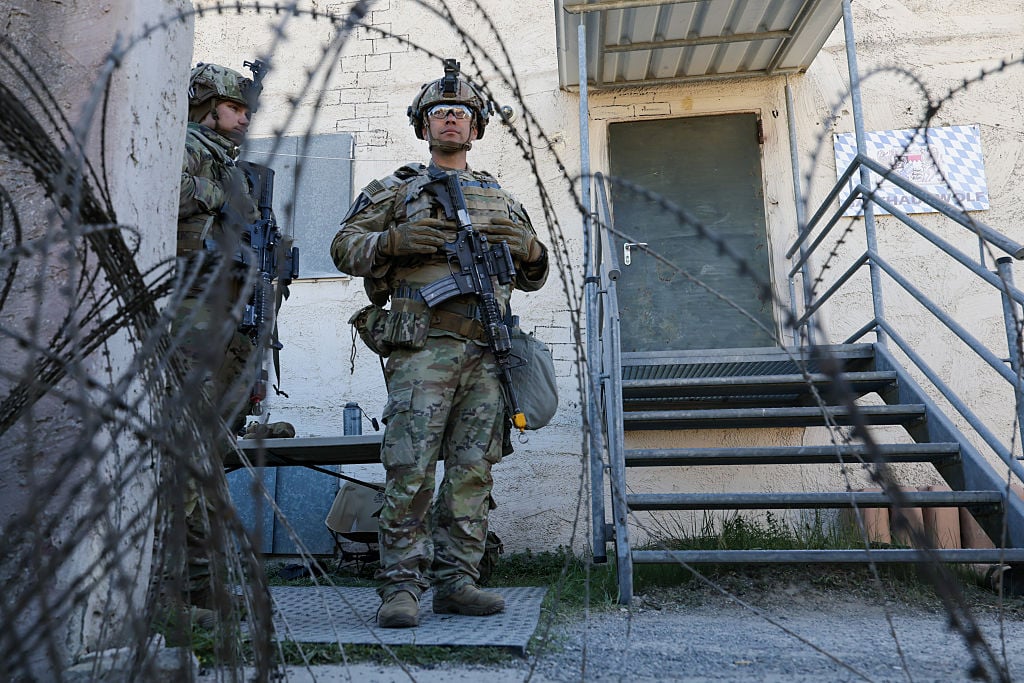
The geopolitical landscape of 2026 has reached a fever pitch, and the latest signals from Washington suggest a seismic shift in the global order. For decades, the presence of American boots on European soil was the bedrock of the transatlantic alliance. However, that foundation is cracking.
The recent announcement by the Trump Administration to withdraw 5,000 troops from Germany is not merely a tactical adjustment; it is a harbinger of a much more extensive retreat. As the Pentagon conducts a “thorough review” of its global force posture, the message to Brussels, Madrid, and Rome is clear: the era of guaranteed American protection is ending.
The First Domino: Why Germany is Losing 5,000 Troops
On Friday, the Pentagon confirmed that 5,000 U.S. service members would be leaving Germany. While the official stance cites “theater requirements and conditions on the ground,” the political subtext is impossible to ignore. This move reduces the American presence in Germany to approximately 30,000 troops—a significant number, but one that is rapidly dwindling.
The catalyst for this specific withdrawal appears to be a breakdown in the relationship between President Donald Trump and German Chancellor Friedrich Merz. Tensions peaked following Merz’s public criticism of the U.S.-led war in Iran, which he described as a “humiliation” for the United States.
Merz’s comments regarding the failed negotiations in Islamabad struck a nerve in the Oval Office. President Trump, never one to overlook a slight, responded by signaling that the 5,000-troop cut is only the opening salvo. “We’re going to cut way down,” Trump told reporters in Florida. “And we’re cutting a lot further than 5,000.”
Operation Epic Fury and the Iran War Friction
To understand the 2026 drawdown, one must look at Operation Epic Fury—the U.S. military campaign in Iran. This conflict has become the ultimate litmus test for European loyalty in the eyes of the Trump Administration.
While the U.S. has demanded “greater burden sharing,” many European allies have balked at participating in a conflict they view as destabilizing and illegal. The refusal of NATO members to send warships to secure the Strait of Hormuz led to the President labeling the alliance as “useless” and its leaders as “cowards.”
The Burden-Sharing Debate
For years, the U.S. has pressured NATO members to meet the 2% GDP defense spending threshold. While Germany and others have significantly increased their budgets in response to the Russian invasion of Ukraine, the Trump Administration argues that financial contributions are no longer enough. The new standard is active military participation in U.S. global interests.
The Next Targets: Spain and Italy
The drawdown is not limited to German soil. Internal Pentagon documents suggest that the U.S. is reviewing its diplomatic and military support for other key allies who have failed to align with Washington’s Iranian strategy.
The Spanish Standoff
Spain’s Prime Minister, Pedro Sánchez, has emerged as a primary antagonist in this diplomatic drama. By calling U.S. and Israeli strikes on Iran “illegal” and—more importantly—denying U.S. access to joint-military bases, Sánchez has placed Spain in the crosshairs. Trump has threatened to pull back troops from Spain, calling the country’s cooperation “absolutely horrible.”
The Rift with Italy’s Meloni
Perhaps the most surprising fallout is with Italy. Prime Minister Giorgia Meloni, once considered a staunch ideological ally of the Trump Administration, has seen the relationship sour. The denial of a Sicilian airbase for U.S. military aircraft was a breaking point.
Furthermore, Meloni’s defense of Pope Leo following the President’s attacks on the Pontiff led Trump to label her “unacceptable.” The President has argued that Italy’s refusal to assist in the Iran conflict proves they are indifferent to the threat of a nuclear-armed Tehran.
The Strategic Void: Implications for Ukraine and Russia
The timing of this drawdown could not be more precarious for Eastern Europe. As Russia continues its protracted invasion of Ukraine, any reduction in U.S. force posture is seen as a potential green light for Vladimir Putin.
Republican lawmakers, including Senator Roger Wicker and Representative Mike Rogers, have expressed grave concerns. They argue that withdrawing troops sends the “wrong signal” to Moscow at a time when Ukraine is already struggling with munitions shortages.
The Weapons Supply Crisis
The U.S. military drawdown is being accompanied by a logistical nightmare. The Pentagon has informed NATO allies to expect significant delays in weapons deliveries. The reason? The U.S. must replenish its own stockpiles depleted by the war in Iran.
Key systems affected by these delays include:
Patriot Air Defense Systems: Vital for Ukraine’s defense against ballistic missiles.
HIMARS (High Mobility Artillery Rocket Systems): A cornerstone of Ukrainian offensive capabilities.
- NASAMS: Critical for protecting urban centers from drone swarms.
Europe’s “Wake-Up Call” and the Push for Autonomy
German Defense Minister Boris Pistorius has characterized the drawdown as “anticipated,” yet the reality is a shock to the European system. European Union Defense and Space Commissioner Andrius Kubilius has described the outlook for the continent as “critical.”
In response, there is a renewed, urgent push for European strategic autonomy. If the U.S. is no longer a reliable guarantor of security, Europe must:
- Develop independent missile production at a rapid pace.
- Standardize military hardware across the EU to reduce reliance on American supply chains.
- Formulate a unified foreign policy that can withstand shifts in Washington’s leadership.
Analysis: A Pivot to the Pacific or Isolationism?
While the war in Iran is the immediate cause of the friction, many analysts believe the drawdown reflects a deeper shift in American grand strategy. The “pivot to Asia” to deter a potential Chinese invasion of Taiwan remains a high priority.
However, the current administration’s rhetoric suggests something more akin to transactional isolationism. By threatening to suspend Spain from NATO or reviewing support for the Falkland Islands, the U.S. is signaling that its alliances are no longer based on shared values, but on immediate, reciprocal military utility.
Conclusion: The New Reality of 2026
The withdrawal of 5,000 troops from Germany is just the beginning. As the Trump Administration continues to prioritize the war in Iran and demands absolute compliance from its allies, the map of American military presence in Europe will continue to shrink.
For Europe, the choice is stark: align completely with Washington’s global military objectives or prepare to defend the continent alone. As 2026 unfolds, the “useless” NATO of the President’s rhetoric may find itself forced to evolve into a purely European entity, or face irrelevance in a world where the U.S. has moved on.