Property Rights Under Siege: PM Mark Carney Faces Backlash Over B.C. Land Title Ruling

The landscape of Canadian property law is currently undergoing a seismic shift, sparking a fierce political firestorm in Ottawa. As of mid-2026, Prime Minister Mark Carney finds himself at the center of a heated debate regarding the sanctity of fee simple private ownership versus evolving Aboriginal title claims in British Columbia.
The tension reached a boiling point following a controversial B.C. Supreme Court decision that granted the Cowichan Tribes title to over 300 hectares of land in Richmond, B.C. As homeowners and developers voice growing anxiety over the stability of their land titles, the federal government is scrambling to contain the political fallout.
The Prime Minister’s Stance: Defending the Federal Strategy
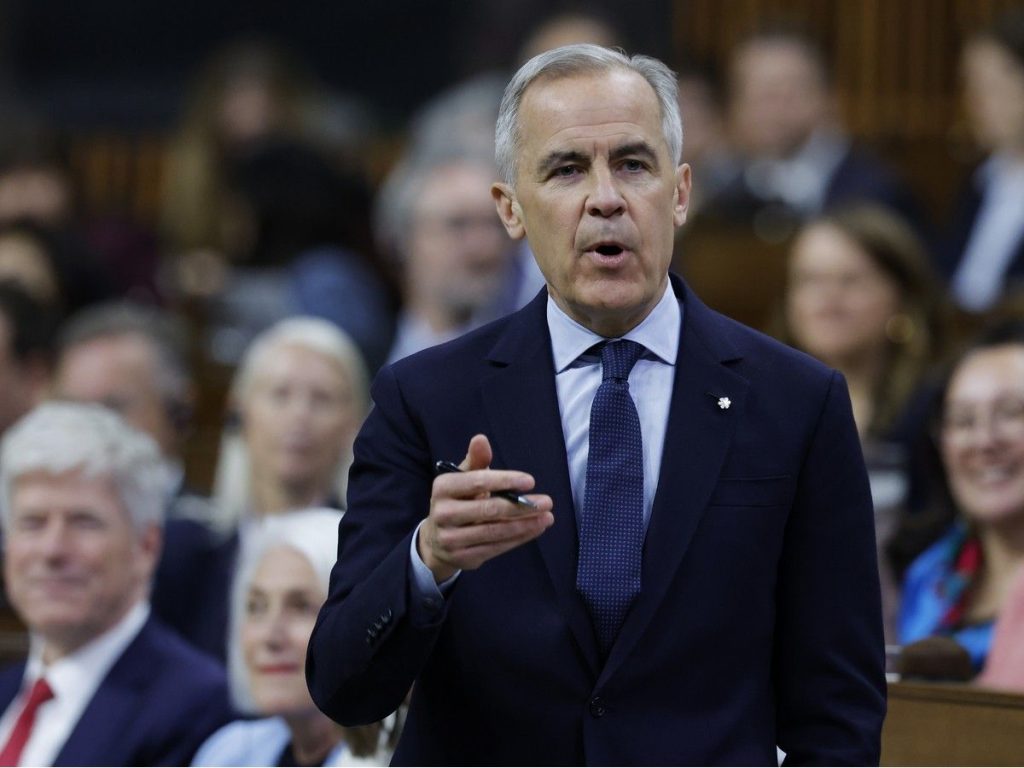
During a recent session of Question Period, Prime Minister Mark Carney took a firm stand against what his administration characterizes as “disinformation” regarding the state of private property rights. Carney explicitly stated that he “fundamentally disagrees” with the lower court’s ruling on the Cowichan land claim.
“We immediately appealed that decision alongside the government of B.C., the City of Richmond, and other First Nations,” Carney asserted. He emphasized that his government remains committed to advancing viable legal arguments to protect the interests of property owners. However, critics argue that these words come too late, questioning the consistency of the Liberal government’s legal strategy since they took office.
The Conservative Offensive: A New Task Force
In response to what they describe as a failure of leadership, the Conservative Party of Canada has launched a special task force on property rights. Led by Lower Mainland MP Tako van Popta, a former real estate and land development attorney, the committee aims to provide a robust defense for B.C. landowners.
Conservative Leader Pierre Poilievre has been vocal, accusing the Liberals of setting the stage for the Cowichan loss by abandoning the “extinguishment” argument—a legal doctrine that asserts the creation of private land titles permanently eliminates underlying Aboriginal title.
Key Pillars of the Conservative Strategy:
Reversing the 2018 Litigation Directive: Poilievre is demanding that the federal government scrap the policy that discourages lawyers from arguing that fee simple ownership takes precedence over all other claims.
Empowering Local Municipalities: The Conservatives are working closely with local leaders, such as Richmond MP Chak Au, to ensure that the voices of those directly affected by land title disputes are heard in Ottawa.
- Economic Engagement Committees: Beyond property rights, the party has established a committee on Pacific economic engagement to analyze how these legal uncertainties affect investment and housing development in the region.
The Legal Tightrope: Can the Strategy Be Saved?
The core of the legal debate rests on whether the federal government can successfully pivot its strategy during the appeal process. Tako van Popta has expressed skepticism, questioning whether the “extinguishment” argument can be reintroduced now that the government has previously signaled its abandonment.
“Carney’s words are empty and hypocritical as long as the Liberal government refuses to argue for the supremacy of fee simple title in front of the courts,” van Popta stated. Meanwhile, the City of Richmond has taken matters into its own hands, spearheading the appeal and insisting that the legal argument for the finality of private land ownership remains valid and necessary.
The Broader Political Context: Reconciliation vs. Property Rights
The controversy over the Cowichan decision is not merely a legal dispute; it is a flashpoint for the broader reconciliation agenda in Canada. Within the B.C. Conservative leadership race, candidates are taking increasingly bold stances. Caroline Elliott, for example, has called for a ban on land acknowledgments in schools, arguing that they inadvertently undermine the legitimacy of private property rights by framing current land ownership as “stolen.”
However, political analysts warn that this rhetoric is a double-edged sword. Mario Canseco, a prominent Vancouver-based pollster, suggests that while the “boots on the ground” message resonates in resource-heavy communities, overly aggressive anti-reconciliation rhetoric could alienate First Nations voters—a demographic that is increasingly vital for any party looking to maintain a stable mandate in British Columbia.
Is Carney Vulnerable?
Despite the intensity of the debate, polling data suggests that Prime Minister Carney’s popularity in British Columbia remains relatively resilient. His ability to frame the issue as a “misinformation” campaign by his opponents has, thus far, prevented the property rights issue from causing a significant dent in his overall approval ratings.
Conclusion: The Path Forward
As the appeal works its way through the courts, the tension between the federal government’s desire for reconciliation and the public’s demand for certainty in land ownership will likely dominate the political discourse in 2026.
The formation of the Conservative task force signals that property rights will be a central pillar of the next federal election campaign. Whether the Liberals can maintain their current legal path or whether they will be forced to adopt a more aggressive, pro-property rights stance remains to be seen. For now, homeowners in B.C. are left waiting for clarity, hoping that the courts will provide a definitive answer to the question of who holds the ultimate title to their land.