Operation Uranium Shield: Trump Briefed on High-Stakes Special Forces Mission in Iran

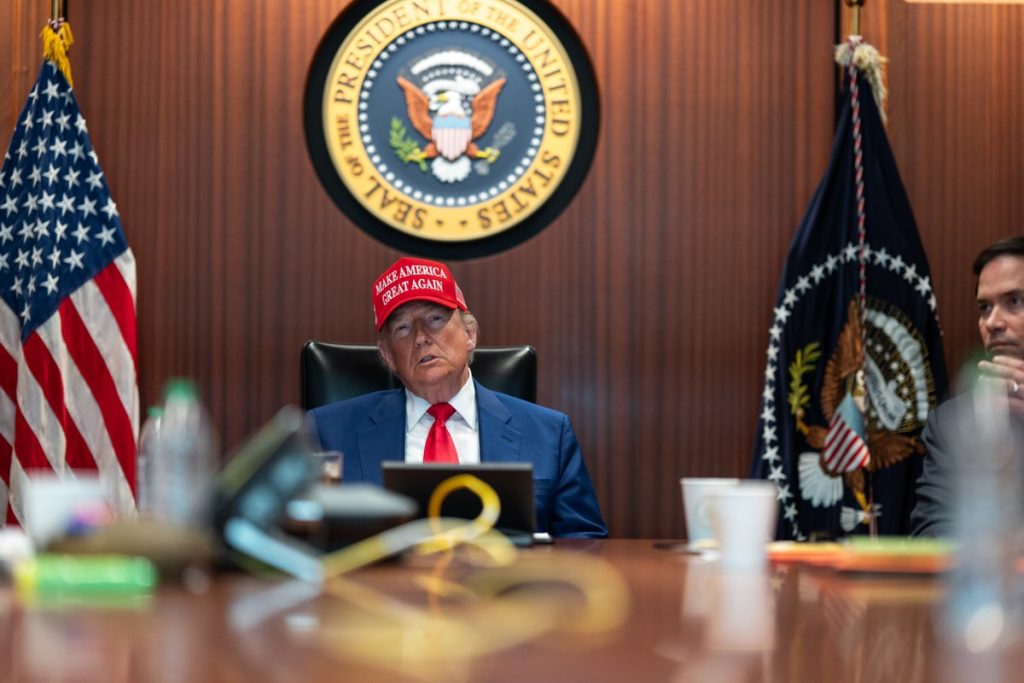
As the geopolitical landscape of the Middle East shifts in 2026, the Trump administration has escalated its strategic focus on Iran’s nuclear capabilities and its broader nuclear ambitions. Following a series of high-level military briefings where Trump ‘briefed on mission’ to secure Iran’s uranium stockpile, President Donald Trump has been presented with a range of aggressive options, the most daring of which involves a special forces mission to secure Iran’s enriched uranium stockpile, central to denuclearization efforts.
This potential operation, designed to neutralize what the White House views as a persistent nuclear threat and potential weapons of mass destruction (WMD), highlights the administration’s “maximum pressure” doctrine. This approach is also a form of strategic deterrence against further aggression. While the President has publicly declared that the U.S. has “already won” the conflict, the reality on the ground—characterized by an ongoing blockade of the Strait of Hormuz—suggests that the war is far from over.
The Strategic Briefing: A New Phase of Military Engagement
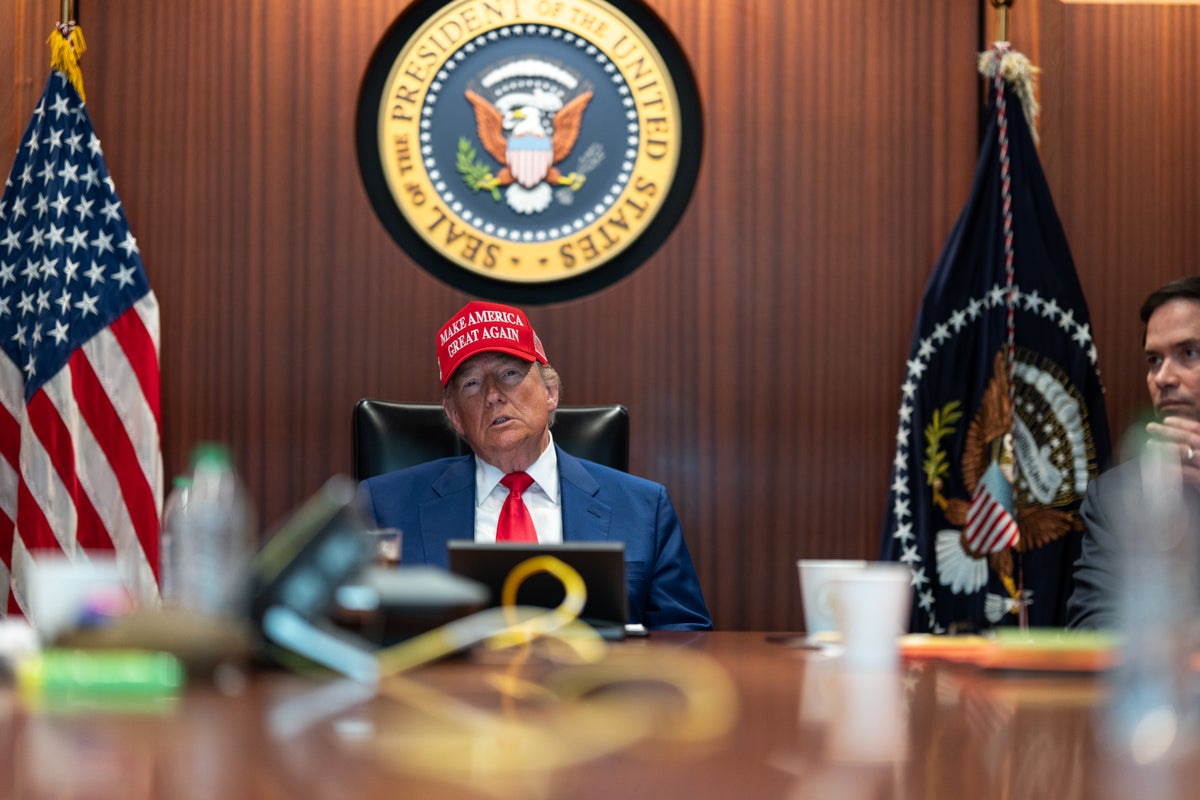
On a Thursday, Centcom commander Admiral Brad Cooper and Chairman of the Joint Chiefs of Staff General Dan Caine met with President Trump to outline a series of tactical military options, including the detailed plans for which Trump ‘briefed on mission’ to secure Iran’s uranium stockpile. The administration is seeking a decisive end to the Iranian nuclear program, moving beyond traditional air campaigns toward direct ground-based intervention, especially given concerns about the limitations of past International Atomic Energy Agency (IAEA) inspections.
The Three Pillars of the New Strategy
The military briefing reportedly focused on three distinct, yet interconnected, objectives, with the third objective being the core of why Trump ‘briefed on mission’ to secure Iran’s uranium stockpile:
- Surgical Infrastructure Strikes: A series of “short and powerful” air strikes designed to cripple Iranian command-and-control centers and key military logistics hubs.
- Strait of Hormuz Control: A naval-led operation to break the Iranian blockade, ensuring the free flow of global energy supplies.
- The Uranium Recovery Mission: A high-risk, high-reward covert special operations deployment to seize approximately 450 kilograms (nearly 1,000 pounds) of 60% enriched uranium.
The Logistics of a High-Risk Extraction
The proposal to seize nearly 1,000 pounds of highly enriched uranium (HEU) is arguably the most complex operation discussed, forming the critical component of why Trump ‘briefed on mission’ to secure Iran’s uranium stockpile. This aggressive stance follows the U.S. withdrawal from the Joint Comprehensive Plan of Action (JCPOA), also known as the Iran nuclear deal. Experts suggest that such an endeavor is not merely a “raid” but a full-scale logistical feat. The uranium is reportedly buried deep within reinforced facilities near Isfahan and Natanz.
Why the Mission is Considered “Deadly”
According to military analysts and former government officials, the risks associated with this operation are unprecedented:
Radiation Hazards: The handling of HEU requires specialized equipment to prevent fatal radiation exposure to the operators.
Structural Complexity: The uranium is stored in subterranean bunkers that have been hardened against past strikes. Accessing these caches would likely require heavy excavation machinery.
Engineering Requirements: The mission plan reportedly includes the construction of a temporary runway to facilitate the transport of heavy gear, making the operation vulnerable to enemy counter-attacks during the setup phase.
Trump’s “Bigger Margin” Doctrine
President Trump’s rhetoric has remained consistently bullish throughout 2026. Despite the ongoing instability in the Persian Gulf, exacerbated by Iran’s continued ballistic missile development, the President continues to assert that the U.S. has effectively dismantled the leadership and military structure of the Iranian state, even as Trump ‘briefed on mission’ to secure Iran’s uranium stockpile.
His stated desire to win by a “bigger margin” suggests that the administration is not satisfied with a stalemate. By targeting the uranium stockpile, a key objective for which Trump ‘briefed on mission’ to secure Iran’s uranium stockpile, the White House aims to remove one of Iran’s most vital bargaining chips, effectively stripping the regime of its ability to pivot toward nuclear weaponization during peace negotiations, and thereby enhancing long-term regional security and geopolitical stability.
The Geopolitical Fallout: Risks and Realities
The decision to deploy U.S. ground forces into Iranian territory, even for a limited mission like the one for which Trump ‘briefed on mission’ to secure Iran’s uranium stockpile, carries significant geopolitical weight, potentially challenging the spirit of the Nuclear Non-Proliferation Treaty (NPT).
Potential Implications
Escalation Risks: A ground operation, regardless of its surgical intent, could be viewed as an invasion by the Iranian public, potentially triggering a unified defensive response that could draw in regional proxies.
The Strait of Hormuz Conundrum: While the U.S. aims to clear the Strait, the focus on a ground mission in the interior of the country might leave naval assets overextended or vulnerable to asymmetric attacks from Iranian fast-attack boats and coastal missile batteries.
International Reaction: Global markets remain sensitive to any escalation in the region. A mission of this magnitude could cause a temporary spike in oil prices as investors factor in the uncertainty of a sustained ground operation.
Is the Mission Feasible?
Military experts remain divided on the feasibility of the operation, particularly the complex undertaking for which Trump ‘briefed on mission’ to secure Iran’s uranium stockpile. While the U.S. military possesses the most advanced special operations capabilities in the world, the environment in Iran is uniquely hostile.
The primary concern is the “staying time.” A mission to extract 450 kg of uranium is not a “hit-and-run.” It would require days of ground presence, during which time the forces would need to defend their position against potential Iranian reinforcements. The intelligence community is currently weighing whether the risk of losing elite personnel outweighs the strategic gain of securing the nuclear material.
Conclusion: A Turning Point in 2026
As of April 2026, the White House is at a crossroads. The briefing by General Caine and Admiral Cooper marks a pivotal moment in the administration’s foreign policy, especially concerning the plans for which Trump ‘briefed on mission’ to secure Iran’s uranium stockpile. Whether President Trump greenlights the mission to secure the uranium stockpile will likely depend on the latest intelligence regarding the stability of the Iranian regime’s inner circle.
If the mission proceeds, it will be one of the most daring special operations in modern U.S. history, fulfilling the objective for which Trump ‘briefed on mission’ to secure Iran’s uranium stockpile. If it remains a contingency plan, it serves as a stark warning to Tehran that the U.S. is prepared to reach into the very heart of their nuclear program to ensure regional security. As the situation develops, the world watches to see if this “bigger margin” victory will be achieved through diplomacy or the boots of American commandos.