Operation Midnight: How Banksy Erected a 25-Foot Statue in the Heart of London Overnight

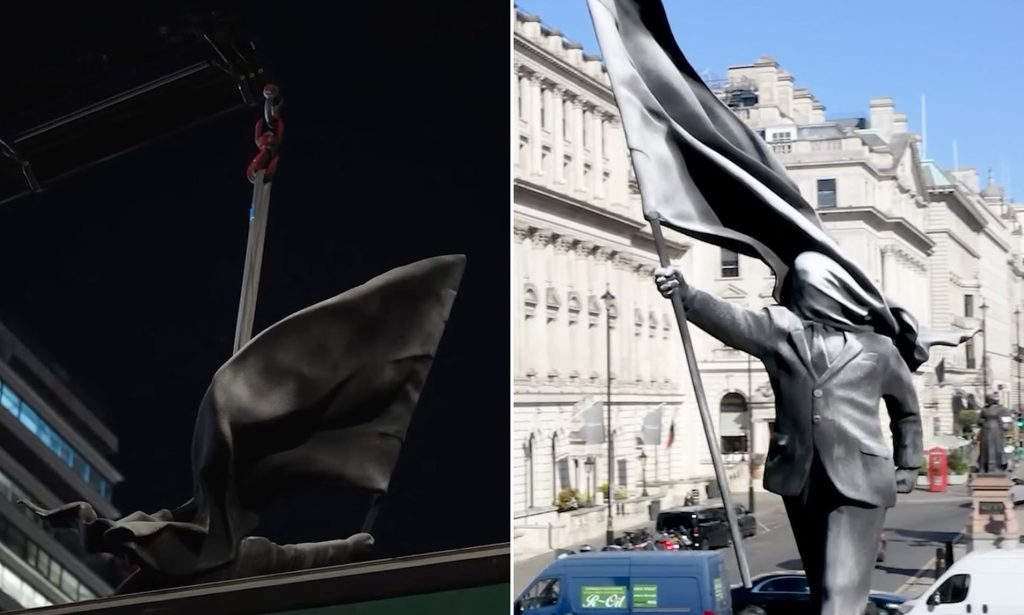
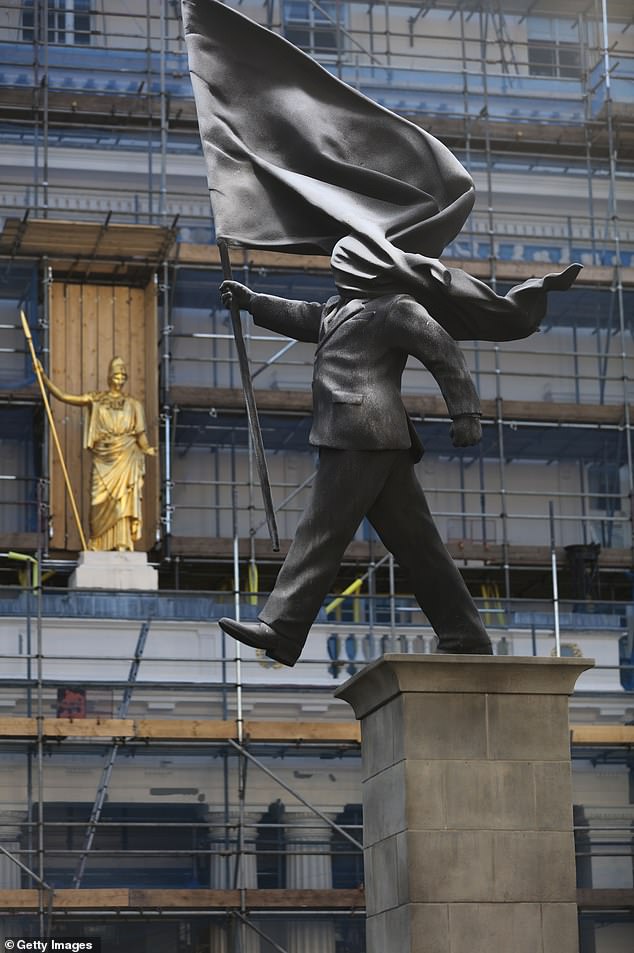
In the early hours of a chilly Wednesday morning, London’s Pall Mall underwent a silent transformation. As the city slept, one of the most ambitious guerrilla art installations in history was executed with military precision. By the time commuters emerged for their morning coffee, a 25-foot-tall resin sculpture of a suited man, blindly stepping off a plinth with a flag smothering his face, dominated the skyline.
The question on everyone’s lips—from the tourists at the Crimean War Memorial to the blindsided officials at Westminster Council—remains: How did the world’s most elusive artist pull off such a massive stunt in one of the most surveilled cities on Earth?
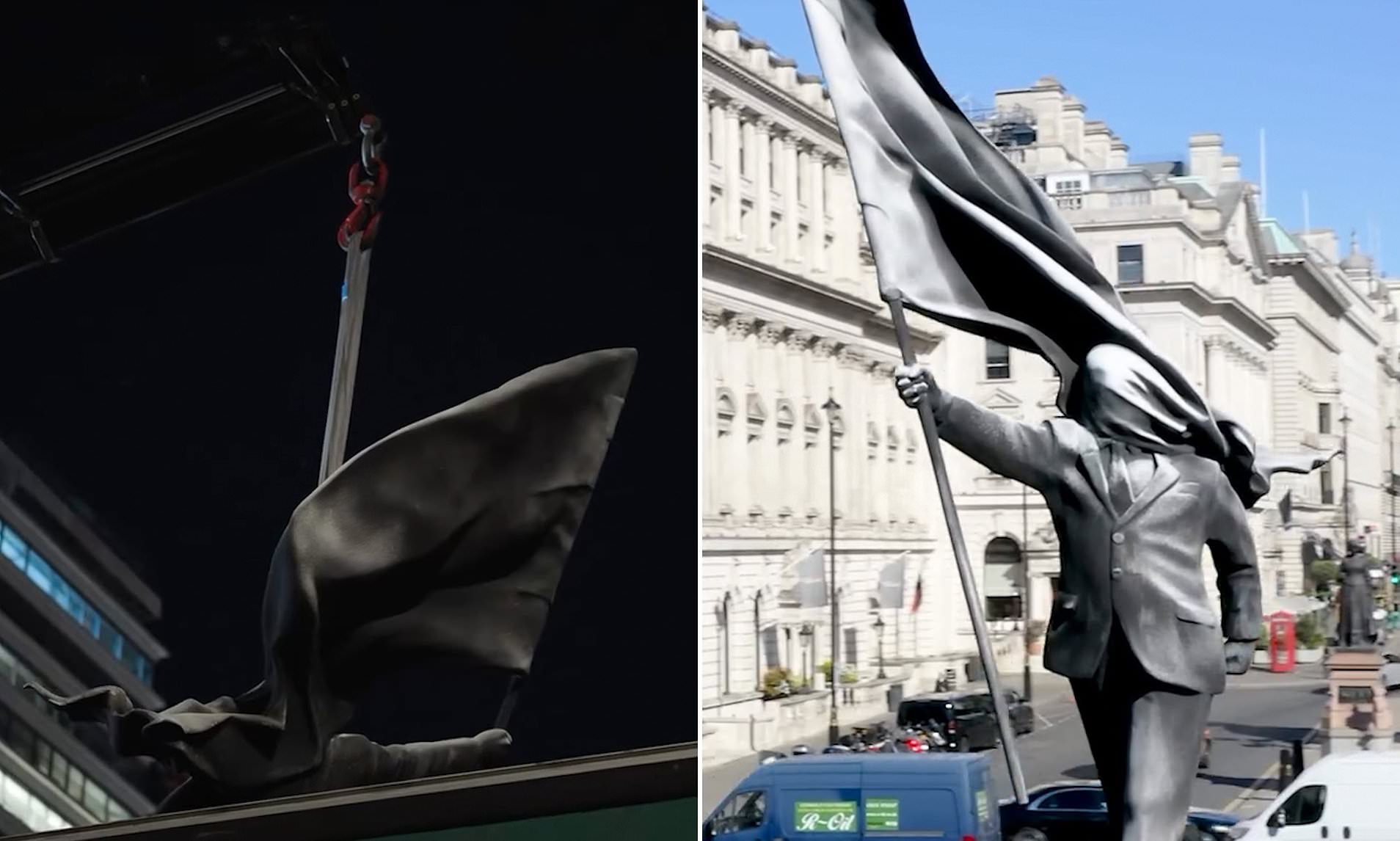
The Logistics of a “Ghost” Installation
To the casual observer, erecting a multi-ton, two-story statue seems impossible without months of permits, road closures, and public consultations. Yet, Banksy has built a career on the impossible. In 2026, his methods have become even more sophisticated, blending high-tech engineering with the psychology of “hiding in plain sight.”
Hiding in Plain Sight: The Hi-Viz Strategy
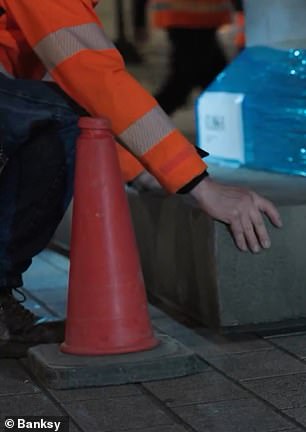
Banksy’s social media reveal provided the first clues. The installation wasn’t done by a shadowy figure in a hoodie, but rather by a crew that looked like any other municipal maintenance team. By using yellow traffic cones, hi-viz vests, and standard industrial equipment, the team created a “perception of legitimacy.”
In London, a city constantly under repair, a low-loader truck and a crane are such common sights that they become invisible. Pedestrians and police alike often ignore workers in orange vests, assuming they have the necessary paperwork. This “unsolicited monument” was installed not by avoiding the light, but by mimicking the very authorities that would usually prevent it.
The Heavy Lifting: Hydraulics and Precision
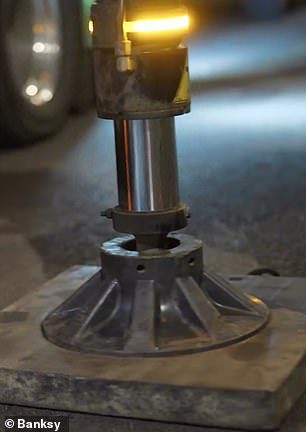
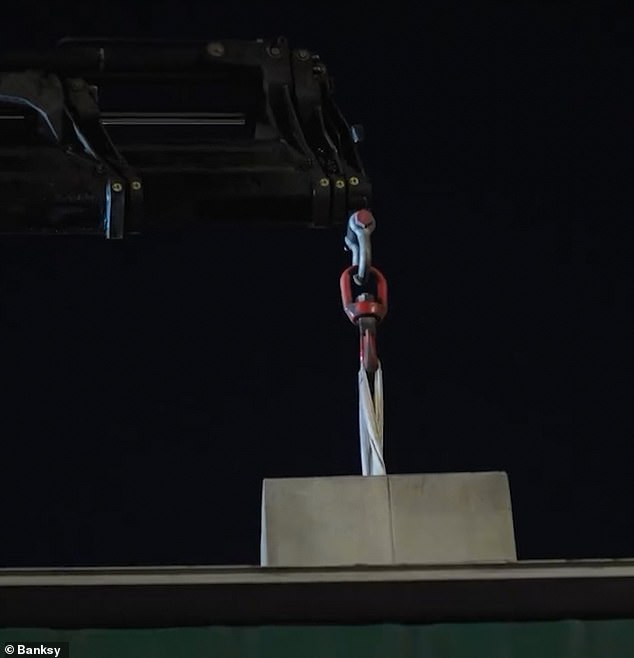
The statue, despite its size, was designed for rapid deployment. The video shared by the artist shows a large low-loader truck rolling into Pall Mall. Using a hydraulic crane and a large metal hook, the crew lowered the pre-fabricated resin figure onto a pre-constructed plinth.
The entire operation likely took less than an hour. By the time the sun rose, the truck was gone, the cones were cleared, and the “suited man” stood as if he had always been there.
Why Pall Mall? The Symbolism of the “Gap”
Banksy’s spokesperson noted that the artist chose the traffic island in Pall Mall because “there was a bit of a gap.” However, in the world of contemporary art, nothing is accidental.
A Dialogue with History
The statue sits in the shadows of London’s most traditional monuments, including the statues of Edward VII and Florence Nightingale. By placing a modern, satirical figure among these historical giants, Banksy forces a comparison between the “heroes” of the past and the “blind leaders” of the present.
Interpreting the “Blind Patriot”
The sculpture features a man in a corporate suit, a universal symbol of power and bureaucracy. The flag flying into his face—blinding him as he steps off a precipice—has been widely interpreted as a commentary on blind patriotism. In a post-2025 political landscape, many see it as a critique of leadership that prioritizes nationalistic symbols over the actual direction of the country.
The Westminster Council Dilemma
Perhaps the most amusing aspect of the “Pall Mall Giant” is the reaction from local authorities. Westminster Council admitted they had no prior warning of the installation. In a statement that reflects the artist’s growing cultural status, the council welcomed the “striking addition” to the city’s art scene, confirming they have no immediate plans to remove it.
This marks a significant shift in how urban guerrilla art is handled. While previous works, such as the 2024 mural at the Royal Courts of Justice, were swiftly covered or protected by screens, this 25-foot statue is being treated as a public asset—at least for now.
Who is the Man Behind the Mask?
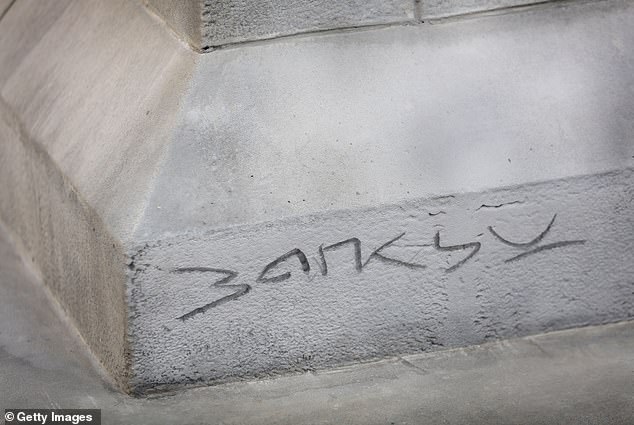
While the world focuses on the statue, the mystery of Banksy’s identity continues to evolve. By 2026, the veil has grown thin. Investigations by major news outlets and international agencies have repeatedly pointed to Robin Gunningham, a Bristol-born artist.
The Life of “David Jones”
Reports suggest that Gunningham lives a quiet, almost ironic life in rural Somerset under the name David Jones. Far from the urban chaos of his art, “Mr. Jones” is said to tend to a vegetable patch and keep chickens. His home, a listed building, is secured with CCTV—a fascinating irony for an artist who has spent decades satirizing the surveillance state.
The Reuters Investigation
A landmark investigation by Reuters confirmed that Gunningham used the name David Jones for international travel, including trips to conflict zones like Ukraine, where Banksy murals appeared shortly thereafter. Despite these “reveals,” the Banksy brand remains untouched, proving that the mythos of the artist is more powerful than the man himself.
A Legacy of High-Stakes Stunts
The Pall Mall statue is just the latest in a long line of “how did he do that?” moments. To understand the scale of the London statue, one must look back at his previous feats:
- The Shredded Masterpiece (2018): When Girl With Balloon self-destructed at a Sotheby’s auction, it proved Banksy could manipulate high-end art markets in real-time.
- The Tate Britain Infiltration (2003): Disguised as a pensioner, Banksy hung his own work in one of the world’s most prestigious galleries.
- The Royal Courts Mural (2024): A towering depiction of a judge and a protester that appeared overnight on a high-security government building.
- The Centre Point Sculpture (2025): An unsigned piece featuring children near Tottenham Court Road that sparked a city-wide scavenger hunt.
The Engineering of Future Art
As we look toward the remainder of 2026, the Pall Mall statue represents a new era for Banksy. He is no longer just a “graffiti artist” with a stencil and a spray can. He is an urban engineer, capable of deploying massive structural works that challenge the very definition of public space.
The 25-foot man in the suit serves as a reminder that the city is a canvas, and even in an age of total surveillance, there are still “gaps” where a giant can be built in the dark.
Conclusion: The Enduring Power of Mystery
Banksy’s ability to erect a massive statue in central London is a testament to the power of logistical planning and creative audacity. By utilizing the tools of the establishment—trucks, cranes, and hi-viz vests—he successfully circumvented the establishment’s rules.
Whether the “Blind Patriot” remains on Pall Mall for years or is eventually moved to a museum, its arrival has already achieved its goal: it made the world stop, look up, and wonder. In an increasingly predictable world, Banksy remains the ultimate master of the unexpected.