The Great Redistricting Scramble: How the Supreme Court Ruling is Reshaping the 2026 Political Landscape

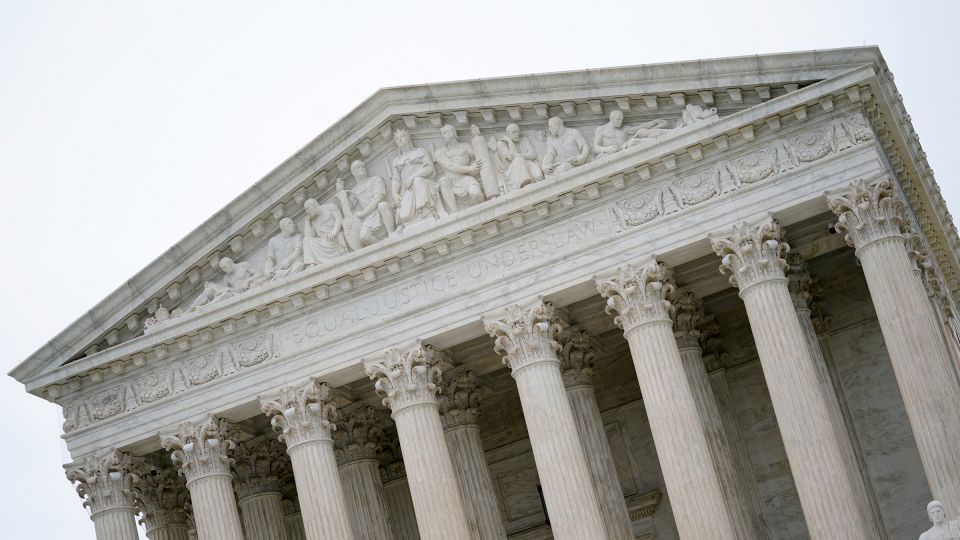
The landscape of American democracy is shifting beneath our feet. Following a landmark Supreme Court decision that significantly weakened the Voting Rights Act (VRA), a massive, state-level scramble to redraw congressional maps has erupted across the United States. This legal earthquake, which centers on the court’s decision to strike down Louisiana’s congressional map containing two Black-majority districts, has effectively opened the floodgates for a new era of aggressive gerrymandering.
As we head deeper into the 2026 electoral cycle, the fallout from this ruling is forcing election officials into a frantic race against time. With primary elections already underway in some jurisdictions, the sudden necessity to adjust boundaries is creating administrative chaos, raising constitutional concerns, and intensifying the partisan battle for control of the U.S. House of Representatives.
The Legal Catalyst: Why the Supreme Court Ruling Matters
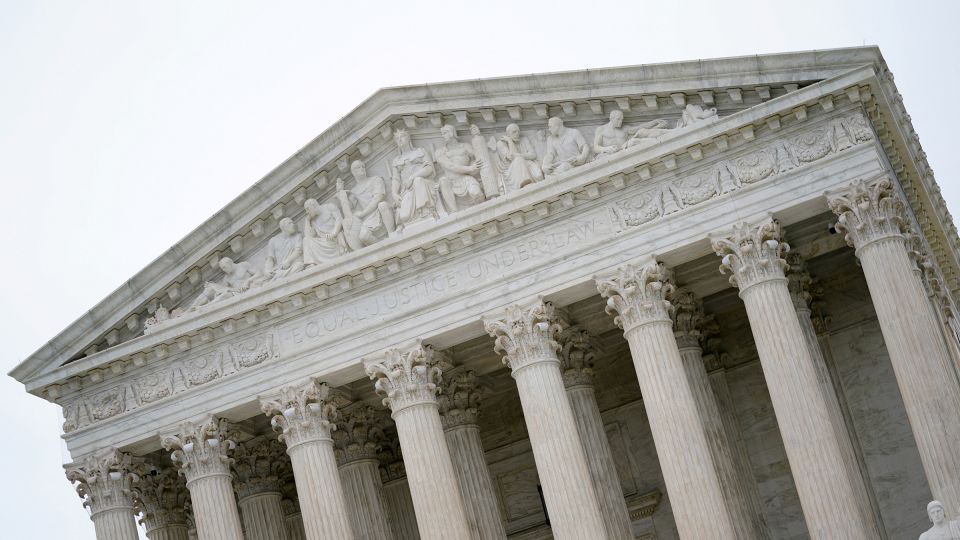
The Supreme Court’s recent opinion, which characterized certain majority-minority districts as unconstitutional racial gerrymanders, has drastically narrowed the scope of legal protection for voters of color. By making it significantly more difficult to challenge redistricting plans as discriminatory, the Court has provided a roadmap for state legislatures to prioritize partisan outcomes over historical protections.
The Erosion of the Voting Rights Act
For decades, the Voting Rights Act served as a primary safeguard against the dilution of minority voting power. However, the current Court’s conservative majority has signaled a shift toward a more restrictive interpretation. Legal scholars argue that this “demolition” of the act creates a environment where:
Racial gerrymandering claims are harder to prove in federal court.
Partisan motives can now be used as a convenient shield to mask the dilution of minority representation.
- States have broader latitude to “crack” or “pack” districts to achieve specific political goals without facing immediate federal intervention.
A State-by-State Scramble for Power
The impact of this ruling is not limited to Louisiana; it has triggered a domino effect across the South and beyond. From Tennessee to Alabama, Republican-led legislatures are moving with unprecedented speed to capitalize on the new legal framework.
The Louisiana Crisis: A Blueprint for Chaos
In Louisiana, the situation remains dire. Despite ballots already being in the mail for the upcoming primary, state officials are moving to void current results and redraw maps to align with the Supreme Court’s new, stricter standards. This has led to a bizarre scenario where votes already cast may effectively be discarded, leaving voters in a state of confusion and disenfranchisement.
Tennessee and the Pressure to Flip Seats
In Tennessee, the political pressure is mounting to redraw the district of the state’s sole Democratic representative. With support from national political figures, state lawmakers are exploring special legislative sessions to “correct” what they term constitutional flaws in existing maps. This brazen attempt to secure a partisan advantage serves as a grim preview of how the 2026 midterms may be manipulated.
Florida’s Strategic Gains
Governor Ron DeSantis has utilized the momentum from the Supreme Court decision to push through a congressional plan in Florida that seeks to flip four blue seats into the Republican column. By leveraging the Court’s ruling to overcome internal legislative skepticism, Florida has become the frontrunner in the movement to maximize partisan gains before the upcoming elections.
The Administrative Nightmare: When Policy Meets Logistics
While the political maneuvering makes headlines, the administrative burden on local election officials is often overlooked. Redrawing districts is not a simple task; it is a complex, data-heavy process that requires precision to ensure the integrity of the ballot.
The Hidden Costs of Mid-Cycle Redrawing
David Becker, a former Justice Department voting attorney, notes that the current climate is creating a “partisan war” that places election administrators in the crosshairs. The logistical requirements of a last-minute shift include:
- Verification of Voter Data: Millions of voters must be re-coded into new districts, a process prone to errors.
- Candidate Re-Qualification: The entire process of candidate filing, verification, and qualification must be restarted, adding weeks of delay.
- Ballot Management: With ballots already printed or mailed, the cost of voiding and reissuing election materials is astronomical, not to mention the potential for voter suppression due to mass confusion.
The Future of Non-Partisan Elections
A critical, often-debated aspect of this ruling is its potential application to non-partisan elections, such as those for state supreme court seats or local school boards. Mississippi is currently serving as a legal testing ground for this theory.
If the Supreme Court’s new standard is applied to non-partisan bodies, it could fundamentally alter the makeup of local government. By allowing for “partisan-lite” gerrymandering in environments that were previously shielded from such tactics, the ruling could ensure that local, non-partisan offices are finally brought into the fold of national political polarization.
Conclusion: A Turning Point for American Democracy
The scramble to redraw maps following the Supreme Court’s decision is more than just a procedural headache; it is a fundamental test of the American electoral system. As political parties continue to treat redistricting as a zero-sum game, the real losers are the voters—particularly those in minority communities whose voices are increasingly being marginalized.
As we look toward the 2026 midterms, the question remains: Can the democratic process survive this level of institutional instability? With the courts providing less protection and political actors showing more willingness to disrupt election cycles, the integrity of our representation is at a crossroads. The “gerrymandering arms race” has officially begun, and the outcome will define the political map for the remainder of the decade.