The €5 Million Question: Why Legal Costs Are Skyrocketing at the New Children’s Hospital

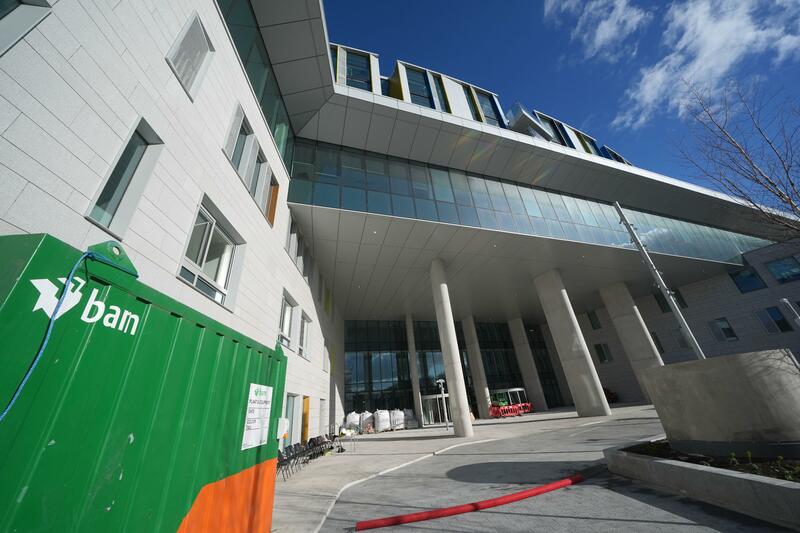
The saga of Ireland’s new national children’s hospital has long ceased to be a simple construction project; it has transformed into a complex, multi-billion-euro legal labyrinth. As of February 2026, the New Children’s Hospital Development Board (NCHDB) has confirmed that over €5 million has been spent on legal fees over the last 12 years. This figure, while staggering, represents only a fraction of the broader fiscal friction defining this project.
With the total project cost ballooning toward an eye-watering €2.2 billion, the public is increasingly asking why a healthcare facility—originally budgeted at €650 million—has become a graveyard for taxpayer funds and a playground for high-stakes litigation.

The Anatomy of the Legal Bill
The revelation regarding the €5.3 million in cumulative legal fees emerged during a tense session of the Public Accounts Committee (PAC). David Gunning, CEO of the NCHDB, clarified that these costs are primarily tied to defending the state against, and adjudicating, a massive €1 billion in claims lodged by the lead contractor, BAM.
Why the Costs Keep Climbing
The legal expenditure isn’t just about hourly rates for lawyers; it is the direct result of a breakdown in contractual harmony. The project has been plagued by thousands of individual claims. To date, an independent employer’s representative has adjudicated over 3,165 claims worth approximately €819 million. Of that total, roughly €52 million has been awarded to the contractor.
However, the legal horizon remains dark. There are significant claims still awaiting resolution, and several high-value matters are currently winding their way through the High Court. The cost of these proceedings—in terms of both legal counsel and administrative time—is effectively acting as a secondary tax on the project’s already strained budget.
A Project Defined by “Serially Delayed” Milestones
The original completion date for the facility was August 2022. As we move through 2026, the project remains in a state of suspended animation regarding a final handover. When pressed by the PAC for a new substantial completion date, Gunning was unable to provide a firm commitment, noting that the board is still waiting on updated program documentation from BAM.
The Tug-of-War Over Accountability
The tension between the NCHDB and BAM has reached a boiling point. The Board’s stance is clear: they argue that the delays are the result of inadequate resourcing. According to the Board, the contractor has failed to deploy sufficient skilled labor and management to maintain a “right-first-time” approach to construction.
Conversely, BAM maintains a different narrative. The contractor asserts that the development program has been forced to evolve due to:
- Instructed design changes initiated by the Board.
- Expansion of the project scope beyond the original contract.
- Complex integration requirements that were not accounted for in the initial tender.
The “Rework” Reality: Small Issues, Huge Impact
One of the most revealing insights from the recent committee hearings came from Project Director Phelim Devine. He pushed back against the idea that the delays are caused by fundamental design flaws. Instead, he painted a picture of a project struggling under the weight of rework and defect closure.
Devine highlighted that while there have been no major changes to the hospital’s core functionality since 2019, the sheer volume of minor issues is staggering. With over 23,500 reissues of drawings and thousands of rooms requiring remedial work—such as moving electrical sockets or adding emergency lights—the project is suffering from a “death by a thousand cuts.” These small, repetitive tasks are consuming time and resources, keeping the site in a state of perpetual finishing rather than final completion.
The Financial Burden: Who Pays the Bill?
The budget for the children’s hospital is split between the NCHDB and Children’s Health Ireland (CHI). While the Board remains optimistic that it can keep its portion of the project under the €1.88 billion limit, the reality is far more fluid.
Julia Lewis, CHI transformation director, has signaled that costs could easily escalate further depending on the final handover date. Every month of delay necessitates additional operational costs, insurance, and site security, further draining the public purse. When you add the €361 million contingency and the ongoing legal fees, the final price tag remains a moving target that continues to outpace inflation.
Looking Toward 2027 and Beyond
Even if the physical structure is completed in the coming months, the public must manage their expectations. Once the keys are handed over, the facility requires an estimated seven-month commissioning period. This involves testing complex medical technology, staff training, and ensuring the environment is sterile and safe for patients.
This means that even in an optimistic scenario where the building is finished by late 2026, the doors may not open for clinical services until well into 2027. The Irish public, which has watched this project evolve from a beacon of hope into a symbol of fiscal mismanagement, is now waiting for a resolution that feels perpetually just out of reach.
Conclusion: The Cost of Indecision
The €5 million spent on legal fees is a symptom of a deeper malaise. When a project of this magnitude becomes defined by litigation rather than construction, the primary losers are the children and families who have been waiting years for a state-of-the-art facility.
The NCHDB and BAM are currently locked in a cycle of blame that has proven to be incredibly expensive. Until there is a shift toward a collaborative, transparent approach to finishing the remaining work, the legal bills will likely continue to rise, and the completion date will continue to be a shifting mirage. For now, the nation watches, waits, and wonders when this “most expensive piece of health infrastructure” will finally be ready to serve the patients it was built for.