Golders Green Terror Attack: Police Reveal Suspect Was Involved in Violent Altercation Hours Before Stabbing

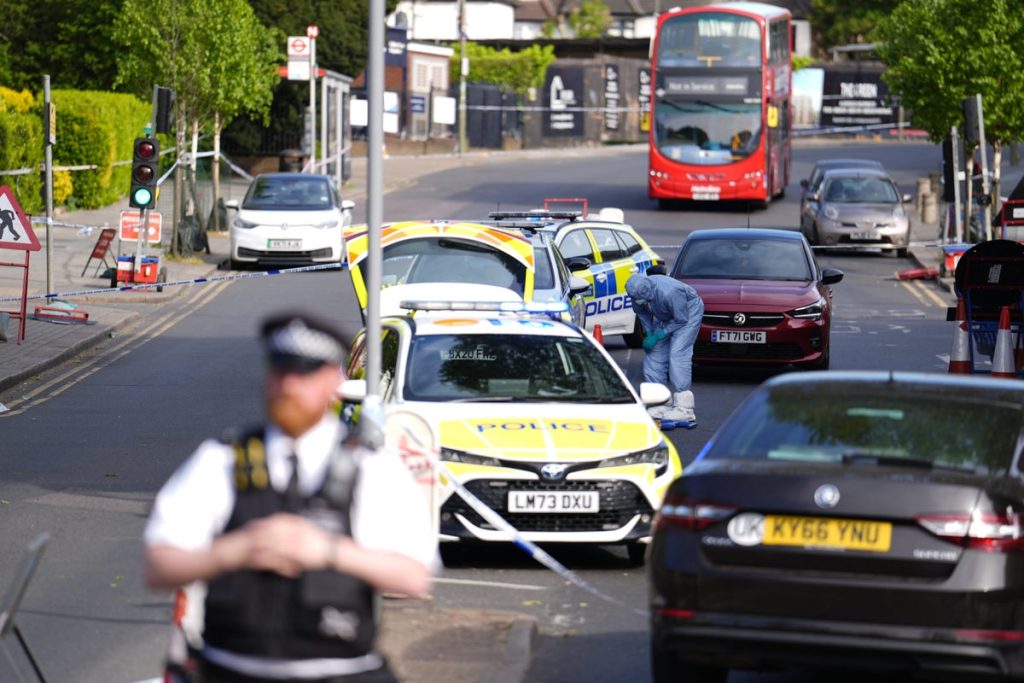
The security landscape of London in 2026 remains under intense scrutiny following a harrowing terrorist incident in the heart of the Jewish community. As Counter-Terrorism Police deepen their investigation into the Golders Green stabbing, shocking new details have emerged regarding the suspect’s movements. Detectives now believe that the 45-year-old man, currently in custody, was involved in a violent prior altercation in Southwark just hours before the dual stabbings in North London.
This revelation has sent shockwaves through the capital, raising urgent questions about early intervention and the persistent threat of lone-actor extremism. As the Metropolitan Police search an address in South-East London, the community is left grappling with the aftermath of an attack that has been officially declared a terrorist incident.

The Morning Altercation: A Missed Warning Sign?
Long before the sirens echoed through Golders Green, the day began with a disturbing encounter in South-East London. According to Scotland Yard, officers were called to a residence on Great Dover Street, Southwark, at approximately 8:50 am.
Reports indicate that a suspect, matching the description of the Golders Green attacker and armed with a knife, engaged in a heated altercation with an occupant. While the occupant escaped with only minor injuries, the suspect managed to flee the scene before police arrived.
Connecting the Dots: Southwark to Golders Green
Detectives now strongly believe this individual is the same 45-year-old British national who would later be apprehended in North London. The timeline suggests a calculated or highly agitated progression across the city. The fact that a known violent offender, born in Somalia and with a history of mental health problems, was active on the streets hours before the main attack has reignited debates over police response times and the monitoring of high-risk individuals in 2026.
Terror in Golders Green: The Timeline of the Attack
The peace of the north London suburb was shattered later that Wednesday. The victims, identified as Shilome Rand (34) and Mosche Ben Baila (76) (known locally as Moshe Shine), were targeted in what appears to be a premeditated act of hate.
The “Miracle” Survival of Shilome Rand
Mr. Rand, who had just left his local synagogue and was heading to work, described the terrifying moment he was confronted. Speaking to the media, he recounted how the attacker lunged at him, stabbing him in the chest.
“This fellow came towards me and just stabbed me in the chest… I jumped back, so thankfully it was only one stab. It could have taken my life,” Rand stated.
Initially told he would require emergency surgery, Rand’s condition was later downgraded, leading him to describe his survival as a “miracle.” However, the psychological scars on the community are far deeper. Rand noted that the local population is “really afraid” and “uncomfortable walking in the streets,” with many placing the blame on the government’s perceived inaction regarding antisemitic incidents.

Police Bravery and the Use of Force
The apprehension of the suspect was caught on harrowing body-worn footage and bystander videos. The clips show a man at a bus stop visibly putting on a kippah—a Jewish skullcap—immediately before the attacker lunged. This specific detail has been pivotal in classifying the event as a targeted antisemitic attack.
The Confrontation on the Road
Metropolitan Police officers faced the knifeman in the middle of a busy road. The footage reveals a tense standoff where officers repeatedly shouted, “Get down on the ground” and “Drop the knife.” When the suspect, who was described as violent and posing a “clear threat,” refused to comply, officers deployed a Taser.
A member of the public also stepped in, demonstrating immense bravery by helping to apprehend the suspect. Sir Mark Rowley, the Metropolitan Police Commissioner, later revealed that the officers on the scene believed the suspect might have been carrying an explosive device, adding an even more dangerous layer to the confrontation.

The Suspect: A Profile of Violence and Mental Health
The 45-year-old suspect is a British national, born in Somalia. According to Sir Mark Rowley, the individual has a documented history of serious violence and significant mental health issues. This “dual-threat” profile—combining radicalization potential with psychiatric instability—has become a primary focus for counter-terrorism units in 2026.
Investigating “Hayi” and Arson Links
While the stabbing is the most recent horror, it follows a string of suspicious activities in the area. A group calling itself “Hayi” has claimed responsibility for the stabbing, as well as several recent arson attacks on Jewish sites, including:
- An attempted arson at a memorial wall.
- The destruction of four Jewish community ambulances by fire in late March.
- A drone incident near the Israeli embassy.
However, investigators are treating the group’s claims regarding the Golders Green stabbing with skepticism. The nature of a lone-actor knife attack differs significantly from the more technical arson and drone operations previously claimed by the group.

Political Fallout and National Security in 2026
The attack has triggered a political firestorm. Prime Minister Sir Keir Starmer convened a Cobra meeting, acknowledging that this was not an “isolated incident” but part of a disturbing trend of antisemitic violence.
Government Pledges and Public Anger
- The Home Secretary: Shabana Mahmood pledged that the government would “strain every sinew” to ensure the safety of the Jewish community.
- The Opposition: Tory leader Kemi Badenoch labeled the situation a “national emergency,” citing the existence of terrorists specifically seeking out visibly Jewish people.
- The Monarchy: King Charles III, currently in the US, expressed deep concern, while the Prince and Princess of Wales issued a statement wishing the victims a speedy recovery.
Despite these assurances, the mood on the ground remains volatile. Sir Mark Rowley and local MP Sarah Sackman were heckled by residents demanding their resignations, reflecting a community that feels abandoned by the state’s security apparatus.

Analysis: The Evolving Threat of Antisemitism
The Golders Green incident highlights a critical shift in urban security challenges. In 2026, the intersection of mental health crises and ideological radicalization has made “lone-wolf” attacks increasingly difficult to predict and prevent.
The fact that the suspect was involved in a prior altercation on the same day suggests a “triggering” event may have occurred earlier in the morning. This underscores the need for real-time data sharing between local police units and counter-terrorism commands. If the Southwark incident had been flagged with higher urgency across districts, the tragedy in Golders Green might have been averted.
Community Resilience and Protests
Following the attack, over 150 protesters marched through Golders Green, demanding that groups like the IRGC be placed on the terror list and criticizing Mayor Sadiq Khan. This grassroots movement signals a community that is no longer content with “words of condemnation,” as Chief Rabbi Sir Ephraim Mirvis poignantly noted.
Conclusion: A City on Edge
As the investigation continues, the focus remains on the South-East London address being searched by forensic teams. The 45-year-old suspect remains in custody, facing charges of attempted murder and terrorism-related offenses.
For the residents of North London, the “miracle” of survival for Shilome Rand is a small comfort against the backdrop of a “national emergency.” The Golders Green stabbing is a stark reminder that the battle against extremism and the protection of minority communities requires more than just reactive policing—it requires a fundamental shift in how the UK addresses the root causes of hate and the management of violent offenders with mental health histories.