**Canada Selected as Global Hub for NATO’s New Defence, Security and Resilience Bank (DSRB)**

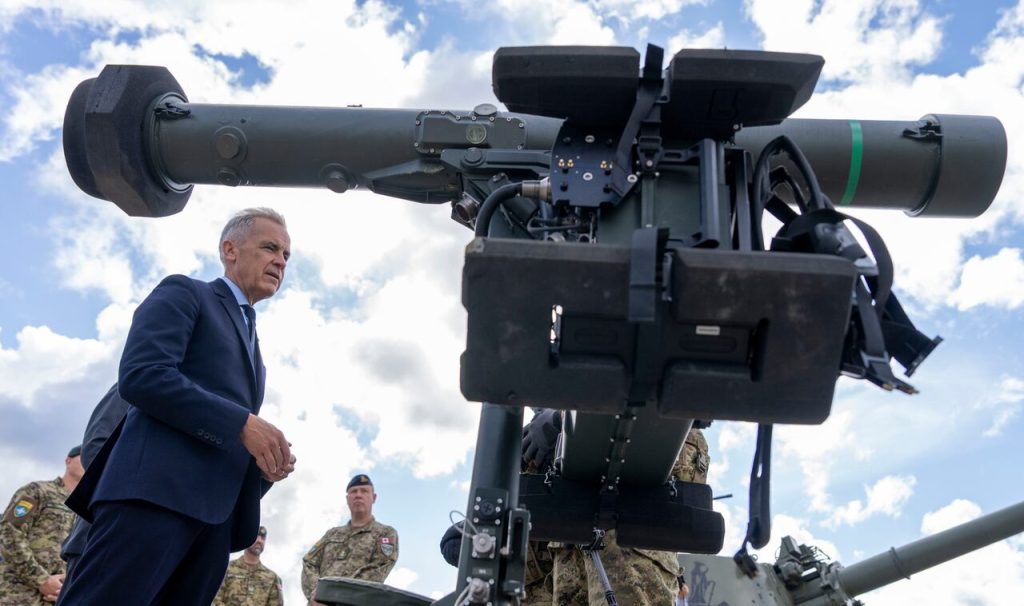
In a landmark move that solidifies Canada’s position as a cornerstone of Western geopolitical stability, sources have confirmed that Canada has been selected to host the headquarters of the newly formed Defence, Security and Resilience Bank (DSRB). This decision, first reported by The Globe and Mail and later corroborated by Radio-Canada, marks one of the most significant expansions of the international financial architecture in decades.
As we move through 2026, the global security landscape has shifted toward a model of “integrated resilience.” The DSRB is designed to be the primary engine for this transformation, providing the necessary capital to modernize the collective defense capabilities of NATO members and their allied nations.
What is the Defence, Security and Resilience Bank (DSRB)?
The DSRB is not a traditional commercial bank. It is a multilateral institution specifically engineered to bridge the gap between private capital and public security needs. Its primary mission is to finance large-scale projects that enhance the “resilience” of democratic nations—ranging from traditional military hardware to cybersecurity infrastructure and climate-resilient logistics.
The bank’s services are expected to include:
- Long-term credit facilities for sovereign nations.
- Streamlined procurement processes for joint-nation defense acquisitions.
- Venture capital for emerging defense technologies (DeepTech).
- Resilience bonds aimed at hardening civilian infrastructure against hybrid threats.
By centralizing these functions in Canada, the international community is signaling its trust in the nation’s regulatory stability and its burgeoning expertise in defence finance.

The Economic Impact: 3,500 High-Value Jobs
The establishment of the DSRB headquarters is expected to be a massive economic catalyst for Canada. Early estimates suggest the bank will directly create at least 3,500 specialized jobs. These roles will not be limited to administrative staff; the bank will require a “brain trust” of experts in:
- International Operations: Managing cross-border capital flows and diplomatic financial relations.
- Defence Finance: Structuring complex loans for multi-billion dollar military assets.
- Specialized Research and Analysis: Assessing geopolitical risks and the efficacy of new security technologies.
- Cybersecurity and Fintech: Ensuring the bank’s own operations are immune to the very threats it seeks to mitigate.
This influx of professional talent is expected to turn the host city into a global “Silicon Valley of Defence Finance,” attracting secondary investments from private equity firms and defense contractors looking to be near the source of funding.
The Battle of the Cities: Who Will Host the DSRB?
While Canada has secured the bank, the internal debate over which city will serve as the host is reaching a fever pitch. Four major urban centers have submitted comprehensive bids: Toronto, Montreal, Ottawa, and Vancouver. The federal government, led by Prime Minister Mark Carney, is currently weighing the strategic advantages of each.
Toronto: The Financial Powerhouse
Toronto is widely considered the frontrunner. As Canada’s financial heart and the second-largest financial hub in North America, it offers unparalleled access to global capital markets. Ontario Premier Doug Ford and Toronto Mayor Olivia Chow have presented a rare united front, arguing that Toronto’s existing infrastructure and concentration of banking talent make it the only logical choice.
Montreal: The Aerospace and AI Hub
Montreal’s bid leans heavily on its status as a global leader in aerospace and artificial intelligence. With organizations like ICAO already headquartered there, Montreal has a proven track record of hosting international bodies. The city’s expertise in AI could be a decisive factor, as the DSRB looks to finance next-generation autonomous defense systems.
Ottawa: The Seat of Power
As the capital, Ottawa offers the most direct proximity to the Department of National Defence (DND) and Global Affairs Canada. Proponents argue that for a bank so closely tied to NATO policy, being in the same city as the nation’s political decision-makers is essential for operational efficiency.
Vancouver: The Pacific Gateway
Vancouver’s bid focuses on the shifting focus toward Indo-Pacific security. As NATO allies look to increase their presence in the Pacific, Vancouver offers a geographic advantage and a timezone that bridges the gap between Europe and Asia.
Strengthening Collective Security in 2026
The establishment of the DSRB comes at a time when traditional defense spending is no longer sufficient. In 2026, “security” encompasses more than just tanks and jets; it includes energy independence, supply chain integrity, and digital sovereignty.
“Canada is stepping up with like-minded partners to mobilize capital at scale,” a government source noted. By hosting the DSRB, Canada is facilitating a move toward multilateral procurement. Historically, countries have often struggled to buy equipment together due to differing financial regulations and budget cycles. The DSRB will act as a “financial clearinghouse,” allowing multiple nations to pool their resources and achieve economies of scale that were previously impossible.
Why Canada? The Logic Behind the Selection
Several factors contributed to Canada being chosen over other NATO allies:
- Geopolitical Neutrality within the Alliance: While a staunch NATO member, Canada is often seen as a “middle power” capable of mediating between the interests of the United States and European allies.
- Regulatory Excellence: The Canadian banking system is consistently ranked as one of the soundest in the world.
- The “Carney Factor”: Prime Minister Mark Carney’s background as the former Governor of the Bank of England and the Bank of Canada has given the international community confidence in Canada’s ability to oversee a complex multilateral financial institution.
The Road Ahead: Implementation and Launch
The federal government is expected to announce the winning host city by the end of the fiscal year. Once the location is finalized, a rapid build-out phase will begin. This involves not only the physical construction of a secure headquarters but also the creation of a legal framework that allows the DSRB to operate with the necessary immunities and privileges afforded to international organizations.
For Canadian businesses, the DSRB represents a “once-in-a-generation” opportunity. Small and medium-sized enterprises (SMEs) in the defense and tech sectors will have a direct line to a massive new source of funding, potentially accelerating Canada’s own domestic defense production.
Conclusion: A New Era for Canadian Diplomacy
The selection of Canada as the headquarters for the Defence, Security and Resilience Bank is more than just an economic win; it is a diplomatic triumph. It signals a shift in how the world views the intersection of finance and security.
As the DSRB begins its operations, Canada will find itself at the very center of the global conversation on how to fund the protection of democratic values. With 3,500 new jobs on the horizon and a mandate to reshape the “Arsenal of Democracy,” Canada is no longer just a participant in global security—it is the vault that secures it.