Rubio Navigates Diplomatic Minefield: Mending US-Vatican Ties After Trump’s Feud with Pope Leo XIV

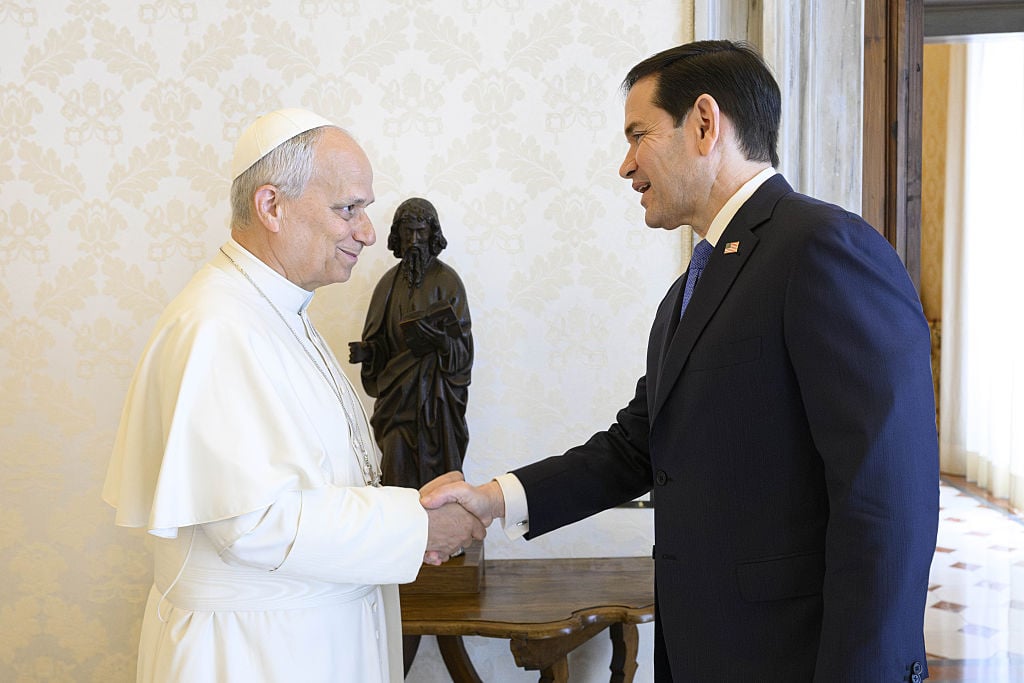
In a geopolitical landscape constantly shifting, the delicate balance of international relations often hinges on pivotal diplomatic encounters. One such high-stakes meeting unfolded in May 2026, as U.S. Secretary of State Marco Rubio embarked on a critical mission to the Vatican. His primary objective: to mend the strained relationship between the United States and the Holy See, severely tested by a public and acrimonious feud between former President Donald Trump and the first American pontiff, Pope Leo XIV. This visit, far from routine, underscored the enduring significance of religious diplomacy and the complex interplay of faith, politics, and global peace.
Rubio’s arrival in Vatican City was shadowed by weeks of escalating tension. President Trump had launched a series of pointed criticisms against Pope Leo XIV, particularly concerning the pontiff’s unwavering stance against the Iran war and his broader advocacy for nuclear disarmament. These attacks had not only created a diplomatic rift but also ignited significant debate among American Catholics, adding a potent domestic political dimension to the international dispute. The Secretary of State, himself a practicing Catholic and a leading figure in the Republican party, faced the formidable task of reaffirming shared commitments to peace and human dignity while navigating the lingering resentments from the recent presidential rhetoric.
A Diplomatic Tightrope Walk: Rubio’s Vatican Mission
The meeting between Secretary Rubio and Pope Leo XIV was a carefully orchestrated affair, designed to de-escalate tensions and re-establish a foundation of mutual respect. For two and a half hours, the two leaders engaged in extensive discussions, signaling a concerted effort to move beyond the recent discord. The State Department emphasized the constructive nature of the dialogue, highlighting a strong relationship between the United States and the Holy See.
The Genesis of Discord: Trump vs. the Pontiff
The roots of the Trump-Leo feud ran deep, fueled by fundamental disagreements on key foreign policy and humanitarian issues. Pope Leo XIV, known for his progressive leanings and consistent calls for global solidarity, had repeatedly clashed with the Trump administration over policies ranging from immigration to the ongoing U.S. blockade in Cuba. However, tensions reached a boiling point over the Iran war and the broader issue of nuclear proliferation.
Trump had publicly accused Pope Leo XIV of “endangering Catholics” by opposing the Iran war and, controversially, mischaracterized the Pope’s position on nuclear weapons. “I think he’s endangering a lot of Catholics and a lot of people. But I guess if it’s up to the Pope, he thinks it’s just fine for Iran to have a nuclear weapon,” Trump had asserted. This statement prompted a swift and unequivocal clarification from the pontiff, who reiterated the Catholic Church’s long-standing condemnation of all nuclear weapons and called for critics to speak “truthfully.” Pope Leo XIV consistently championed dialogue over military intervention, stressing that “it is much better to enter into dialogue, than to look for arms, and to support the arms industry.”
These criticisms from a former U.S. President, combined with a now-deleted, controversial AI-generated image depicting Trump in a Jesus-like form, had sparked widespread backlash among Christians and conservatives alike. The episode highlighted the sensitive intersection of faith and politics and the significant influence the Holy See wields on a global scale.
Bridging the Divide: Key Discussions and Shared Commitments
According to State Department spokesperson Tommy Pigott, the discussions between Rubio and Pope Leo XIV covered a broad spectrum of critical issues. Central to their talks were “the situation in the Middle East and topics of mutual interest in the Western Hemisphere.” The officials also reviewed ongoing humanitarian efforts in the Western Hemisphere and strategized on “efforts to achieve a durable peace in the Middle East.”
The Vatican, in its own statement, underscored the “need to work tirelessly in favor of peace” and confirmed a “shared commitment to fostering good bilateral relations between the Holy See and the United States of America.” Cardinal Pietro Parolin, the Vatican Secretary of State, had publicly defended Pope Leo XIV against Trump’s attacks on the eve of the meeting, stating, “To attack him in this way or to reproach what he does seems a bit strange to me.” This unified front from the Vatican highlighted the depth of the institution’s commitment to its leader and its principles.
The dialogue extended to current events, with particular attention paid to countries “marked by war, political tensions, and difficult humanitarian situations.” This comprehensive agenda demonstrated a mutual desire to collaborate on global challenges, transcending the recent political friction. The emphasis on human dignity and global stability served as a foundational principle for the renewed engagement.
Beyond Diplomacy: Symbolic Gestures and Political Undercurrents
Beyond the formal discussions, the exchange of gifts offered a symbolic olive branch and a glimpse into the personal dynamics at play. Secretary Rubio presented Pope Leo XIV with a small crystal paperweight, cleverly shaped like a football, bearing the seal of the State Department. This gesture playfully referenced Pope Leo XIV’s known support for the Chicago White Sox baseball team. “You’re a baseball guy, but it has the seal of the State Department,” Rubio quipped, adding, “What to get someone who has everything?” The lighthearted moment helped to dissipate some of the lingering tension.
In return, Pope Leo XIV gifted Rubio a pen crafted from olive wood, a powerful symbol of peace. “Olive being of course the plant of peace,” the Pope explained, also presenting a picture book showcasing Vatican artworks. These thoughtful exchanges underscored a mutual desire to find common ground and rebuild trust, moving past the recent public acrimony. Such cultural diplomacy often plays a crucial role in healing diplomatic wounds.
Rubio’s 2028 Ambitions and the Catholic Vote
Rubio’s Vatican visit was not merely a diplomatic necessity; it also carried significant implications for his own political future. Widely regarded as a leading contender for the Republican presidential nomination in 2028, his ability to deftly navigate the Trump-Pope feud was a critical test of his statesmanship and political acumen. For many Catholics, who constitute America’s largest religious group, the President of the United States repeatedly attacking the Pope is a deeply sensitive issue.
Political analysts, like Steve Millies, a professor of Public Theology at the Catholic Theological Union in Chicago, noted that such attacks “pushes a button. It excites a reaction, and the reaction is not one that’s going to play well for President Trump or for the Republican Party.” For Rubio, a devout Catholic, successfully mending ties with the Holy See could bolster his appeal to a crucial demographic ahead of the upcoming electoral cycles. His nuanced defense of Trump’s comments, suggesting they were “misunderstood” and aimed at protecting Catholics from potential Iranian aggression, showcased his efforts to balance loyalty with diplomatic necessity. This balancing act is crucial for any potential 2028 presidential hopeful seeking broad support.
Broader Geopolitical Implications: Italy and Beyond
Rubio’s diplomatic mission extended beyond the Vatican. Following his audience with Pope Leo XIV, he was scheduled to meet with Italian Prime Minister Giorgia Meloni and Foreign Minister Antonio Tajani. These meetings were expected to further test Rubio’s diplomatic skills, as tensions between Washington and Rome had widened. Trump had previously threatened to withdraw U.S. troops from Italy and Spain over their refusal to support the war in Iran.
This broader context highlighted the multifaceted challenges facing U.S. foreign policy in 2026. Rubio’s tour was a clear attempt to reaffirm American commitment to its allies and to collaborative solutions, even amidst internal political divisions and lingering international disagreements. The Secretary of State’s ability to engage effectively with both religious leaders and secular governments on sensitive issues like the Iran conflict and troop deployments is paramount for U.S. global standing.
Conclusion: A Fragile Peace, A Renewed Commitment
Secretary of State Marco Rubio’s visit to Pope Leo XIV in May 2026 marked a crucial turning point in the strained relationship between the United States and the Holy See. While the immediate tensions appeared to have eased, the underlying ideological differences that fueled the feud between former President Trump and the pontiff remain significant. Rubio’s mission successfully reaffirmed a shared commitment to promoting peace, human dignity, and strong bilateral relations, providing a much-needed reset.
The encounter underscored the enduring relevance of Vatican diplomacy and its global moral authority. For Rubio, the visit was a critical test, showcasing his capacity to navigate complex geopolitical and domestic political landscapes, potentially enhancing his standing for a future presidential bid. As the world continues to grapple with conflicts in the Middle East, humanitarian crises, and the specter of nuclear proliferation, the renewed dialogue between Washington and the Holy See represents a vital step towards fostering greater understanding and collaborative action on the world stage. The path to a truly durable peace, however, will require sustained effort, open communication, and an unwavering dedication to shared values.