Project Freedom: Why Trump’s Strait of Hormuz Plan Stirs Global Uncertainty

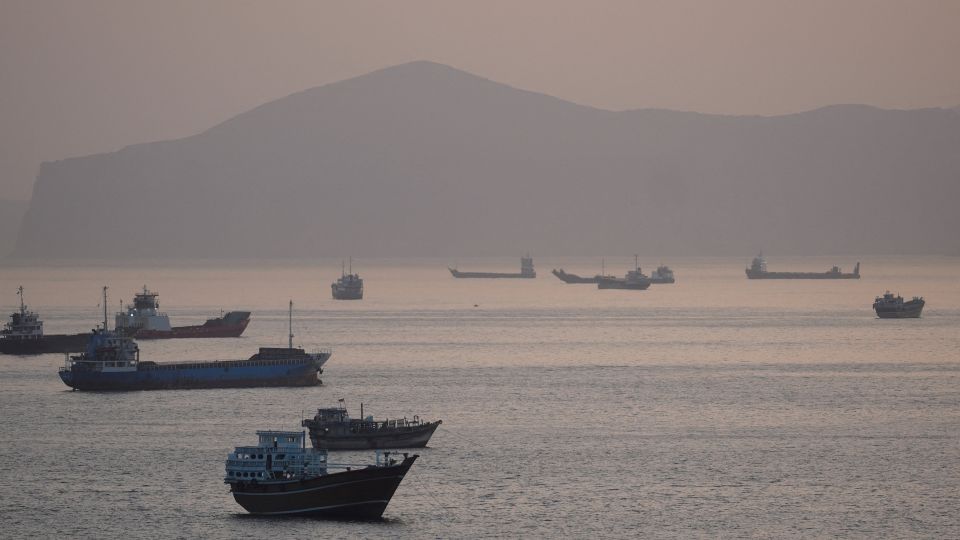
In a high-stakes move that has sent shockwaves through global energy markets, particularly impacting the global oil supply, President Donald Trump has officially launched “Project Freedom.” This ambitious, last-minute initiative aims to “guide” merchant vessels trapped in the Strait of Hormuz, a critical maritime chokepoint and one of the world’s most vital international shipping lanes, that has been effectively paralyzed since the outbreak of the current conflict with Iran.
While the administration frames this as a humanitarian necessity to clear the waterway and bolster maritime security, the plan has been met with skepticism from military analysts and shipping executives alike. Indeed, Trump’s new plan to ‘guide’ merchant ships through Hormuz leaves many questions unanswered. With the operation already underway, the world is left asking: Is this a genuine path toward de-escalation, or a dangerous gamble that invites a wider regional conflict with significant geopolitical implications?
The Mechanics of Project Freedom
According to statements from U.S. Central Command (CENTCOM) on X, the operation is backed by significant military muscle. This includes guided-missile destroyers, over 100 land and sea-based aircraft, and a network of multi-domain unmanned platforms. Yet, the operational details—specifically how these assets will physically “guide” commercial vessels, including oil tankers and LNG carriers, through a 24-mile-wide strait littered with potential threats—remain shrouded in ambiguity, confirming that Trump’s new plan to ‘guide’ merchant ships through Hormuz leaves many questions unanswered.
Experts like Jennifer Parker, a nonresident fellow at the Lowy Institute, suggest that the objective is less about providing a “shield” for individual ships and more about a psychological shift. By increasing the presence of U.S. naval assets, the administration hopes to force a change in the status quo, challenging Iran’s de facto control over the strait and asserting the principle of freedom of navigation. The goal is to make the environment “feel safe” enough for commercial traffic to resume, even if the physical threat of Iranian shore-based missiles and small attack craft persists.
Iran’s Fierce Response: A Violation of the Ceasefire?
The reaction from Tehran was swift and confrontational. Ebrahim Azizi, head of the Iranian parliament’s National Security Commission, publicly denounced the operation as a blatant violation of the April 8 ceasefire. This immediate backlash underscores why Trump’s new plan to ‘guide’ merchant ships through Hormuz leaves many questions unanswered. Iranian military commanders, particularly from the Iranian Revolutionary Guard Corps (IRGC), have doubled down, warning that any “invading American force” attempting to enter or operate within the strait will be met with immediate kinetic force.
This rhetoric places the U.S. in a precarious position. By moving warships into the narrow channels, the U.S. is effectively daring Iran to escalate. As Parker notes, to disrupt this operation, Iran would have to move beyond harassment and directly engage U.S. warships—a significant escalation that would fundamentally alter the nature of the ongoing conflict.
The Ghost of Operation Earnest Will
The current situation draws inevitable comparisons to the 1987-1988 “Tanker War,” during which the U.S. launched Operation Earnest Will to protect reflagged Kuwaiti tankers through extensive naval escort missions. However, military analysts warn that the strategic landscape today is vastly different and arguably more dangerous.
Challenges to Traditional Convoy Escorts
Asset Scarcity: As of late April 2026, the U.S. Navy maintains 12 destroyers in the Middle East. However, these vessels are already stretched thin, tasked with blockade enforcement and protecting carrier strike groups. Experts like former U.S. Navy captain Carl Schuster argue that the U.S. simply lacks the numbers to sustain traditional, close-protection convoy operations, further illustrating why Trump’s new plan to ‘guide’ merchant ships through Hormuz leaves many questions unanswered.
The “Swarm” Threat: Unlike the 1980s, the modern threat profile includes highly mobile, dispersed drone swarms and truck-mounted anti-ship missiles. Navigating a tanker through a two-mile-wide channel while being targeted by asymmetric, low-cost weaponry makes traditional escorting nearly impossible.
- Maneuverability: The narrow nature of the shipping lanes leaves little room for warships to maneuver in the event of an ambush. If an escort mission goes wrong, the collateral damage to the commercial ships being “guided” could be catastrophic.
Are Shipping Executives Convinced?
The maritime industry remains unconvinced that Project Freedom will lower the risk profile, impacting global supply chain stability. Bjørn Højgaard, CEO of ship manager Anglo-Eastern, emphasized that “it takes both sides to unblock” the strait. As long as the threat of Iranian mines or sudden missile strikes remains, the insurance premiums and the fear of losing crew will keep most vessels far from the region, highlighting how Trump’s new plan to ‘guide’ merchant ships through Hormuz leaves many questions unanswered.
Analysts like Collin Koh from the S. Rajaratnam School of International Studies suggest that even with advanced U.S. technology, “eradicating the threats” is not a feasible goal. You cannot destroy every hidden mobile missile launcher or every small fishing boat capable of deploying a sea mine. Consequently, many in the industry view the U.S. plan as a symbolic gesture rather than a practical solution to the current logjam, reinforcing that Trump’s new plan to ‘guide’ merchant ships through Hormuz leaves many questions unanswered.
The Strategic Gamble
President Trump’s decision to move forward with this mission appears to be a calculated effort to break the stalemate. The administration is betting that a show of force will deter Iran from attacking, effectively calling their bluff, even though Trump’s new plan to ‘guide’ merchant ships through Hormuz leaves many questions unanswered.
If the operation succeeds in getting ships moving without a major kinetic incident, it could be hailed as a masterstroke of “peace through strength.” Conversely, if a single U.S. destroyer is hit or a merchant vessel is sunk under U.S. “protection,” the administration could find itself dragged into a much deeper, more complex military engagement than it originally bargained for.
Conclusion: A High-Stakes Maritime Standoff
As Project Freedom enters its initial phase, the global community watches with bated breath. The Strait of Hormuz remains one of the most volatile pieces of geography on Earth, and this new U.S. policy has injected a layer of unpredictability into an already fragile ceasefire. Indeed, Trump’s new plan to ‘guide’ merchant ships through Hormuz leaves many questions unanswered.
While the desire to secure global energy transit is clear, the path chosen by the administration is fraught with logistical hurdles and the looming threat of unintended escalation. Whether this plan leads to a reopening of the strait or a new, more dangerous phase of the conflict, jeopardizing regional stability, remains the defining question for the coming weeks in 2026.