Louisiana Election Shakeup: Governor Landry Moves to Suspend Primary for Congressional Redistricting

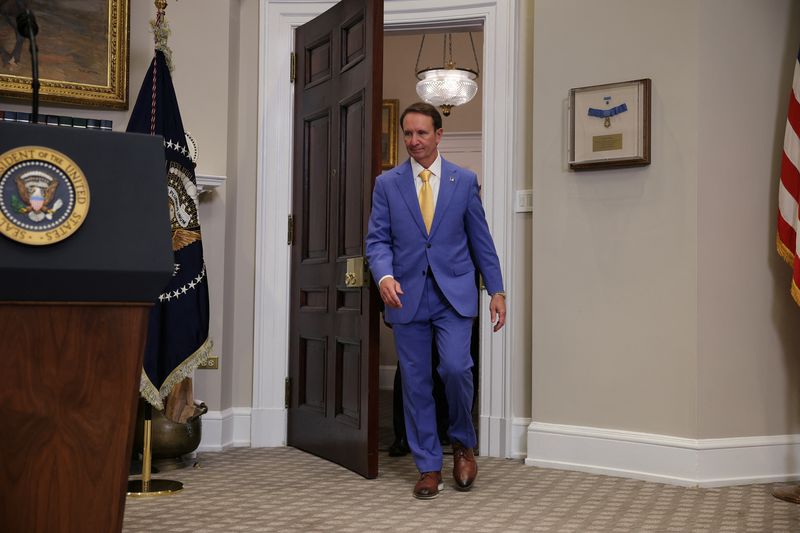
The political landscape in Louisiana is currently in a state of high-stakes flux. As the 2026 midterm cycle approaches, Governor Jeff Landry has initiated a bold and controversial strategy: suspending the upcoming May primary elections. This move, aimed at providing the state legislature with the necessary window to redraw congressional maps, has ignited a firestorm of debate regarding voting rights, partisan power, and the future of the U.S. House of Representatives.
Following a landmark U.S. Supreme Court decision that significantly altered the legal landscape surrounding electoral maps, Louisiana Republicans are moving aggressively to consolidate their influence. With early voting scheduled to begin imminently, the decision to halt the democratic process has left voters, candidates, and legal experts questioning the stability of the state’s electoral calendar.
The Catalyst: Supreme Court Rulings and Redistricting Power
The primary driver behind this sudden legislative pivot is a recent 6-3 Supreme Court ruling that fundamentally weakened the protections afforded by the Voting Rights Act. By making it increasingly difficult for minority groups to challenge electoral maps on the grounds of racial discrimination, the Court has essentially provided a “green light” for Republican-led states to re-evaluate their district boundaries.

Why Louisiana is Pivoting Now
Louisiana’s current political map has been a subject of intense litigation for years, specifically regarding the creation of a second Black-majority congressional district. With Black residents comprising roughly one-third of the state’s population, civil rights groups have long argued that the current six-district map dilutes the voting power of minority communities.
- Partisan Advantage: Republicans view the current map as a hurdle to maintaining their razor-thin majority in the U.S. House.
- Legal Shielding: The Supreme Court’s decision allows state legislatures to pursue aggressive redistricting with less fear of immediate federal intervention.
- The 2026 Strategy: By delaying the primary, the GOP-led legislature hopes to finalize a map that ensures favorable outcomes for their party in the November general elections.
The Legislative Maneuver: Halting the Process
The decision to suspend the May 16 primary is not merely a political statement; it is a logistical overhaul. In a special session characterized by party-line voting, the Louisiana legislature pushed through measures to delay the primary schedule. This move comes at an awkward time, as absentee ballots had already been distributed and early voting dates were set in stone.
The Opposition’s Stance
Democratic lawmakers and voting rights advocates have been vocal in their condemnation of the delay. They argue that:
- Constitutional Concerns: Critics suggest that altering the election calendar to facilitate a partisan redraw is a direct attack on the integrity of the democratic process.
- Voter Confusion: By stalling the process, the state risks disenfranchising voters who have already prepared to participate in the May primary.
- Precedent Setting: Opponents fear this move will set a dangerous precedent, where states can manipulate the timing of elections whenever the political winds shift.
Jeff Landry’s Political Trajectory
Governor Jeff Landry, now in his third year of office, has solidified his role as a central figure in Southern conservative politics. Since his decisive 2023 victory, he has transformed Louisiana into a solid Republican trifecta. However, his tenure has not been without controversy.
Between his active role in the state’s legislative agenda and his recent appointment as a special envoy to Greenland under the Trump administration, Landry is balancing local governance with national influence. His intervention in the House Republican Caucus leadership race earlier this year signaled his desire to consolidate power within the statehouse, ensuring that his legislative priorities—like this current redistricting push—face minimal internal resistance.
The National Impact: A Domino Effect?
Louisiana is not acting in a vacuum. The state is among several across the U.S. that are re-evaluating their congressional maps ahead of the 2026 midterms. If Louisiana successfully navigates this legal and political minefield, it could embolden other Republican-governed states to pursue similar strategies.
The Stakes for the U.S. House
The battle for control of the House of Representatives is expected to be one of the closest in modern history. A few key districts in states like Louisiana, Virginia, and others could be the difference between a Democratic or Republican majority.
- Democratic Seats at Risk: Many districts currently held by Democrats are now being scrutinized by GOP legislatures.
- The “Red Map” Strategy: By redrawing lines to pack or crack minority voters, states can effectively “lock in” seats for years to come.
- Federal Oversight: The weakened state of the Voting Rights Act means that the burden of proof has shifted heavily onto those challenging the maps, making it a difficult battle for civil rights organizations.
Looking Ahead: What Voters Should Expect
As the dust settles on the special session, the immediate future remains uncertain. Candidates who were ready to hit the campaign trail are now in a state of limbo, waiting for the legislature to finalize the new district boundaries. For the average voter, this translates to a chaotic electoral season.
Key Considerations for the Coming Months
- Legal Challenges: It is highly likely that this delay will face immediate court challenges from advocacy groups, potentially leading to further delays or federal injunctions.
- Campaign Logistics: Candidates will need to re-evaluate their campaign budgets, messaging, and outreach strategies to account for a shifted primary date.
- Civic Engagement: The complexity of these maneuvers often leads to voter fatigue. Maintaining high turnout will be a challenge for both parties as the election date remains fluid.
Conclusion
The decision to suspend Louisiana’s primary election is a clear reflection of the current “win-at-all-costs” climate in American politics. By leveraging a favorable Supreme Court ruling to reshape the state’s electoral map, Governor Landry and his allies are betting that the long-term political gains will outweigh the short-term criticism and logistical upheaval.
As Louisiana moves forward, the eyes of the nation will be fixed on the state. Whether this move secures a stronger Republican foothold in the U.S. House or triggers a massive legal backlash remains to be seen. One thing is certain: the 2026 midterm cycle has officially begun, and it is already redefining the rules of the game.