Hantavirus Crisis: MV Hondius Anchors Off Tenerife as Global Repatriation Begins

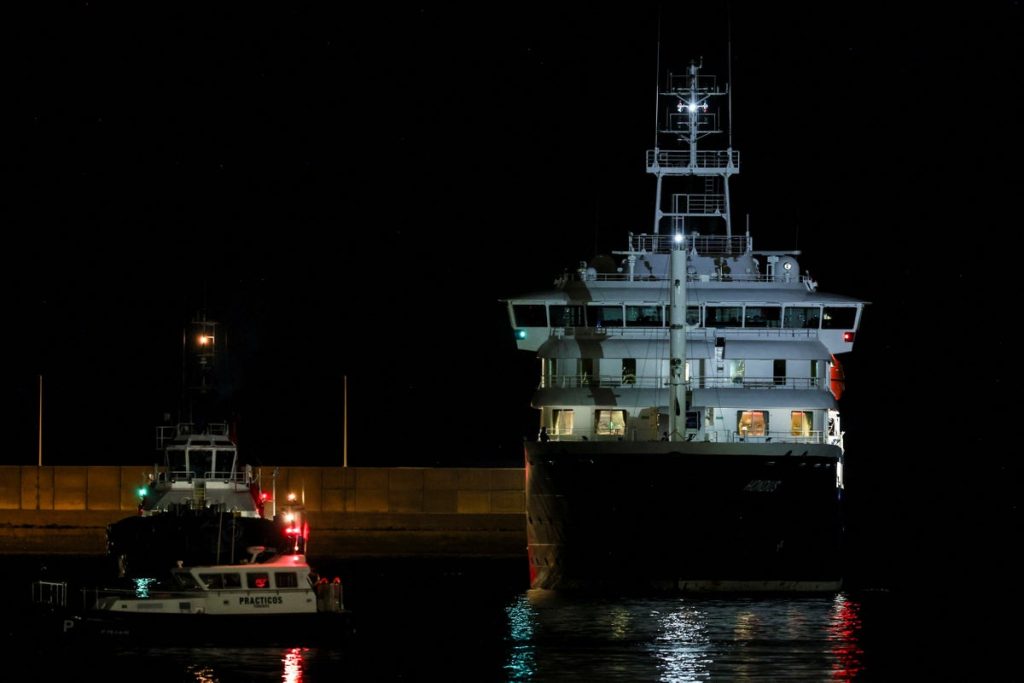
The maritime world and public health authorities are currently focused on the Canary Islands, where the MV Hondius, a cruise ship grappling with a rare and deadly hantavirus outbreak, has officially anchored off the coast of Tenerife. This high-stakes operation, unfolding in May 2026, marks a critical turning point for the 147 passengers and crew who have been effectively stranded at sea for weeks.
As the vessel maintains its position near the Port of Granadilla, the focus has shifted from the open ocean to a meticulously planned, military-style evacuation. With the World Health Organization (WHO) providing guidance and international governments scrambling to repatriate their citizens, the situation serves as a stark reminder of the complexities inherent in managing infectious diseases within the confined, interconnected environment of a cruise ship.
The Anatomy of the Outbreak: How It Started
The crisis, which has resulted in three tragic deaths and several confirmed cases, is believed to have originated from a seemingly innocuous event. Health officials are currently working under the hypothesis that a Dutch couple may have contracted the virus during a bird-watching excursion to a landfill site in Ushuaia, Argentina, earlier this spring.
Hantavirus is generally transmitted to humans through contact with rodent excreta, often via inhalation of aerosolized particles. While human-to-human transmission is extremely rare, the Andes virus strain identified on the MV Hondius has raised alarms due to its potential for limited transmission in high-density settings.
A Military-Style Evacuation Plan
To mitigate any risk of the virus reaching the local population of Tenerife, Spanish authorities have implemented a “zero-contact” protocol. The operation is designed to be seamless, fast, and strictly quarantined.
The Logistics of Disembarkation
Small Vessel Transfers: Passengers will be ferried from the anchored ship to the industrial port of Granadilla in small, controlled groups.
Sealed Transport: Once on land, individuals will be moved into sealed, guarded buses that proceed directly to the airport via cordoned-off routes.
No Public Interaction: The WHO and Spanish government have assured residents that at no point will passengers mingle with the local population or port workers.
Luggage Restrictions: To prevent potential contamination, passengers are restricted to carrying only essential items, such as documentation, phones, and chargers.
International Response and Repatriation
The global effort to bring these passengers home is unprecedented. With 22 nationalities represented on board, the European Union has activated its Civil Protection Mechanism, deploying two aircraft to assist countries that lack the necessary air transport resources.
UK and US Contingency Plans
The UK Health Security Agency (UKHSA) has confirmed that British nationals will be flown directly to the UK, where they will be transferred to Arrowe Park Hospital in the Wirral. This site, famously used as an initial quarantine facility during the 2020 COVID-19 pandemic, will serve as the hub for a mandatory 72-hour clinical assessment. Following this, specialists will determine the necessity of a 45-day isolation period.
Conversely, the US CDC has stated that while they are closely monitoring the 17 Americans on board, they are not currently mandating a formal quarantine upon arrival at Offutt Air Force Base in Nebraska, emphasizing that testing is not recommended for asymptomatic individuals.
Tensions on the Island: Public Fear vs. Scientific Fact
Despite the calm and methodical approach taken by the WHO and local government, the atmosphere in Tenerife is one of apprehension. Protesters have gathered near the port, carrying signs and expressing concerns that the arrival of the ship could trigger a local health crisis.
“We feel like we are in the eye of a hurricane,” noted one passenger, who asked to remain anonymous due to fears of stigmatization. Local residents have expressed frustration, asking why their island was selected for the operation. However, WHO Director-General Dr. Tedros Adhanom Ghebreyesus has written a public letter to the people of Tenerife, explicitly stating that this is “not another Covid” and that the risk to the general public remains “absolutely low.”
Understanding Hantavirus Symptoms
As the world watches the evacuation, many are asking: what exactly is hantavirus? Because there is currently no vaccine or specific antiviral treatment, the medical response is entirely supportive—focused on respiratory assistance and managing symptoms as they arise.
Common Symptoms: Fever, muscle aches, extreme fatigue, nausea, vomiting, and diarrhea.
Severe Complications: Shortness of breath, which signifies the onset of pulmonary issues.
- Incubation Period: Symptoms typically emerge 2 to 4 weeks post-exposure, though reports suggest they can appear as late as 40 to 45 days.
Why Cruise Ships Are Vulnerable
The MV Hondius incident highlights the inherent risks of cruise travel. Modern cruise ships function as “temporary cities at sea.” When a pathogen enters this interconnected environment, the centralized ventilation, shared dining areas, and high-frequency movement of passengers can facilitate rapid spread.
Public health experts note that while cruise lines have significantly improved their sanitation protocols since the 2020 pandemic, the nature of these vessels makes them uniquely susceptible to outbreaks of everything from norovirus to more exotic threats like hantavirus.
The Road Ahead: Disinfection and Recovery
Once the final passenger has been successfully repatriated, the MV Hondius will not be cleared for immediate service. Thirty crew members will remain on board as the vessel sails to the Netherlands. Once in a Dutch port, the ship will undergo a comprehensive, deep-sanitization process to eliminate any remaining viral traces.
The death of a passenger on board has cast a somber shadow over the entire operation. Their body will remain on the ship until it reaches the Netherlands, marking a tragic end to a voyage that was meant to be a holiday.
Conclusion
The arrival of the MV Hondius in Tenerife is a testament to the importance of international cooperation in the face of public health emergencies. While fear among the local population is understandable, the stringent protocols in place—from the use of sealed transport to the 72-hour clinical assessments—are designed to ensure that this outbreak remains contained. As the world continues to monitor the situation, the focus remains on the safe return of the 147 individuals who have been caught in the crosshairs of this rare medical crisis.