Tragedy at Denver International: Investigation Underway After Runway Collision Involving Frontier Airlines

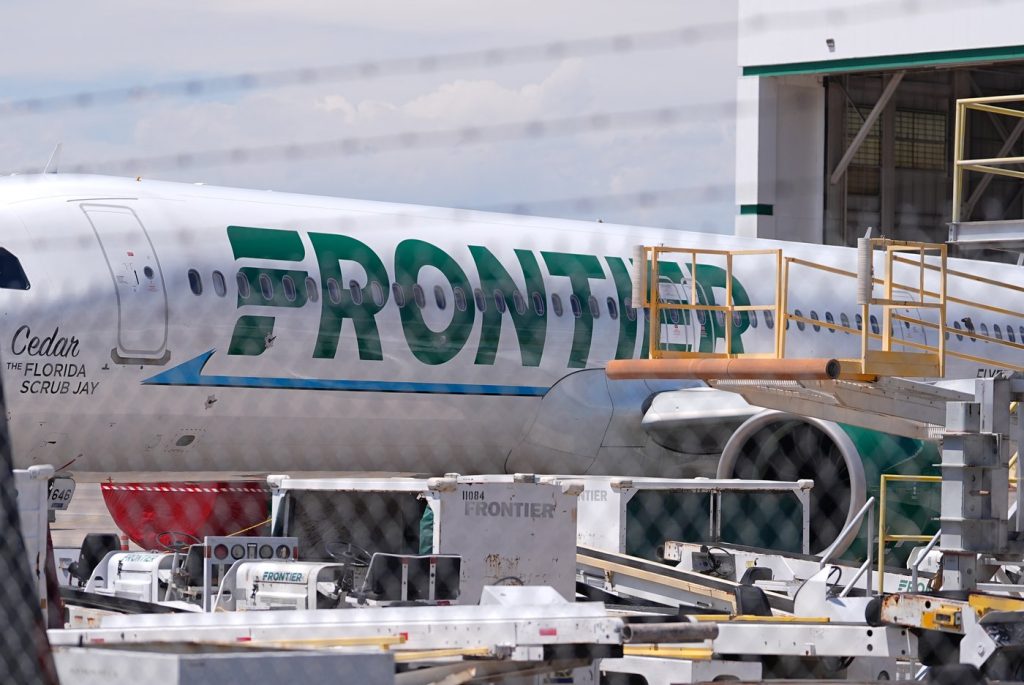
The aviation community and the traveling public were left reeling following a harrowing incident at Denver International Airport (DEN). Late on a Friday night, a routine departure turned into a catastrophe when a Frontier Airlines aircraft struck a pedestrian who had gained unauthorized access to the runway. This rare and devastating event has ignited a national conversation regarding airport perimeter security and the safety protocols governing commercial aviation.
As authorities continue their investigation into how an individual bypassed high-security measures, the focus remains on the 231 “souls” on board the flight and the tragic loss of life on the tarmac.
The Sequence of Events: A Flight Aborted
Frontier Airlines Flight 4345 was cleared for takeoff, bound for Los Angeles International Airport (LAX), when the unthinkable occurred. At approximately 11:19 p.m., the aircraft, carrying 224 passengers and seven crew members, began its roll down the runway.
According to official reports, the pilot was forced to initiate an emergency stop after striking an unidentified individual who had entered the restricted area by scaling a perimeter fence. The impact was immediate and severe, resulting in an engine fire and smoke filling the cabin.
ATC Communications Reveal the Chaos
Audio recordings from the cockpit, retrieved via ATC archives, paint a chilling picture of the moments following the collision. The pilot, maintaining composure under extreme pressure, alerted the control tower: “We’re stopping on the runway. We just hit somebody. We have an engine fire.”
The gravity of the situation was compounded by the presence of 231 passengers on board. As the pilot confirmed an emergency evacuation was necessary, air traffic control acted swiftly to mobilize ground support. The coordination between the flight crew and ground teams was credited with preventing further loss of life among those inside the aircraft.
Emergency Evacuation and Passenger Safety
Following the collision, the decision to evacuate the aircraft was made immediately due to the fire and smoke conditions reported by the crew. Passengers utilized emergency slides to exit the plane directly onto the runway, a process that, while chaotic, resulted in no fatalities among the passengers.
The Aftermath on the Tarmac
While the evacuation was successful, the scene was fraught with tension. Passengers reported seeing extensive damage to the engine and thick smoke obscuring their vision.
Injuries: Twelve passengers reported minor injuries during the evacuation process.
Medical Response: Five individuals were transported to local hospitals for further observation and treatment.
- On-Ground Experience: Some passengers expressed frustration regarding the wait time on the runway before transport to the terminal could be facilitated, citing cold conditions and limited immediate assistance.
Security Breach: How Did This Happen?
The primary question lingering in the wake of this disaster is how an unauthorized individual managed to breach the perimeter of one of the busiest airports in the United States. Transportation Secretary Sean Duffy emphasized the severity of the breach, stating that the individual “deliberately scaled a perimeter fence” to gain access to the restricted airfield.
Evaluating Perimeter Security
Airport authorities have confirmed that the victim was not an employee, and the incident occurred only two minutes after the person entered the restricted area. This raises critical questions about:
- Surveillance Gaps: Why the breach was not detected by sensors or surveillance prior to the individual reaching the runway.
- Fence Integrity: Whether existing perimeter barriers are sufficient to deter determined trespassers.
- Response Times: The efficacy of the current security patrol protocols at DEN.
Investigation and Regulatory Impact
The National Transportation Safety Board (NTSB) has taken the lead in the investigation. The runway involved, 17L, remained closed through Saturday morning to allow for a thorough forensic analysis of the scene.
Frontier Airlines has pledged full cooperation with federal authorities, stating, “We are investigating this incident and gathering more information in coordination with the airport and other safety authorities.” The airline is also providing support to both the passengers affected and the crew members who were forced to manage this traumatic event.
Broader Implications for Aviation
This tragedy comes on the heels of another fatal incident at Orlando International Airport, where a Delta Air Lines employee lost their life on the job. While the circumstances differ, these back-to-back events have placed a spotlight on the inherent risks present on active airport ramps and runways.
Regulatory bodies are expected to review “airside” safety protocols in the coming months. The goal is to ensure that perimeter breaches—which are statistically rare—become an impossibility through enhanced technology, such as AI-driven motion detection and fortified structural barriers.
Conclusion: A Community in Mourning
The loss of life at Denver International Airport is a profound tragedy that touches the lives of the victim’s family, the passengers who witnessed the ordeal, and the aviation workers tasked with maintaining safety in a high-stakes environment. As the NTSB investigation moves forward, the aviation industry must grapple with the difficult task of balancing the openness of modern transport hubs with the absolute necessity of rigorous perimeter security.
For now, the focus remains on supporting those impacted by the incident and ensuring that lessons are learned to prevent such a nightmare from ever repeating itself.