Greens Storm London: Labour’s Electoral Earthquake Leaves Keir Starmer on the Brink

The 2026 local elections have delivered a seismic shock to the foundations of British politics. In what many analysts are calling a “political earthquake,” the Green Party has decimated Labour’s long-standing dominance in the capital, leaving Prime Minister Sir Keir Starmer fighting for his political survival. As the dust settles on a night of unprecedented electoral shifts, the traditional two-party system appears to be undergoing a painful, perhaps terminal, transition.
With Labour losing control of key London strongholds and Reform UK carving out swathes of territory in the north and Midlands, the political map of the UK has been fundamentally redrawn. Sir Keir Starmer now faces a mutiny within his own ranks, with senior MPs openly questioning whether his government can survive until the next general election.
The Green Surge: A New Reality in London Politics
For decades, London has been the undisputed heartland of the Labour Party. However, the rise of the Green Party under the leadership of Zack Polanski has shattered this status quo. The Greens did not just win; they dismantled Labour’s infrastructure in boroughs that were considered untouchable for the centre-left party.
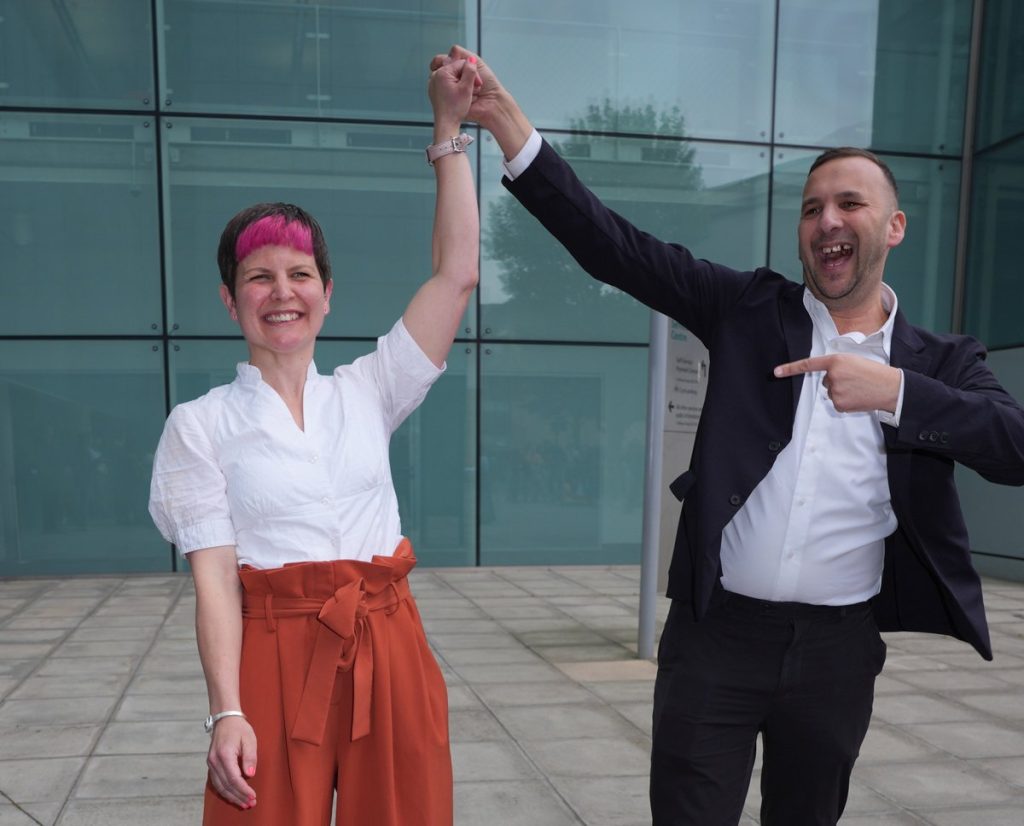
The most symbolic victory occurred in Hackney, where Green candidate Zoe Garbett secured a resounding mandate, ending years of Labour administration. Similar scenes played out in Lewisham and Waltham Forest, as voters increasingly turned away from Labour’s platform in favor of the Greens’ localized, environmental, and socially progressive agenda.
Why Labour Voters Are Switching
The disillusionment among Londoners is palpable. Mayor Sadiq Khan, reflecting on the results, admitted that the shift was not merely a protest vote but a “far-reaching fracturing” of the political landscape. Key drivers for this exodus include:
Policy Fatigue: A perception that Labour has drifted too far from its core principles.
The Green Alternative: Voters feeling that Labour is not aggressive enough on climate change and urban infrastructure.
- Local Accountability: A desire for representation that feels closer to community needs rather than Westminster-led mandates.
The “Two-Party” Myth: Is the Era of Labour and Conservative Hegemony Over?
Zack Polanski, speaking from the Hackney count, did not mince his words: “Two-party politics is not just dying, it is dead and it is buried.” This sentiment is backed by the numbers. While the Greens surged in the capital, Nigel Farage’s Reform UK party successfully targeted traditional Labour heartlands in the north and Midlands, winning seats in Sunderland, Wigan, and Barnsley.
The rise of Reform UK has created a pincer movement that has left the Labour Party besieged. By winning in areas that have historically leaned Labour since the end of World War I, Reform has proven that it is no longer a fringe movement. Instead, it has become a legitimate electoral force capable of pulling voters from both the left and the right.
The Conservative Response
While Labour suffered, the Conservatives also faced a complex night. While they managed to reclaim ground in boroughs like Westminster, they simultaneously lost significant territory to Reform UK. The loss of Essex County Council to Reform highlights the volatility of the current electorate. It is clear that the Tory party is also struggling to maintain its identity in a post-2026 landscape where voters are increasingly willing to look beyond the traditional blue-red binary.
The Crisis at Number 10: Starmer’s Leadership Under Fire
The pressure on Sir Keir Starmer is reaching a boiling point. Following the electoral carnage, several Labour MPs have broken rank, with some explicitly calling for the Prime Minister to resign. Former Cabinet minister Louise Haigh stated clearly that unless the government delivers “significant and urgent change,” Starmer cannot lead the party into another general election.
The “Responsibility” Dilemma
Starmer has publicly taken responsibility for the “tough” results, refusing to “sugar-coat” the disaster. However, his insistence that he will not “walk away and plunge the country into chaos” is being met with skepticism. Behind closed doors, senior Labour figures are debating the viability of his leadership. The core issue remains the party’s inability to hold its progressive base against the Green tide while simultaneously losing working-class voters to Reform.
Regional Collateral Damage: Wales and Scotland
The contagion of Labour’s decline has not been limited to England. In Wales, the results have been catastrophic. The loss of seats in the Senedd to Plaid Cymru and Reform UK has reduced Labour to a “single-digit rump” in some areas. First Minister Eluned Morgan, a high-profile casualty of the night, has joined the chorus of voices demanding that the party “change course” and return to its roots as the party of the working class.
In Scotland, while the SNP managed to hold onto power, the Scottish Labour Party’s failure to “win the argument” further underlines the national trend of a party struggling to define its purpose in a fragmented UK.
What Happens Next? The 2026 Political Outlook
As we look toward the remainder of 2026, the political landscape is more unpredictable than it has been in decades. The “Green Storm” in London is likely to serve as a blueprint for future campaigns, forcing every major party to reassess its strategy.
Three Key Trends to Watch:
- The Coalition Reality: We may be entering an era where local councils and perhaps even future national governments require formal coalitions or supply-and-confidence agreements.
- The Rise of Single-Issue Politics: With the Greens and Reform both capitalizing on specific voter frustrations, centrist parties will struggle to maintain their “big tent” appeal.
- Leadership Instability: Starmer’s grip on the Labour Party is tenuous at best. The next few months will be defined by internal power struggles and potential leadership challenges.
Conclusion: A Turning Point for Britain
The 2026 local elections will be remembered as the moment the status quo finally broke. The rise of the Green Party in London, coupled with the systemic gains by Reform UK in the north, indicates a public that is tired of the traditional political establishment. For Sir Keir Starmer, the message from the ballot box is clear: the current trajectory is unsustainable.
Whether he can pivot to address the “far-reaching disillusionment” identified by Sadiq Khan, or whether he will be the latest casualty of this shifting political tide, remains to be seen. One thing is certain: British politics will never be the same again. The era of the two-party monopoly has been challenged, and the electorate has shown it is more than willing to look elsewhere for answers.