Strait of Hormuz on the Brink: US Forces Strike Iranian Tankers as Ceasefire Crumbles

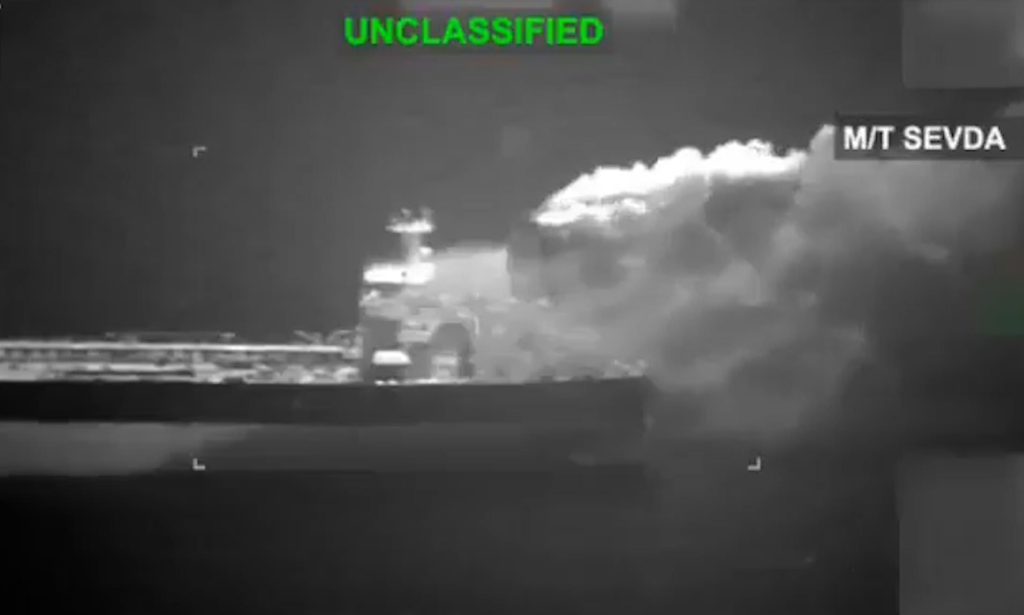
The geopolitical landscape of the Middle East reached a fever pitch this Friday, May 8, 2026, marking the Moment US forces strike two Iranian oil tankers as tenuous ceasefire moves closer to collapse. The strikes, which occurred in the strategic waters of the Strait of Hormuz, were executed after the vessels allegedly attempted to breach the stringent naval blockade enforced by the Trump administration. As smoke billowed into the sky, the fragile month-old ceasefire between Washington and Tehran appears to be hanging by a thread.
This latest escalation, the Moment US forces strike two Iranian oil tankers as tenuous ceasefire moves closer to collapse, marks a significant departure from the diplomatic maneuvering that has defined the last few weeks. With the global energy market already reeling from the effective closure of the Strait, these direct military strikes signal that the United States is prepared to use kinetic force to prevent the flow of resources to and from Iranian ports.
The Anatomy of the Strike: Enforcing the Blockade
According to official reports from U.S. Central Command, the operation, which encapsulates the Moment US forces strike two Iranian oil tankers as tenuous ceasefire moves closer to collapse, was precise and targeted. The vessels in question—identified as Very Large Crude Carriers (VLCCs)—were empty, presumably attempting to return to Iranian terminals to reload. The U.S. military’s objective was clear: maintain the integrity of the blockade that has been a cornerstone of the current administration’s strategy since the conflict began on February 28.
Tactical Precision in the Strait
The strikes focused on the vessels’ propulsion and infrastructure, specifically targeting smokestacks to bring the massive ships to an immediate halt. By disabling these tankers, the U.S. is signaling a “zero-tolerance” policy regarding maritime movement in the region.
Vessel Status: The tankers were unladen, nullifying the immediate risk of a massive environmental oil spill from the strike itself.
Strategic Goal: To prevent the replenishment of Iranian oil reserves and enforce the isolation of its major export hubs.
Military Coordination: The action followed a series of overnight clashes in the Strait, where U.S. Navy ships were reportedly targeted by Iranian forces.
A Ceasefire in Name Only?
While President Donald Trump continues to maintain that the ceasefire remains in effect, the reality on the ground—or rather, on the water—following the Moment US forces strike two Iranian oil tankers as tenuous ceasefire moves closer to collapse, suggests a much darker narrative. Iranian Foreign Minister Abbas Araghchi has been vocal in his condemnation, labeling the incident a “reckless military adventure” that blatantly violates the terms of the temporary truce.
The diplomatic standoff is now characterized by a dangerous game of “wait and see.” Secretary of State Marco Rubio has publicly stated that Washington is awaiting a “serious offer” from Tehran regarding the nuclear program and the reopening of the Strait. However, the rhetoric coming from the Iranian Foreign Ministry suggests that diplomacy is being sidelined by the escalating military confrontation.
The Global Energy Crisis and Maritime Chaos
The closure of the Strait of Hormuz, exacerbated by the Moment US forces strike two Iranian oil tankers as tenuous ceasefire moves closer to collapse, is no longer just a regional security concern; it is a global economic crisis. As one of the world’s most critical “chokepoints” for energy, the standoff has caused a spike in fuel prices that is being felt in households from South Korea to the United States.
The Role of the “Persian Gulf Strait Authority”
Adding to the tension is the recent formation of an Iranian government agency specifically tasked with vetting and taxing ships passing through the Strait. This move has been met with fury by the international community.
International Shipping: Hundreds of commercial vessels remain trapped, unable to navigate the waterway, leading to supply chain bottlenecks for petroleum products and fertilizers.
The Chinese Factor: Despite the blockade, some tankers—including those with Chinese crews—have attempted passage, highlighting the complex web of global energy dependencies that the U.S. blockade is currently straining.
Economic Impact: South Korea, a nation heavily reliant on crude oil imports through the Strait, has already been forced to cap gasoline prices to mitigate the domestic impact of the soaring costs.
Environmental and Humanitarian Concerns
Beyond the immediate military conflict, spurred by the Moment US forces strike two Iranian oil tankers as tenuous ceasefire moves closer to collapse, there is growing alarm regarding the environmental impact of these skirmishes. Satellite imagery from earlier this week revealed a massive oil slick covering approximately 95 square kilometers near Kharg Island. While the U.S. Pentagon has declined to comment on the origin of the spill, environmental experts like Nina Noelle of Greenpeace Germany warn that the drift of this slick could devastate ecologically sensitive marine areas in the Gulf.
Furthermore, the human cost is mounting. Reports from Iranian-affiliated news agencies indicate at least one sailor was killed and ten others injured during an overnight strike on a cargo vessel. As the military operations intensify, the line between “targeting infrastructure” and “endangering civilian crews” becomes increasingly blurred.
What Lies Ahead: A Diplomatic Crossroads?
As the international community watches the fallout from the Moment US forces strike two Iranian oil tankers as tenuous ceasefire moves closer to collapse, the role of third-party mediators has become vital. Pakistani Prime Minister Shehbaz Sharif has been engaged in “day and night” communication with both Washington and Tehran, hoping to prevent the complete collapse of the truce.
However, the tone from the White House remains firm. President Trump has reiterated that the U.S. is prepared to resume full-scale bombing campaigns if Iran fails to comply with the proposed nuclear and maritime agreements. The “red lines” have been drawn, and the U.S. military has demonstrated that it is willing to cross them to enforce its strategic objectives.
Summary of Current Tensions
- Military Escalation: The Moment US forces strike two Iranian oil tankers as tenuous ceasefire moves closer to collapse highlights the failure of current de-escalation efforts.
- Economic Fallout: Global energy markets remain volatile, with the Strait of Hormuz effectively locked down.
- Diplomatic Stalemate: The U.S. demands a “serious offer” while Iran decries “hostile military action,” leaving little room for negotiation.
- Environmental Risks: A massive oil slick in the Persian Gulf threatens the fragile marine ecosystem of the region.
As we move past this Friday’s violence, the Moment US forces strike two Iranian oil tankers as tenuous ceasefire moves closer to collapse leaves the world to wonder if the 2026 conflict is spiraling toward a point of no return. With both sides dug in, the balance between total war and a negotiated peace has never been more precarious. The next 48 hours will be critical in determining whether the ceasefire can be salvaged or if the region is bracing for a new, even more devastating, phase of the conflict.