Air Canada Grounded by Global Energy Crisis: Why More U.S. Routes Are Being Cut in 2026

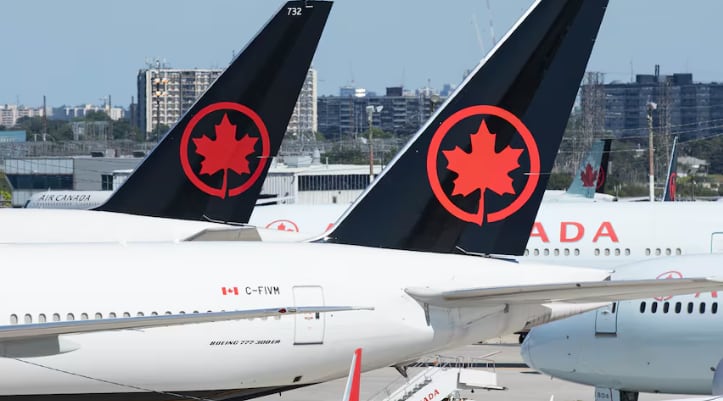
The year 2026 has proven to be a period of unprecedented turbulence for the global aviation industry. While the world hoped for a stabilized travel market, geopolitical tensions have once again reshaped the skies. Air Canada, the country’s flagship carrier, recently sent shockwaves through the travel sector by announcing the early termination of several key seasonal routes to the United States.
This decision is not an isolated incident but a direct response to a burgeoning global energy crisis. With jet fuel prices more than doubling in a matter of months, the economics of long-haul and mid-market regional travel have been fundamentally upended. For passengers, the message is clear: the cost of flying is rising, and the availability of direct routes is shrinking.
The Catalyst: Geopolitical Tensions and the Strait of Hormuz Blockade
To understand why Air Canada is cutting flights, one must look at the global stage. The primary driver behind the current surge in operating costs is the ongoing conflict in Iran. As of mid-2026, the Strait of Hormuz oil blockade has effectively throttled a significant portion of the world’s petroleum supply.
Since the Strait is a critical artery for global energy, the blockade has caused a massive spike in crude oil prices, which directly translates to the cost of kerosene-based jet fuel. For airlines, fuel typically represents 20% to 30% of total operating expenses. When those costs double, routes that were once profitable—or at least broke even—suddenly become “economically unfeasible.”
Industry analysts note that jet fuel prices have remained at levels double what they were prior to the escalation of Middle Eastern tensions. This has left carriers like Air Canada with no choice but to consolidate their schedules and focus on only the most high-yield corridors.
Detailed Breakdown: The Four Impacted U.S. Routes
Air Canada has confirmed that four specific seasonal routes to the United States will conclude their service much earlier than originally scheduled for the 2026 season. These routes connect major Canadian hubs like Toronto, Vancouver, and Montreal to mid-sized American cities.
The affected routes and their new final flight dates are:
- Toronto (YYZ) to Sacramento (SMF): The final flight is now scheduled for August 1, 2026.
- Vancouver (YVR) to Raleigh (RDU): Service will conclude on July 29, 2026.
- Toronto (YYZ) to Charleston (CHS): The last flight will depart on September 6, 2026.
- Montreal (YUL) to Austin (AUS): Service ends on September 7, 2026.
These cities represent “growth markets” that Air Canada had been nurturing to capture tech-sector business and high-end leisure travel. However, the high fuel burn required for these mid-range transborder flights, combined with the current price of fuel, has forced a tactical retreat. The airline has stated it intends to resume these services in the summer of 2027, provided market conditions stabilize.
The Ripple Effect: WestJet, Porter, and Air Transat Respond
Air Canada is not the only carrier feeling the heat. The entire Canadian aviation ecosystem is in a defensive crouch. WestJet, Air Canada’s primary domestic rival, has also announced significant capacity reductions.
According to recent reports, WestJet is cutting its overall capacity by:
1% in April
3% in May
Nearly 6% in June
WestJet’s strategy involves consolidating flights on high-frequency routes and shortening the travel window for its own seasonal destinations. Meanwhile, Porter Airlines and Air Transat have been forced to adjust their financial models. While Air Transat has stated it currently has no plans to cancel flights, it has joined other carriers in implementing fuel surcharges and raising base fares to offset the crushing cost of fuel.
A New Era of Surcharges and Fees
Beyond just cutting routes, airlines are looking for every possible way to recoup costs. Travelers in 2026 are seeing:
Increased Baggage Fees: Air Canada recently introduced higher fees for checked luggage on certain routes.
Fuel Surcharges: Transparent “fuel adjustment” fees are being added to ticket prices at the point of purchase.
Fare Hikes: Across the board, ticket prices for transborder and international travel have risen by an estimated 15-25% compared to 2025.
What This Means for Impacted Passengers
For those who had already booked travel on the cancelled Sacramento, Raleigh, Charleston, or Austin routes, the news is a significant inconvenience. Air Canada has committed to a policy of transparency and support for affected customers.
Alternative Travel Options
Passengers will typically be offered a re-routing through one of Air Canada’s major hubs or via a partner airline (such as United Airlines). For example, a passenger flying from Toronto to Sacramento after August 1st might be re-routed through San Francisco or Los Angeles.
Refund Policies
In cases where an alternative flight is not suitable or adds significant delay to the traveler’s itinerary, Air Canada is offering full refunds. Under the Canadian Air Passenger Protection Regulations (APPR), passengers are entitled to certain protections when a flight is cancelled for reasons within the carrier’s control, though “fuel shortages” and “geopolitical crises” often fall into complex legal categories regarding compensation.
The Economic Feasibility of Modern Aviation
The term “economically feasible” has become a buzzword in airline boardrooms this year. When an airline evaluates a route, it looks at the CASM (Cost per Available Seat Mile) versus the RASM (Revenue per Available Seat Mile).
With fuel prices doubling, the CASM has skyrocketed. For a route like Montreal to Austin to be profitable, the airline would have to charge fares that the average consumer might find prohibitive. By suspending these routes early, Air Canada is attempting to protect its balance sheet from the “hemorrhaging” of cash that occurs when flying half-empty planes with expensive fuel.
The Focus on High-Yield Hubs
By cutting mid-sized U.S. routes, Air Canada can redirect its more fuel-efficient aircraft—such as the Airbus A220 and the Boeing 737 MAX—to high-density corridors like Toronto to London or Vancouver to Tokyo, where higher ticket prices are more easily absorbed by the market.
The Role of the Iran Conflict in Global Travel
The conflict in Iran is the “black swan” event of 2026. The Strait of Hormuz is a narrow waterway through which roughly one-fifth of the world’s total oil consumption passes. The blockade has not only affected the price of oil but has also created logistical nightmares for global supply chains.
Aviation is particularly sensitive because there is no immediate “green” alternative for long-haul flight. While sustainable aviation fuel (SAF) and electric short-haul planes are in development, the industry still relies almost entirely on petroleum. When the supply of that petroleum is threatened, the entire global network of air travel begins to contract.
Analyzing the 2027 Resumption Plan
Air Canada’s plan to resume these routes in 2027 is an optimistic signal, but it remains contingent on several factors:
- De-escalation in the Middle East: A diplomatic resolution to the Iran conflict is required to reopen the Strait of Hormuz and stabilize oil prices.
- Fleet Modernization: Air Canada is continuing to take delivery of more fuel-efficient jets which may make these routes viable even at slightly higher fuel prices.
- Consumer Demand: If the global economy enters a recession due to high energy costs, the demand for seasonal travel to cities like Charleston or Austin may not return as quickly as hoped.
Survival Strategies for Travelers in 2026
In this environment of uncertainty, travelers must adapt. Here are some expert tips for navigating the 2026 aviation crisis:
Book Early, but with Protection: With fares rising, booking early is essential, but always opt for “refundable” or “flexible” fares.
Monitor Flight Status Regularly: Airlines are adjusting schedules with very little notice. Check your flight status at least once a week leading up to your trip.
Consider Hub-and-Spoke Travel: While direct flights are more convenient, they are the most likely to be cut. Flying through major hubs (Toronto, Chicago, Denver) offers more redundancy if a flight is cancelled.
Use Travel Insurance: Ensure your insurance policy covers “cancellations due to airline schedule changes” and “geopolitical disruptions.”
Conclusion: A Turbulent Horizon
The news that Air Canada is cutting more flights due to soaring jet fuel prices is a sobering reminder of how interconnected our world truly is. A conflict thousands of miles away can directly impact a family’s vacation to South Carolina or a business trip to the California state capital.
As we move through the remainder of 2026, the aviation industry will continue to be a mirror of global stability. For now, Air Canada and its competitors are in “survival mode,” prioritizing financial health over network expansion. Travelers should prepare for a year of higher costs and fewer options, while hoping that the promised return to normalcy in 2027 becomes a reality.
The aviation landscape is shifting, and the “new normal” of 2026 is defined by the high price of energy and the delicate balance of global politics. For those planning to fly, flexibility is no longer just a luxury—it is a necessity.